Oura Ring vs Garmin: which wearable tracks your health better?
Being behind major reports like The Mother of All Breaches and RockYou2024, our in-house cybersecurity experts and journalists provide unbiased, real-world testing and in-depth analysis.
We maintain complete transparency by openly sharing our testing methodologies with our audience.
Learn more

With so many wearables promising to optimize health and fitness, it can be tough to figure out which one actually fits your needs. In this comparison, I’m looking at Oura and Garmin as brands, with the Oura Ring Gen4 and the Garmin Venu 3S as my main reference devices. These two are the closest when it comes to health‑tracking features, so they are the focus. I also bring in other models like the Oura Ring Gen3 and Garmin’s Fenix, Forerunner, and Venu lineups to give you a clearer sense of how everything fits together.
I base this comparison on hands-on insights, expert testing data, and verified research to evaluate real-world performance. From sleep tracking and accuracy to battery life and usability, I break down the key differences and name a winner in each category.
Oura Ring Gen4 wins for general recovery, wellness tracking, and subtle wearability. Garmin wins for workout tracking, practical features, and value over time. Your choice depends on whether you're more focused on optimizing recovery or maximizing fitness tracking.
Oura Ring vs Garmin overview
| Feature | Oura Ring Gen4 | Garmin Venu 3S |
| Form factor | Ring (titanium build; sizes 4–15) – no screen | Watch (41.0mm case; 1.2” AMOLED display) |
| Weight | ~3.3–5.2g (lighter than Gen3) | ~40g (with strap) |
| Health sensors | Optical heart rate (PPG), advanced sensor matrix, 7 temperature sensors, SpO₂ | Garmin Elevate Gen5 HR sensor, Pulse Ox, accelerometer, ambient light sensor, body temperature sensor |
| Key health metrics | Sleep and readiness scores, HRV, resting HR, temp trends, respiratory rate | Sleep and stress tracking, Body Battery energy level, all-day HR |
| Fitness/activity | Steps, inactivity alerts, basic score – no GPS | 25+ sport modes, GPS, on-watch workout metrics |
| Water resistance | 100m (10 ATM) – safe for swimming, sauna | 50m (5 ATM) – swim safe |
| Battery life | Up to 8 days per charge | Up to 10 days; up to 21h with GPS use |
| Smart features | Syncs to mobile app; no screen or notifications | Smart notifications, music controls, contactless pay |
| Get Oura Ring Gen4 | Get Garmin Venu 3S |

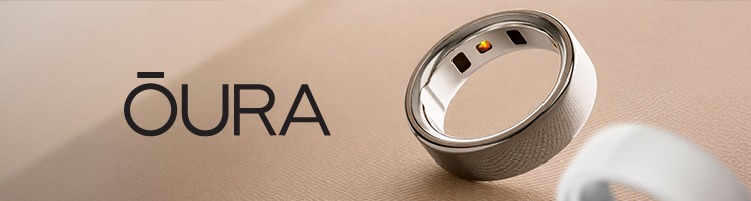
Oura Ring Gen4
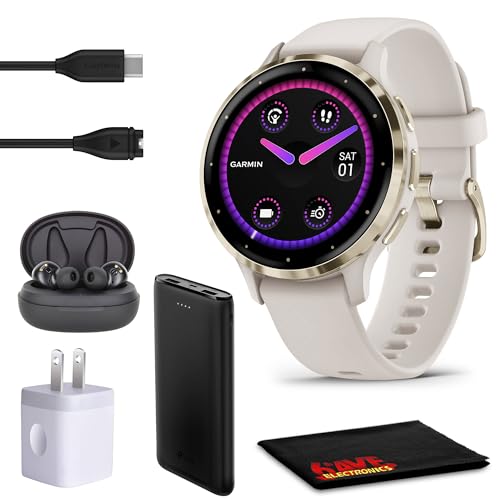
Garmin Venu 3S


Our team of in-house researchers, writers and editors reviews and analyzes health tech products using a research-driven approach. We gather data from multiple sources, fact-check all information, and conduct our research based on peer-reviewed studies, expert opinions, consumer ratings, and regulatory approvals.
You can learn more about how we test health tech products here.
Oura Ring vs Garmin: design and wearability
When it comes to how these wearables are worn and experienced daily, the Oura Ring Gen4 and Garmin Venu 3S take different paths that impact everything from comfort to engagement.
Form factor
The Oura Ring Gen4 is a titanium smart ring worn on your finger. It’s ultra-light, unobtrusive, and suited to users who prefer minimal gear. The Oura Ring Gen3 is still available at a lower price point and shares the same ring form factor, though with slightly less advanced sensors. Garmin’s Venu 3S is a wristwatch with a bright AMOLED screen, designed for hands-on users who like real-time stats and visual prompts. For users seeking a rugged option, the Garmin Fenix 8 features a larger, more durable build, while the Garmin Venu X1 takes a sleeker approach with a bigger display. For serious runners, the Garmin Forerunner 970 delivers advanced training metrics.

Discreetness vs display
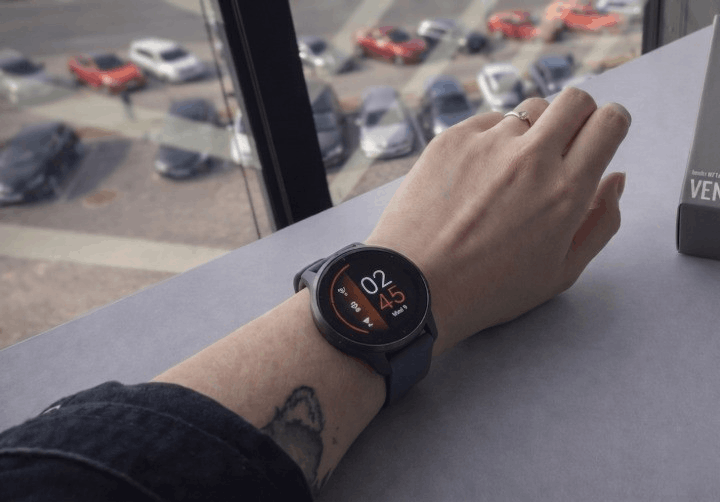
Oura prioritizes subtlety – no screen, sounds, or pop-ups. It’s ideal if you don’t want distractions. Garmin’s screen, however, gives you instant feedback during workouts, daily health-related updates, and notifications. If live data matters to you, Garmin’s interface wins.
Durability and lifestyle fit
The Oura Ring is waterproof to 100m and durable enough for everyday wear, but the rigid metal design can feel vulnerable in contact sports or strength training. Garmin is bulkier but more rugged overall – made to survive fitness routines, swimming, and knocks. Oura is more comfortable during sleep, while Garmin’s larger size might require adjustment.
User experience
The Garmin Venu 3S allows full interaction: starting workouts, checking heart rate zones, and responding to alerts. The Oura Ring Gen4 captures data silently, with insights delivered after syncing to the app. Oura’s UI is clean and wellness-focused, while Garmin’s app is packed with fitness data, training suggestions, and custom dashboards.
Oura Ring vs Garmin: price and subscription costs
Garmin's range varies significantly in price, from the Venu 3S to the premium Fenix 8, while Oura's Gen3 is a more affordable entry point compared to the Gen4. Both Oura Ring Gen4 and Garmin Venu 3S sit in a similar range when it comes to upfront investment – but what you get in return and what you’ll keep paying over time are quite different.
Garmin follows a simple model: you pay once, and you’re done. Everything is included – app access, health-related metrics and fitness tracking, sleep stats, Body Battery, and even workout plans. No extra payments, no locked data. Once you own the device, it keeps delivering value without monthly charges.
Oura uses a subscription model. After you purchase the Gen4 ring, you’ll need to pay a monthly membership fee to unlock features like Readiness, detailed sleep breakdowns, and menstrual cycle predictions. Without the subscription, you're left with basic stats and little context. That said, the subscription supports frequent updates and algorithm improvements.
You do get a free trial with the ring at first, but if you're planning to use it long-term for recovery tracking and health-related trends, that recurring cost adds up over time.
If you want a one-and-done purchase with full feature access and no surprises, Garmin wins. If you're focused on recovery and don’t mind an ongoing subscription, Oura still holds unique value.
Garmin wins because it offers full access to all features with a one-time purchase, while Oura requires an ongoing subscription to unlock its core insights.
Garmin vs Oura Ring: health, sleep, and stress tracking
Heart rate monitoring
Garmin provides continuous, all-day heart rate tracking with live stats visible directly on the watch. According to the manufacturer, these readings support general wellness monitoring and exercise insights. However, we haven’t found independent clinical validation for Garmin’s heart rate accuracy, so this claim remains based on product documentation.
Oura, in contrast, emphasizes nighttime heart rate, focusing on resting values and multi-night trends for its health scoring. While it doesn’t offer live stats, peer-reviewed studies funded by Oura have shown its heart data aligns closely with clinical ECG readings during sleep monitoring.
Sleep staging accuracy
Oura appears to lead in sleep-stage tracking accuracy, particularly due to its use of multiple sensors beyond motion. A peer-reviewed study comparing the Oura Ring to lab-grade polysomnography found that it provided sleep–wake and total sleep time estimates within acceptable ranges for most users and showed reasonable agreement across sleep stages. Garmin, while offering sleep data through its app, relies more heavily on movement and heart rate estimation, which has been shown to reduce staging precision in wrist-worn wearables.
HRV and stress levels
Oura tracks heart rate variability (HRV) primarily during sleep and factors it into its Readiness score. Gen4 maintains strong ECG correlation and provides nuanced recovery insights. Garmin uses HRV to generate daily stress scores and fuel its Body Battery metric, offering helpful but less detailed insights.
Recovery insights and readiness scores
According to the brand, Oura’s Readiness score is based on HRV, temperature, sleep, and resting heart rate. It helps users gauge when to rest or push harder. Garmin’s Body Battery also gives an energy estimate but focuses more on daily stress and activity rather than longer-term recovery.
App and data presentation
Garmin provides real-time charts, training suggestions, and stats right on the watch and app. It’s designed for users who want in-the-moment data. Oura’s app emphasizes trend insights, offering a calmer, holistic view with daily summaries and recovery suggestions.
Overall, both wearables serve different priorities, but when it comes to sleep tracking accuracy, HRV insights, and recovery-focused guidance, Oura Ring Gen4 stands out with more scientific research support and more in-depth nighttime data. Garmin Venu Sq 2, on the other hand, remains the better choice for users who want real-time stats, broader daily feedback, and on-watch control.
Oura Ring vs Garmin: activity tracking
Garmin Venu 3S is built for activity. It tracks steps, calories burned, and inactivity. It also includes 25+ workout modes, built-in GPS, and real-time metrics like pace, HR zones, and lap times. Workouts are easy to start and manage on the watch itself. If you are a performance-focused runner or endurance athlete, models like the Forerunner 970 or Fenix 8 go much deeper on training metrics, making the brand even more compelling for that audience.
Oura Ring Gen4 takes a more passive approach. It tracks steps and movement trends and can auto-detect elevated activity, but you won’t get on-demand stats or real-time workout feedback. There's no GPS or sport modes, and any detailed analysis happens later in the app.
Garmin shines for runners, gym users, and anyone who wants live performance data. Oura is better suited for people who walk, do light activity, or just want to understand how active they were that day.
Garmin stands out for activity tracking due to its real-time metrics, built-in GPS, and wide range of sport modes tailored to more active users.
Oura Ring vs Garmin: battery life
Battery duration per charge
Garmin lasts longer on a charge, often reaching over a week in smartwatch mode. Oura’s charge typically holds for 4–7 days depending on how many features are enabled.
Charging time
Oura charges faster – about 80 minutes for a full top-up. Garmin takes around 2 hours, but you’ll charge it less often.
Power management features
Garmin lets you tweak settings like GPS and always-on display to save power. Oura focuses on passive tracking, so it conserves energy by default, but features like live heart rate monitoring can shorten battery life.
Daily usage habits and battery longevity
Oura users often top up during a break to ensure it’s ready for overnight tracking. Garmin can go several days without a charge, making it more convenient for users who don’t want to think about battery.
While both devices offer multi-day battery life, Garmin pulls ahead with longer endurance between charges – a clear advantage for users who prefer to set it and forget it. Oura’s quicker charging is convenient for topping up throughout the day, but Garmin’s staying power ultimately makes it the more practical choice for uninterrupted tracking.
Garmin offers longer battery life between charges, making it a more convenient option for uninterrupted, low-maintenance use.
Oura Ring vs Garmin: which one should you choose?
If you’re trying to decide between the Oura Ring Gen4 and the Garmin Venu Sq 2, the right pick depends entirely on your lifestyle and goals.
Choose the Oura Ring Gen4 if:
- You want deep recovery and sleep trend insights over time.
- You prefer something subtle and minimal on your finger.
- You’re okay with a monthly subscription for advanced insights.
Choose the Garmin Venu 3S if:
- You need real-time stats during workouts and built-in GPS.
- You want a watch that also handles notifications, music, and payments.
- You’d rather pay once and get full features without ongoing costs.
Other reviews you might be interested in:
Oura Ring vs Apple Watch: which health and fitness tracker is right for you?
Oura Ring 4 vs Samsung Galaxy Ring: which one is more worth it?
RingConn vs Oura Ring: which one is more worth it?
Oura Ring vs Apple Watch: which health and fitness tracker is right for you?
FAQ
Is the Oura Ring more accurate than Garmin for sleep tracking?
Yes, based on each brand’s claims, Oura offers more detailed sleep tracking than Garmin. Oura uses multiple sensors to estimate sleep stages like REM and deep sleep. Garmin tracks sleep too but focuses more on general trends using heart rate and movement.
Can Garmin do everything the Oura Ring does?
No, Garmin doesn’t offer the same recovery features as Oura. While it excels in fitness tracking and GPS, Garmin lacks body temperature sensors and Oura’s Readiness score.
Is there a subscription required for Garmin or Oura?
Oura requires a subscription, while Garmin uses a one-off purchase model. Oura charges a monthly fee to access advanced features like sleep analysis and readiness scores. Garmin’s full feature set is unlocked with the device – no extra payments.
Which device is better for athletes – Oura or Garmin?
Garmin is better suited for athletes. It supports real-time stats and workout tracking and has built-in GPS and sport modes, making it ideal for training and performance.
Can I use both Garmin and Oura together?
Yes, many users combine both. Garmin is great for workouts and daily activity, while Oura handles recovery and sleep. Used together, they can offer a more complete health picture.
3 resources
- Physiol. Meas. Feasible assessment of recovery and cardiovascular health: accuracy of nocturnal HR and HRV assessed via ring PPG in comparison to medical grade ECG
- Behavioral Sleep Medicine The Sleep of the Ring: Comparison of the ŌURA Sleep Tracker Against Polysomnography
- SLEEP Advances A performance validation of six commercial wrist-worn wearable sleep-tracking devices for sleep stage scoring compared to polysomnography