Best fitness trackers: comprehensive review by Cybernews
Being behind major reports like The Mother of All Breaches and RockYou2024, our in-house cybersecurity experts and journalists provide unbiased, real-world testing and in-depth analysis.
We maintain complete transparency by openly sharing our testing methodologies with our audience.
Learn more
Fitness trackers have come a long way from simply counting steps or measuring heart rate. Today’s devices can analyze sleep patterns, monitor stress levels, and reveal long-term wellness trends. Some may even alert you to potential health issues before you notice them yourself. In many ways, the best fitness trackers have evolved into personal health companions that provide meaningful insights into your overall wellness.
Modern health wearables – including rings, bands, and smartwatches – now promise advanced features such as recovery insights, readiness scores, and even metrics related to aging and longevity. To help separate genuine innovation from marketing hype, I teamed up with the Cybernews research team to analyze and evaluate the best fitness trackers currently available.
In this guide, my goal is to help you find a fitness tracker that truly fits your goals and lifestyle. I’ve carefully researched the most reliable and feature-rich options on the market, focusing only on verified information from official and trustworthy sources.
Best fitness trackers – shortlist
- Hume Band 2.0 – best for long-term health insights and risk alerts
- RingConn Gen 2 Air – top ultra-light smart ring with AI-generated guidance
- Oura Ring – best for sleep depth, stress trends, and readiness insights
- WHOOP – subscription-model fitness tracking
- Go2sleep 3 – affordable overnight ring for sleep insights


Our team of in-house researchers, writers and editors reviews and analyzes health tech products using a research-driven approach. We gather data from multiple sources, fact-check all information, and conduct our research based on peer-reviewed studies, expert opinions, consumer ratings, and regulatory approvals.
You can learn more about how we test health tech products here.
The best fitness trackers compared
Below is a general comparison table comparing all five providers in essential categories. The categories include battery life, weight, price, and the official Cybernews rating:
| Model | Our rating | Type | Weight | Battery life | Water resistance | Blood oxygen monitoring | Best for |
| Hume Band 2.0 | 4.8 | Smart wristband | N/A | Up to 14 days | IP68, up to 1m for up to two hours | Yes | Longevity-focused individuals |
| RingConn Gen 2 Air | 4.7 | Smart ring | 2.5-4g | 10 days | IP68, up to 100m | Yes | Everyday wellness-focused individuals |
| Oura Ring | 4.5 | Smart ring | 3.3-5.2g | 5-8 days | Water-resistant up to 100m | Yes | Health-tech enthusiasts |
| WHOOP | 4.0 | Smart band | N/A | Over 14 days | IP68, up to 10m for two hours | Yes | Serious athletes |
| Go2sleep 3 | 3.8 | Smart ring | 6g | About two nights | IP67 | Yes | Sleep-tracking focused individuals |
5 Best fitness trackers – our detailed list
Next, you’ll find a detailed list – structured, expert mini-reviews – including all five wearables. I dive deeper into each device – pricing, design, unique features, who it’s for, and why I picked it. I then end with my personal pros and cons.
1. Hume Band 2.0 – best overall fitness tracker
| Price: | Mid-tier |
| Type: | Smart wristband |
| Battery life: | Up to 14 days |
| Best for: | Longevity-focused wellness tracking |
Hume Health markets Hume Band 2.0 as a “longevity coach”, putting the emphasis on long-term wellness. Instead of focusing solely on steps and workouts, it aims to help you understand how daily habits affect your overall well-being.
In the beautifully-designed app, you can find metrics displayed as Metabolic Capacity/Momentum to help you spot long-term trends of sleep, stress, and recovery. Alongside those insights, Hume Band 2.0 tracks familiar metrics, including heart rate, blood oxygen saturation, and estimated blood pressure trends. It’s worth noting that the blood pressure feature is designed to show changes over time and it isn’t a replacement for medical checkups.
It’s my top pick because it combines a clean, minimal design and an enjoyable app with a unique longevity and aging-slowdown focus. It also doesn’t require a subscription for access to the core features, making it a compelling option for longevity enthusiasts.
2. RingConn Gen 2 Air – top ultra-light smart ring for women
| Price: | Mid-tier |
| Type: | Smart ring |
| Battery life: | Up to 10 days |
| Best for: | Tracking women’s health |
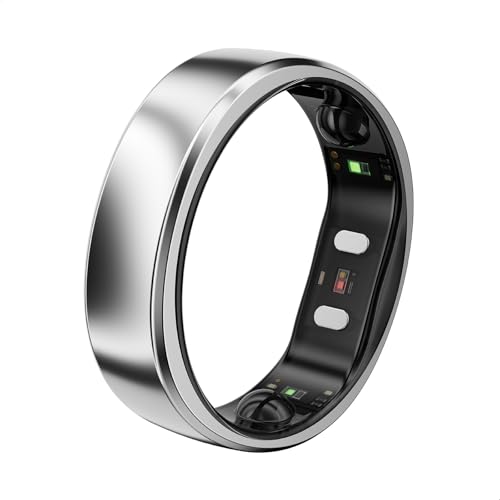
RingConn Gen 2 Air is a titanium smart ring that leans into women’s wellness, marketed as “Designed for Life, Enhanced by AI.” This is a true 24/7 wearable – light, only 2mm thick, and rated up to 100m under water. It tracks sleep stages, blood oxygenation, and even cycle predictions. There’s an AI health companion that learns your trends and provides guidance.
I chose this as runner-up because it uniquely focuses on women’s health, plus it’s no-subscription with a straightforward app. This ring is best for health-conscious people.
3. Oura Ring – discreet lab-style sleep and stress insights
| Price: | High-tier |
| Type: | Smart ring |
| Battery life: | Up to eight days |
| Best for: | Premium look and feel |
Oura Ring is a durable full-titanium smart ring. It’s marketed as “Sleeker, smarter, and made for you.” It uses “Smart Sensing” to track dozens of essential metrics like daytime stress, temperature trends – and turns them into guidance. The app is sleek and lab-style. Full insights require a recurring-cost Oura Membership.
I’ve moved it down to third-place pick because of the cost – and some color choices cost extra. Also, the metrics and guidance are “limited,” without the Oura membership. This smart ring suits those who want a premium smart ring.
4. WHOOP – recovery insights for high-performance athletes
| Price: | Mid to High-tier (depending on membership type) |
| Type: | Smart band |
| Battery life: | Over 14 days |
| Best for: | Training and workout insights |
WHOOP is a screenless, sporty smart band with a membership business model – different from the rest. Marketed as “Join the next generation,” WHOOP offers three yearly subscription options ranging from mid-tier to high-tier pricing: ONE, PEAK, and LIFE.
WHOOP tracks many key metrics such as heart rate, Max zones, and recovery. The app is clean and performance-oriented. There’s also a smart apparel collection that’s compatible with the WHOOP device.
It’s in fourth place because it’s subscription-only. However, you can pass on your used device to someone else (“upcycling”) so they can start their own membership.
5. Go2sleep 3 – built for overnight oxygen tracking
| Price: | Low-tier |
| Type: | Smart ring |
| Battery life: | About two nights |
| Best for: | Sleep insights |
Last but not least, Go2Sleep 3 is marketed as “Redefine home sleep tracker.” It’s in last place because this is still an undeveloped night-only sleep-tracking silicone smart ring – with a cozy, sleep-focused app.
It’s by far the cheapest of the bunch. It’s got focused sleep metrics like second-by-second SpO₂ with ODI events, plus heart rate metrics. It allows CSV/PDF exports – so it’s practical. However, eight features are currently listed as under development.
Our methodology
The Cybernews evaluation method is based on in-depth research, thorough data analysis, and verified user feedback – not hands-on product testing. Here’s a look at the weighted criteria I used to assess each top smart ring and smart band in my fitness tracker tests for this article:
- Design and comfort (20%): How comfortable the wearable is. Also, I took build quality and aesthetics into account – such as materials, plus any reports regarding discomfort and build quality issues.
- Tracking accuracy (25%): The reliability of step counting, heart rating monitoring, and how advanced the sensors are. I also took into account any studies or lab tests backing the wearable – and whether these were actually backed up by science.
- Features and functionality (25%): Key features like water resistance, fast charging, and exportable data. I took each wearable’s app quality into account – particularly what users had to say.
- Battery life (15%): How long a single charge lasts. I also considered charging convenience, charging speed, and whether users reported any issues with battery life.
- Price and value (15%): I personally considered whether pricing reflects real-world value. I also considered the feature-to-cost balance of each device, and whether I would actually purchase the device myself.
What is a fitness tracker and how does it work?
A fitness tracker is a wearable device that resembles an everyday item – but collects several wellness metrics from your body through built-in sensors. A fitness tracker can come in the form of a smart fitness watch, smart ring, or a smart wristband – and other forms.
Usually, fitness trackers are a piece of hardware combined with a strap – or a ring with a chip and a sensor in it. Today, many popular trackers are able to collect biomarkers like heart rate, heart rate variability (HRV), blood oxygen saturation, and sometimes even skin temperature. Technically speaking, an accelerometer tracks movement patterns, while optical sensors read miniscule changes in blood flow. If available, temperature sensors add even more context.
Finally, what makes fitness trackers “connected” is a proprietary app. Apps usually create trends from data points gathered over periods of time – and that’s where the real value is, because you get real insights into your health and wellness.
Key features and benefits of fitness trackers
Next, I’ll outline the key features and benefits of fitness trackers. It’s important to understand how these collectively support better health management:
- Activity tracking: Measurements like daily steps, calories burned, and distance covered. This encourages movement, and sets measurable goals.
- Heart rate monitoring: Important for wellness tracking. Continuous heart rate data points during activities like workouts and rest may help you optimize training intensity. It also sometimes reveals potential health or stress-related issues.
- Sleep analysis: Sleep is big for health and recovery. Analysis usually means sleep stages and duration – helping you see patterns that affect your rest quality.
- Water resistance: If you’re going to wear a fitness tracker 24/7, it should have water resistance. Without it, it wouldn’t be possible to swim or shower with it on – and long-term tracking would be thrown off.
- Smart notifications: Fitness trackers sync with smartphones, and some alert you if something’s off with your measurements. Some can show you calls, messages, and app alerts.
- Battery performance: Frequently taking off your fitness tracker for charging is counter-productive in terms of long-term wellness trends. The best trackers can go at least several days before needing a re-charge – and re-charging should be quick.
The best fitness trackers according to users
According to users, some of the best fitness trackers in %currentyear%% are from brands like Garmin, Oura, and Fitbit. Other brands like WHOOP, Hume Health, and Apple have their own dedicated following.
Based purely on my top three, I’ll start with Hume Band 2.0. It’s quite popular for its clinically-inspired wellness and recovery metrics, plus its trendy longevity-forward focus – especially since new-age enthusiasts are learning how to live longer. On the negative side, Hume Band 2.0 is criticized for its inconsistent activity tracking.
As for RingConn Smart Ring 2 Air, online users love its 24/7 wearability and effective sleep tracking. However – as with many other trackers – users complain about occasionally inaccurate heart and activity data.
Oura is quite established compared to other newer brands like Hume Health and RingConn. Users consistently say its sleep and recovery tracking are “best-in-class.” Then again, others complain about expensive subscriptions and app bugs. Overall, the takeaway is that most fitness trackers still have a long way to go to be perfected – regardless of brand.
How to choose the best fitness tracker
Choosing the best fitness tracker is a structured process, meaning you must consider aspects like your wellness goals, budget, as well as hardware and compatibility needs. The following list will help you decide:
- Wellness goals: Pinpoint what you need – whether that’s a basic step-count/calorie trackers or a fully-fledged tracker with high-level metrics and integrated AI coaching/guidance/alerts.
- Battery life: The best trackers can go many days without a charge, while the not-so-great ones might last a day. It also depends on how much energy the device draws (e.g., sensor complexity, high brightness). If you’re a traveler or need uninterrupted, long-term health trends, extended battery life is a must.
- Display and comfort: Some trackers have a screen, some don’t. Choose a fitness tracker with a bright, high-resolution screen for all-day comfort. Even if your tracker is screenless, strap comfort – for instance – or ring comfort is crucial if you’re going to sleep with it on.
- Compatibility: Most likely you have a smartphone – and you’ll want a tracker that works with it (whether that’s iOS, Android, or both). Remember, Apple Watches only pair with iPhones, while Android-compatible trackers work across a broad spectrum – Google Wear OS or Fitbit, for instance.
- Budget: Budget may be the most difficult to figure out, but here’s my advice: balance the features you want with affordability. Most often, mid-tier fitness trackers provide the best cost-to-features and cost-to-reliability. High-tier fitness trackers can exceed $500 – and you may not actually need all those features or the premium subscriptions.
Final verdict on the best fitness trackers
Think about what you actually care about in terms of your health and wellness. Different fitness trackers serve different purposes: Hume Band 2.0 is a longevity companion, while RingConn Gen 2 Air may complement everyday women’s health.
If you’re after a deluxe fitness tracker experience, you’ll enjoy Oura Ring. If you need only sleep tracking, try the comfortable and affordable Go2sleep 3 from SLEEPON.
It’s a fact that wearable technology may help people create healthier habits. Consult this guide any time you need honest, research-based advice on choosing your next fitness tracker.
Other reviews from Cybernews:
Best minimalist fitness trackers in 2026: discreet and screen-free picks
Best fitness apps to crush your goals in 2026
Best fitness watch: top picks in 2026
Best watch for heart monitoring: top picks for ECG, HRV, and 24/7 tracking
FAQ
What is the most accurate fitness tracker for heart rate monitoring?
The most accurate fitness trackers for heart rate monitoring include Samsung Galaxy Watch Ultra and Apple Watch Series 10. Hume Band 2.0 uses PPG sensors to estimate heart rate, HRV, and SpO₂. However, Chest strap monitors like Polar H10 may offer much higher accuracy.
How long do fitness trackers typically last?
Battery life varies a lot depending on model and usage. Basic trackers with minimal power draw can last over two weeks, while advanced smartwatches with bright, high-resolution displays usually need charging daily or every other day. On average, mid-range models last between four to seven days.
Do fitness trackers work without a smartphone connection?
Yes, most fitness trackers can record activity independently. However, a smartphone with the fitness tracker’s app is usually required later to view data and trends.
Are fitness trackers waterproof or only water-resistant?
Most are water-resistant, not waterproof. Full high-pressure water resistance (such as when diving) for extended periods of time is rare.
Which fitness tracker offers the best value for money?
That depends a lot on what the user needs. In my opinion Hume Band 2.0 or RingConn Gen 2 Air are solid choices.