Kiier Laser Cap review: can it really regrow your hair?
Being behind major reports like The Mother of All Breaches and RockYou2024, our in-house cybersecurity experts and journalists provide unbiased, real-world testing and in-depth analysis.
We maintain complete transparency by openly sharing our testing methodologies with our audience.
Learn more
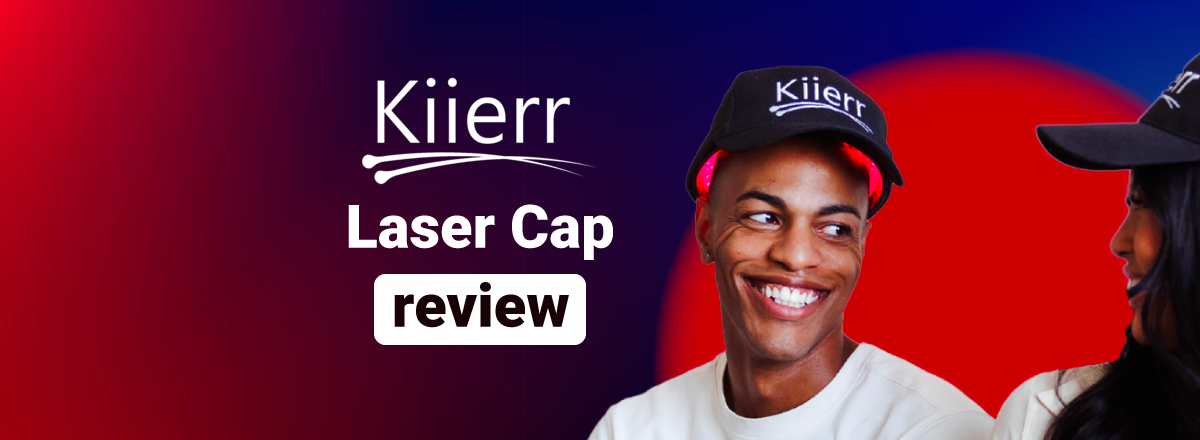
Laser therapy has quickly become a promising non-invasive option for managing certain types of hair loss, thanks to how well-tolerated and beneficial it can be. With the market projected to reach over $310 million by 2026, many brands have launched their version of the best laser cap for hair loss. Yet, Kiier has stood out from the crowd.
The Kiier laser cap won users over by combining intuitive, seamless tech with a more affordable price tag. To see if it ticks all these boxes, my team and I reviewed user feedback, expert input, as well as its features, ease of use, and performance. This Kiier laser cap review breaks down all that we’ve found so you can make an informed decision on whether it’s right for you.
Quick overview of the Kiier laser cap
Here’s a quick overview of the Kiier laser cap before I dive into the specifics.
| Rating: | 4.5 |
| Product description: | Low-light laser therapy cap |
| Main features: | 148-312 diodes,1,360 mW total power, 650nm wavelength, up to XL cap sizes, lightweight and easily-portable, 2-year warranty |
| App integration: | No |
| Pricing: | $799-$2,199 (depending on the model) |


Our team of in-house researchers, writers and editors reviews and analyzes health tech products using a research-driven approach. We gather data from multiple sources, fact-check all information, and conduct our research based on peer-reviewed studies, expert opinions, consumer ratings, and regulatory approvals.
You can learn more about how we test health tech products here.
What is the Kiier laser cap and how does it work?
The Kiier laser cap is a laser therapy product designed to manage certain types of hair loss. It appears to be a regular cap at first glance, made of fabric with a bill positioned above the eyes. However, its insides are lined with diodes that generate light at a specific wavelength and frequency. This technology is called low-level laser therapy (LLLT).
The exact mechanism behind low-level laser light therapy isn’t clear. Still, there’s growing evidence that it may trigger the kind of biological activity your scalp needs to support hair restoration over time.
The low-light photons are hypothesized to be able to penetrate the scalp and potentially boost blood flow in cells surrounding hair follicles. Some suggest this process may help support stronger, healthier hair in certain individuals, though results can vary.
Kiier’s laser cap diodes produce 650nm-wavelength light, which several studies have shown to be promising for management in certain types of hair loss. However, Kiier laser cap reviews show that not everyone experiences improvements. Still, overall feedback leans positive, especially for those in the early to moderate stages of hair loss.
Benefits of the Kiier laser cap
The many benefits of the Kiier laser cap range from ease of use to FDA clearance. I explore its most notable advantages below to help you gain a better understanding of what this device can actually do for you.
Non-invasive therapy support to traditional treatment
Kiier’s non-invasive approach is what draws most of its users. According to the brand, it was designed with a similar purpose as medications like minoxidil, but it works through different mechanisms and doesn’t require a prescription. According to research, combining laser therapy with prescription medications may lead to more noticeable results in certain individuals.
In that sense, Kiier may offer added support for individuals using pharmaceutical-based hair loss treatments or for those looking to take further steps in promoting healthy hair growth.
Convenience of at-home therapy
Kiier’s hands-free user experience makes it one of, if not the best, laser cap designs in my opinion. All you have to do is put it on your head, press Start, and go about your day.
Kiieran looks just like a slightly bulkier baseball cap, which means you could wear it while running errands or sitting in a cafe, and few would guess you’re in the middle of a hair loss therapy.
The carbon fiber shell keeps it lightweight, and the size accommodates heads up to 24 inches, making it quite comfortable. From everything I’ve read, most users report wearing it while working at their desk or reading a book with no issues.
Thicker, fuller hair over time
Kiier’s own research suggests wearing the cap can result in better hair density and quality after 12 to 24 weeks. You just have to choose the right model for your hair loss stage and be consistent. This means using the laser cap every other day for up to 30 minutes if you have the 148- or 272-diode model, or 6 minutes every day if you have the 302-diode model.
Not all Kiier reviews reported these results, but I found that a significant number of users who followed the recommended routine did see noticeable improvements.
Clinically-tested, FDA-cleared technology
The Kiier laser cap uses the studied 650nm wavelength, which multiple studies have linked to promising hair loss therapy. On top of that, it’s FDA-cleared, which is a major plus in my books. It shows the device has been reviewed and deemed substantially equivalent in safety and intended use to other cleared devices used for managing hair loss.
Disclaimer: Keep in mind that all the mentioned Kiier laser cap benefits I’ve mentioned are potential, not guaranteed. Like most hair loss therapy devices, results can vary from person to person.
Who should try the Kiier laser cap?
Looking at its features and reviews, I’d recommend you try the laser cap by Kiier if:
- You’re in the early to moderate stages of hair loss, or you’re experiencing hair thinning. According to the brand, the device is designed to work on both men and women, with normal to sensitive scalps.
- You’re looking for non-invasive therapy to complement traditional hair loss treatment. Research suggests that LLLT may support regular hair loss management techniques for individuals seeking to achieve better results.
- You’re not tech-savvy. There’s no complex setup or app installation to worry about. All it takes for Kiier to work is pressing the Power button.
- You’re willing to wait for results. It can take anywhere from six weeks to a couple of months of consistent use to see potential improvements, so you have to stick with it.
Who should not try the Kiier laser cap?
You may not be the best candidate for the Kiier cap if:
- You’re dealing with advanced or pronounced hair loss. People with fully inactive follicles or more progressed hereditary hair loss usually don’t respond as well to low-level laser therapy.
- You have a scalp condition. While Kiier notes its low light is gentle and well-tolerated by most users, speaking to a dermatologist beforehand might be a good idea.
- You want a feature-rich device. Kiier lacks app-based reminders, session tracking, or progress photos, which Capillus reviews highlight, for instance.
- You’re looking for a quick fix. Users confirm that it can take months to see any noticeable difference, even if you’re following instructions.
Kiier laser cap: user reviews
There are not as many Kiier laser cap reviews on forums and rating sites as I expected. Still, my colleagues at Cybernews and I came away with a generally positive impression of the device from the existing feedback.
Users report seeing receding patches fill up with baby hairs as well as noticing the new strands have grown thicker and stronger. Many also praised the customer support, not just for being responsive and polite, but for providing clear, practical answers to technical questions.
Most of the criticism around Kiier centers on how long it takes to see any potential results. Several user testimonies mention little to no improvement after 3 to 5 months of use, which, as noted earlier, seems to be a common point of frustration.
Some people complained that others’ focus on customer service clouded their understanding of Kiier’s devices, but I have to disagree with that one. Having solid support is crucial in case you run into issues, in my experience.
Kiier laser cap: price
The Kiier laser cap is among the more affordable LLLT devices that Cybernews experts and I have come across. Yes, its cheapest version costs $799 and the most expensive one runs for $2,199, but that’s quite solid, given the costs of other similar caps on the market.
Compare Capillus vs Kiier, for instance, and you’ll see the former is from $100 to $700 more expensive per model, all while featuring fewer diodes. It also comes with a month-shorter money-back policy and a year-shorter warranty.
Illumiflow, another competitor brand, offers slightly cheaper higher-tier models at $899 and $1,499. But it has a shallower base, which means poorer scalp coverage, and doesn’t come with accessories. You can get Kiier hair products, like a case and a massager, for free if you go for the most popular model.
Are Kiier laser caps safe?
Kiier is considered safe to use, like most LLLT devices. According to the brand, the cap features clinically tested low-light technology that operates at non-thermal wavelengths and is generally considered safe for the scalp when used as directed. Both independent clinical trials on this type of therapy and Kiierr’s own FDA clearance support these claims.
Still, that’s not to say there aren’t any side effects to Kiierr’s device. The company itself notes that some users may notice redness or mild tingling, but also points out these are rare and usually subside shortly after the therapy. From everything I’ve read, I have to say that’s true. I haven’t come across a single Kiier laser cap review that brings up this concern.
Kiier laser caps: guarantee
Kiier’s guarantees are a major highlight for me. The company promises to give you a full refund if you don’t see any results after 7 months, which is longer than competitors like Capillos and Theradome offer. It also provides a 2-year warranty with all its models, at no additional charge.
You have to provide before and after photos to confirm the lack of results to get the full refund. This means you have to register and take the first photo within 45 days of receiving the cap, a requirement that may be off-putting to new users. But I guess it would be easy to take advantage of the policy otherwise, so I can let that downside slide.
As for the Kiier returns, my team and I didn’t find any complaints about the process itself. The only real gripe was having to wait the full seven months before returning the cap, even if something like the size was an issue, which I think is a fair point.
How to use the Kiier laser cap: step-by-step
Using a Kiier cap is as simple as can be, regardless of your experience with low-level laser therapy. Here’s all you need to do:
- Charge your module. Plug the device into the charger, and the charger into the power pack. Then plug the pack into a power outlet and let the device charge fully before using it.
- Prepare the cap for use. Place the module into the cap you received with it. Connect the USB to both the cap and the power pack, and put the hat on your head. Make sure to adjust it to cover the sports you want to target.
- Start therapy. Press the Power button and wait for the blue battery light to come on. Sit back or continue running errands while the cap is working. Wait for the cap to turn off (it’ll do this automatically when the session is over) to take it off, as the light can harm your eyes.
- Repeat the process. Follow the same steps daily or every other day, depending on the Kiier model you’re using. Try to be as consistent as possible for the best results.
Final word on the Kiier laser cap
The Kiier is a great low-level light therapy cap if you’re after a user-friendly, FDA-cleared solution. Its three models, featuring up to 312 diodes and clinically studied 650nm light, support hair regrowth simply by resting on your head, according to the many positive user reviews.
Kiier lacks the bells and whistles found in other laser caps and helmets, such as app-based tracking, but it’s also more affordable. Not to mention, it comes with a solid return policy and employs responsive customer support.
If you’re willing to stick it out for the months it needs to work, Kiier is definitely a hair loss therapy worth considering. Go through my Kiier laser cap review and see if you agree.
Other reviews you might be interested in:
Hooga red light therapy review 2026
iRESTORE Elite review 2026: can this high-end laser helmet actually regrow your hair?
NovaaLab light pad review: can this compact device actually help with pain?
NovaaLab Oral Care Pro review: can this smart device really improve your dental health?
FAQ
How long does it take to see results with Kiier laser caps?
According to the brand, it typically takes from 6 weeks to 24 weeks for you to see results with Kiier laser caps. However, this timeline can vary depending on the stage of your hair loss, the Kiier model you’re using, and how your body responds to the LLLT in general.
Can I use Kiier with minoxidil?
Yes, you may be able to use Kiier with minoxidil because LLLT is often used in conjunction with hair loss treatments like these. However, you should consult with your doctor beforehand to make sure it’s safe and beneficial to your health.
Is there a risk of shedding with Kiier laser caps?
Yes, there’s a risk of shedding with Kiier laser caps, as this is a common early reaction to LLLT. If the therapy is working, a healthier and thicker regrowth will follow this stage. You can learn more about it from Kiier’s official website.
Does the Kiier laser cap hurt?
No, the Kiier laser cap is not supposed to hurt. This device is designed to be completely painless. The only thing you may feel is warmth, toward the end of the session, and mild tingling, which is a rare and temporary side effect.
How does Kiier compare to other laser caps?
Kiier has a lower price tag and longer money-back and warranty than caps like Capillus, but doesn’t feature an app companion. It also offers better coverage than Illumiflow, and it’s more comfortable to wear than the better-established iRestore. You should choose according to your preferences and needs.
-
Low-Level Light Therapy and Minoxidil Combination Treatment in Androgenetic Alopecia: A Review of the Literature
pmc.ncbi.nlm.nih.gov
-
Low-Level Laser (Light) Therapy (LLLT) for Treatment of Hair Loss
pmc.ncbi.nlm.nih.gov
-
Low-level light therapy versus topical 5% minoxidil in the management of androgenetic alopecia in males:
www.sciencedirect.com