NexOptrics glasses review: do adjustable-focus glasses actually work?
Being behind major reports like The Mother of All Breaches and RockYou2024, our in-house cybersecurity experts and journalists provide unbiased, real-world testing and in-depth analysis.
We maintain complete transparency by openly sharing our testing methodologies with our audience.
Learn more
Whether you’re one of the 2.5 billion people with myopia (nearsightedness) or among the 31% with hyperopia (farsightedness), you’re probably spending a fortune on glasses. And then you have to do it all over again when your condition inevitably changes.
But what if it didn’t have to be like this?
Enter NexOptrics, adjustable-focus glasses that promise easy mechanical switching between short- and long-range vision. Obviously, the Cybernews team and I had to find out if they delivered on those promises. So, we dug into NexOptrics’ product materials, trusted third-party reviews, and, most importantly, real user feedback.
In this NexOptrics glasses review, I’ll go over our findings, including how they work, their potential benefits, and the best ways to use them. I’ll also show you how to adjust your vision with this product, along with what customers have to say about it.
Quick overview of NexOptrics glasses
Before I dive into what these glasses are and who they’re for, let’s see what they offer in terms of key features, pricing, pros, and cons:
| Overall rating | ⭐ 4.1/5 |
| Brief description | NexOptrics glasses are budget-friendly, prescription-free glasses that rely on two slim, wave-shaped plates, which allow users to adjust the focus for each eye individually |
| Key specs |
|
| Pricing | From $54.99 |


Our team of in-house researchers, writers and editors reviews and analyzes health tech products using a research-driven approach. We gather data from multiple sources, fact-check all information, and conduct our research based on peer-reviewed studies, expert opinions, consumer ratings, and regulatory approvals.
You can learn more about how we test health tech products here.
Our methodology
For this NexOptrics glasses review, my team and I relied on Cybernews’ in-house evaluation system, which draws on publicly available data, verified user comments, and third-party reviews from trusted sources. Our focus was on:
- Adjustability and optical concept clarity (25%). First, we evaluated NexOptrics’ claims consistency related to the glasses’ adjustable focus mechanism and vision range.
- Practical usability for everyday tasks (20%). Next, we examined how these glasses could be used in day-to-day life, drawing from both provider claims and user comments.
- Comfort and build expectations (15%). From there, we assessed fitment and long-term comfort, primarily based on verified user reviews.
- Value for money (15%). We compared the price of NexOptrics glasses to that of both standard reading eyewear and best smart glasses to gauge their actual value.
- Transparency and purchase risk (15%). We also looked into the brand’s returns and refunds policy, as well as user-reported experiences, to evaluate NexOptrics’ legitimacy.
- User sentiment consistency (10%). Finally, we analyzed common patterns in both praise and complaint reviews across multiple platforms.
Ultimately, the final score that NexOptrics glasses received from us reflects claims, expectations, and comment patterns, not guaranteed outcomes. After all, results can vary from person to person.
What are NexOptrics glasses?
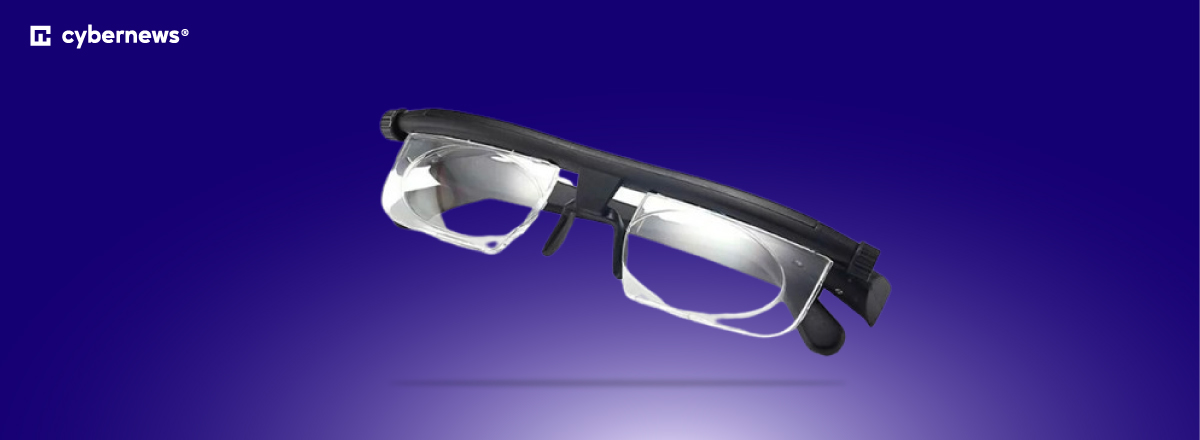
NexOptrics glasses are affordable, prescription-free glasses that rely on a dial-vision principle. Unlike bifocal glasses, which have only two focal points and visible lines, NexOptrics glasses function more like progressives, which provide a seamless multifocal transition with no lines.
In that sense, NexOptrics glasses enable wearers to adjust the focus for each eye individually. That means you can fine-tune your vision to your needs, so you can seamlessly go from reading to watching TV at a certain distance to close-up DIY work with a few turns of the dial.
NexOptrics glasses also support a wide degree of vision correction, from -6 diopters for nearsightedness to +3 diopters for farsightedness. However, just because a certain focal point suits you doesn’t mean you can use these glasses as a substitute for a clinical eye exam.
How do these glasses work?
Going from -6 diopters to +3 diopters, or adjusting the focus between any two numbers in that range, is super easy with NexOptrics glasses. All you’ll need to do is turn the dial to adjust your vision for your current activity, whether you're reading or watching TV.
This activates the glasses’ Dual Lens system, which consists of two slim, wave-shaped plates. When you turn the dial on the side of your glasses, the plates slide over each other, adjusting the lens’s strength.
But do keep in mind that you’ll have to adjust each lens manually. Depending on how often you switch between activities, this system can also be a drawback, as it requires frequent readjustment when switching tasks and a bit of fine-tuning to set both lenses to one focal distance, which is recommended.
Benefits of NexOptrics glasses
Despite being quite affordable, NexOptrics glasses offer more than a few practical advantages:
- Adjustable focus per eye. These glasses can go from -6 diopters to +3 diopters with a quick turn of the dial next to each eye, making them highly adjustable for all tasks.
- Single-pair convenience. Being able to adjust the focus means you can carry a single pair of glasses with you for both near- and far-sightedness.
- No prescription required. Users can quickly pick up a pair of NexOptrics glasses online, without the need for lengthy or expensive optometrist visits.
- Mechanical adjustment. NexOptrics glasses feature mechanical focus dials rather than relying on companion apps or batteries.
Taken together, these benefits reveal NexOptrics’ target audience: users seeking accessible, convenient glasses. That said, they can’t replace standard prescription eyewear or the best prescription smart glasses, as their optical quality can’t match prescription lenses.
Best NexOptrics glasses use cases
With what they offer, NexOptrics glasses can be useful in any of the following situations:
- Reading labels or menus. Their dials essentially act as a zoom function, making them great at focusing on any font size.
- Computer or laptop work. Whether you’re sitting in front of a large 32” monitor or a 15” laptop screen, you can easily adjust your focal distance to get some work done.
- DIY or close-up tasks. The ability to zoom in makes NexOptrics glasses useful for working on everything from painting to fabric crafts.
- Backup, emergency, and temporary glasses. NexOptrics make for great plan-B glasses in case you lose or break your main set, or while you’re waiting for your prescription lenses.
That said, these glasses may not be ideal for driving, due to the need for manual adjustments. The same goes for precision visual work and all-day wear, due to limited optical quality. And they probably won’t be helpful if you have a complex eyewear prescription or astigmatism.
How to adjust NexOptrics glasses for your eyes
Changing the focal distance on your NexOptrics glasses based on your current activity is quite straightforward. All you need to do is:
- Put on the glasses and look at what’s in front of you, be it a book or a canvas.
- Cover one eye with your hand and turn the dial for the uncovered eye until what you’re focusing on looks clear.
- Repeat the process by covering the other eye and turning the other dial, as well.
- Keep focusing on the activity and fine-tune both dials further.
- Repeat the whole process when switching between activities, as NexOptrics glasses aren’t a set-it-and-forget-it solution.
While fine-tuning should keep things in front of you clear, there’s a chance that your vision becomes fuzzy after a while. If that happens, or you feel eye strain, consider visiting an optometrist for a standard eye exam.
What do real users think about NexOptrics glasses?
To complete this NexOptrics glasses review, the Cybernews research team and I also aggregated customer feedback from Reddit, Trustpilot, and eyewear-related online forums. And things aren’t looking great there.
While you’ll occasionally come across comments from satisfied customers, the majority of feedback on the aforementioned review platforms is negative.
On the flip side, most of it seems to be related to the brand’s return and refund policies, not the glasses themselves. In fact, some unhappy customers go so far as to call NexOptrics a scam because of these policies.
NexOptrics glasses: are they really worth it?
NexOptrics glasses can work in some situations. For starters, they’re more affordable than smart glasses or prescription eyewear. They can also be useful as an adjustable backup pair, and they’re worth it for users who are comfortable with trade-offs.
However, you should probably skip NexOptrics glasses if you’re looking for prescription-level optics. The same goes for users with precise vision needs and those who want comfortable all-day wear that they won’t have to readjust constantly. If that’s what you’re after, you’ll probably want to do a standard eye test and go for actual prescription lenses.
FAQ
Do NexOptrics glasses work for both nearsightedness and farsightedness without switching glasses?
Yes, but NexOptrics glasses require manual adjustments. Switching from near vision, such as close-up DIY work, to far vision, like watching TV at a certain distance, requires manually turning the dials on the sides.
What vision range (diopters) do NexOptrics glasses claim to support?
According to NexOptrics, you can turn the dials on the glasses from -6 diopters to +3 diopters to adjust them for both near and far vision, respectively.
Are adjustable-focus glasses a good replacement for prescription eyewear?
No, they’re not. While adjustable multifocal eyewear like NexOptrics glasses can be a solid backup solution, these glasses can’t replace personalized prescription eyewear, especially when it comes to optical quality and long-term comfort.
Can NexOptrics glasses help if I have astigmatism?
No, purchasing NexOptrics glasses isn’t a good idea if you have astigmatism. Effective correction of this condition requires prescription eyewear, often with lenses tailored to “Cyl” and “Axis” values on your prescription.
What should I check (returns, domain legitimacy) before buying NexOptrics online?
While NexOptrics offers a 30-day money-back guarantee, you should still review the brand’s exact terms, as most negative feedback seems to be related to these policies rather than the glasses themselves.
-
Myopia. I
nternational Myopia Institute
-
Hyperopia (Farsightedness).
Cleveland Clinic