Oxiline Scale X Pro vs Withings: which smart scale is better?
Being behind major reports like The Mother of All Breaches and RockYou2024, our in-house cybersecurity experts and journalists provide unbiased, real-world testing and in-depth analysis.
We maintain complete transparency by openly sharing our testing methodologies with our audience.
Learn more
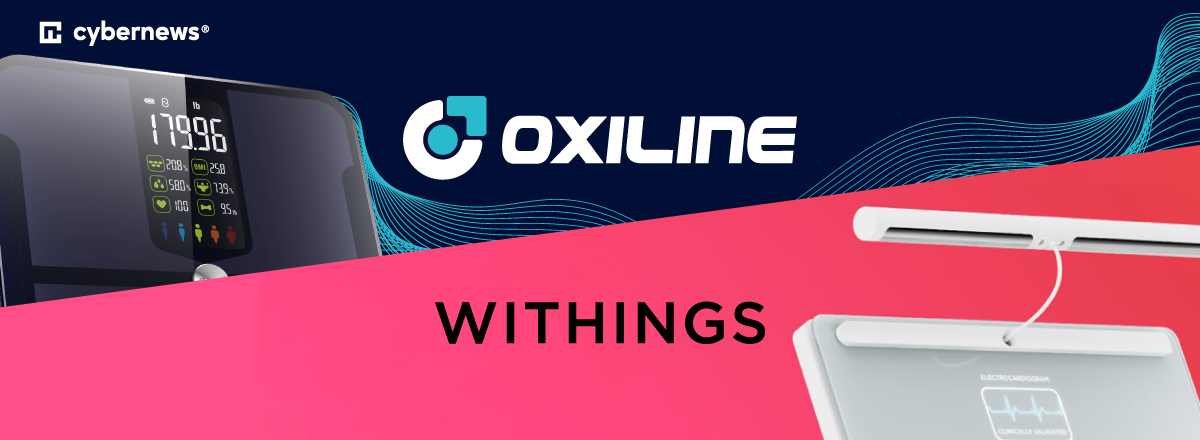
Oxiline Scale X Pro attracts users with its intuitive design and affordability. But does it have what it takes to dethrone the tried-and-tested Withings scales?
To find that out, the Cybernews research team and I have compared the two brands, combing through official product specifications and app details as well as user feedback on various forums and review sites.
You can see all we’ve learned about their specs, features, tracked metrics, accuracy, and usability in the following Oxiline Scale X Pro vs Withings review.
Disclaimer: Withings has a few smart scale models on the market, so this comparison doesn’t focus on a single model. It treats Withings as a category and references different models and their features when relevant.
According to Cybernews research, Withings smart scales edge out the Oxiline Scale X Pro by covering more metrics and offering advanced features. They may not have the strongest software, but plenty of user reviews attest to their hardware quality, consistent readings, and overall value within the Withings wellness ecosystem.
Oxiline Scale X Pro vs Withings overview
Before I go into details, here’s a quick comparison of the two smart scale brands, so you know what to expect.
| Brand | Oxiline Scale X Pro | Withings |
| Rating | ⭐ 4.8/5 | ⭐ 4.7/5 |
| Key features | 8 base metrics tracking | 20–40+ metrics |
| Best for | Beginners looking for a simple and affordable smart scale | Experienced users after a tried-and-true feature-rich smart scale |
| Price | $99 | From $129.95 to $499.95 |


Our team of in-house researchers, writers and editors reviews and analyzes health tech products using a research-driven approach. We gather data from multiple sources, fact-check all information, and conduct our research based on peer-reviewed studies, expert opinions, consumer ratings, and regulatory approvals.
You can learn more about how we test health tech products here.
About Oxiline Scale X Pro
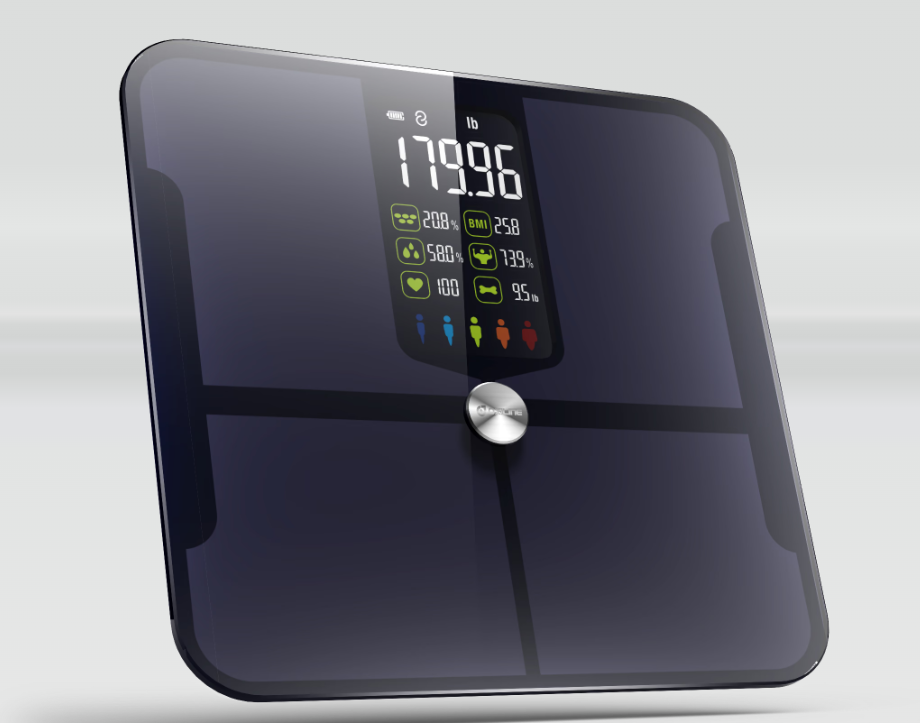
Oxiline Scale X Pro is a smart scale manufactured by its namesake health technology company. It features 2 Echo technology sensors that send a low-level electrical current through the user's body to collect 8 metrics, including weight, BMI, heart rate, body fat, muscle mass, and body water.
Oxiline Scale X Pro displays 6 of those metrics on its built-in screen, but relies on its companion app to show you the rest. The device syncs with the app via Bluetooth, giving you instant insight into your body composition and allowing you to track changes over time.
Unlike Withings, Oxiline is not a dedicated smart scale brand, so it flies a bit under the radar. However, it’s steadily gaining traction, which is why I found it worth considering.
About Withings scales
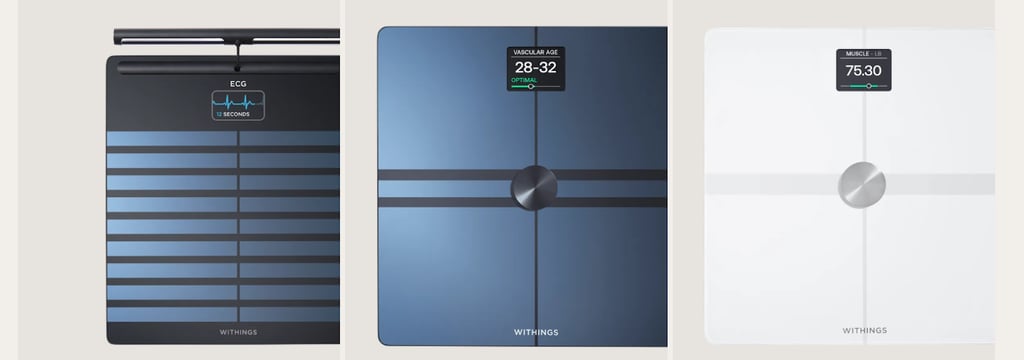
Withings is the company that came up with the first-ever smart scale in 2009, so it’s well-known for these health tech gadgets. It currently has several smart scales on the market, with Body Smart, Body Comp, and Body Scan being the most popular. While these differ in features and specifications, they all rely on the same base technology and data collection system.
Withings scales use multi-frequency bioelectrical impedance analysis (BIA) to estimate your body composition with high accuracy. They cover 20 to 40+ metrics, come with AAA or rechargeable batteries, and connect to their companion app via Wi-Fi or Bluetooth, depending on the model.
Withings Body Comp and Body Scan estimate advanced body composition metrics, such as vascular age, nerve health score, and pulse wave velocity. The latter even features a pull-out lever for assessing fat and body mass distribution across five body zones. It’s these types of innovations that keep the company ahead of the curve.
Oxiline Scale X Pro vs Withings: specs and features compared
To make differences easy to spot, my colleagues at Cybernews and I put together an Oxiline Scale X Pro vs Withings specs and feature table. Compare them to see what each brings to the table.
| Product | Oxiline Scale X Pro | Withings Scales |
| Design and build | Tempered glass and ABS material | Tempered glass platform with plastic casing |
| Display | 5" Color VA Display | 2.8’’–3.2’’ high-resolution color screens |
| Metrics tracked | 8 | 20–40+, depending on the model |
| Sensors | 2x Echo™ X Sensors | 4–14 in the base, plus 4 in the handle (if included) |
| Precision | +/-0.5% | ~50g, according to claims |
| App | iOS and Android, free to use | iOS and Android, free to use, but includes a paid Withings+ subscription for advanced features |
| Connectivity | Bluetooth | Wi-Fi and Bluetooth |
| Battery life | Several months | 15 months to a year, or a rechargeable battery, depending on the model |
| Special features | Unlimited data storage | Pull-out handle for segmental body composition analysis (in Body Scan) |
As the table shows, Oxiline Scale X Pro steers clear of bells and whistles. It’s a simpler, foot-only smart scale with 2 electrodes. It tracks only basic body metrics and has a user-friendly app that organizes them for insights, making it a good fit for new or casual users.

Oxiline Scale X Pro vs Withings: metrics tracked and insights
All modern smart body scales tend to cover the same metrics like body weight, body fat, muscle mass, body water, BMI, and skeletal muscle, because that’s the type of data BIA can capture or estimate. That’s exactly what Oxiline Scale X Pro offers, along with heart rate, heart index, subcutaneous fat, and muscle rate.
In contrast, Withings goes all out on metric coverage, especially in its higher-end models. Basing their estimates on multi-frequency BIA, both Body Comp and Body Scan provide insights into vascular age, pulse wave velocity, and nerve health score. Body Scan even goes so far as to include complete segmental body composition analysis, supported by data collected by its pull-out handle.
Now, neither can claim complete accuracy, as dozens of user testimonials about fluctuations in metrics for both Oxiline and Withings confirm. However, smart scales are still useful for tracking changes over time, helping you notice trends in your body composition.
Oxiline Scale X Pro vs Withings: data accuracy and sensor technology
Bioelectrical impedance analysis uses electrodes to send low-level currents through the body. These currents measure the resistance they encounter in muscle, fat, and water, and use that to calculate various body metrics.
Working in this way, BIA can only be so accurate. Factors such as body hydration, skin temperature, and blood flow can easily affect tissue conductivity and alter the results.
So, you should take even the base metrics that Oxiline Scale X Pro offers with a grain of salt, let alone Withings’ advanced readings. That’s backed up not only by numerous user comments on day-to-day metric fluctuations they’ve noticed, but also multiple studies on smart scale accuracy.
Of course, calibrating the scales every once in a while can help. You may also get more consistent readings if you place the device on a hardwood floor and use it under roughly the same conditions each day. Still, the numbers you get should only help you track your progress, not replace clinical measurements or serve as any kind of diagnosis.
Withings vs Oxiline: app and user experience
App-wise, the Oxiline Scale X Pro vs Withings battle begins neck and neck. Both are compatible with Android and iOS devices and free to download. Both also offer real-time insights into readings and use charts and graphs to present your progress over longer periods.
Like its hardware, the Withings app goes the extra mile, featuring pregnancy tracking and exercise plans, and lets you focus on trends with eyes-closed mode. It also integrates with more third-party apps, while Oxiline sticks to Apple Health and Android Health Connect.
However, the Oxiline app might be more beginner-friendly, as it presents readings on a 360° human body model to make them easier to grasp, stores unlimited data, and offers direct data exports. This app also seems to have a more intuitive interface, especially compared to Withings’ latest update, which hasn’t landed well with everyone.
What tipped the scale toward Oxiline, however, was finding more complaints about syncing issues in Withings reviews, which you wouldn’t expect for a device with both Wi-Fi and Bluetooth connection.

Pricing and availability
The only place you can currently buy the Oxiline Scale X Pro is its website, where the device costs $99. I’ve seen listings on Walmart and Amazon, but they’re often out of stock and sometimes priced higher than retail, so the official store is the safest bet.
On the other hand, Withings scales are much easier to find. Thanks to its brand recognition, most major retailers carry its scales at prices that closely match the official site. You can get Body Smart for $129.95, Body Comp for $229.95, and Body Scan for $499.95.
Of course, occasional discounts may knock a few percentage points off, but even then, Withings remains pricier than Oxiline.
As for what you get, both brands keep it simple: the scale, a user manual, and either batteries or a charger. They also offer free shipping and a 30-day money-back guarantee, so you can try either one without much risk. Where Oxiline pulls ahead is the warranty. It offers lifetime coverage as opposed to Withings’ 2-year plan
What do users think about each model?
Being more popular overall, Withings scales have much more user feedback than the Oxiline Scale X Pro. But opinions seem mixed on both.
Withings scales are praised for their robust feature set and fairly consistent readings compared to many competitors. Users also like how the scales fit into the broader Withings ecosystem.
On the flip side, syncing and app problems come up often, and quite a few reviews mention difficulties with returns despite the 30-day money-back guarantee.
Positive feedback on Oxiline focuses on its simplicity and user-friendliness. We’ve also read an overwhelming number of comments about its helpful customer support. The main gripe is inaccuracy, as body fat and other metrics can be off. While recalibrating helps a bit, this is no small matter.
Remember, these are trends seen in reviews and don’t represent every buyer. Your experience may be entirely different. But it’s still worth knowing before you make your final decision.
How we evaluate smart body scales
The Cybernews team and I reached these conclusions about Oxiline Scale X Pro vs Withings using a strict scoring framework. Here’s the criteria we used and why they matter:
- Data depth & trend clarity (25%). We pay the most attention to the body metrics a scale captures and to how clearly it presents readings. Having access to detailed data through charts, graphs, and trends over set time intervals makes progress tracking much easier.
- Ease of use (20%). My team also spends a great deal of time checking how user-friendly a smart scale is. Nobody wants to lose hours on setup, regularly waste time on syncing, or struggle to find their way around an interface.
- Consistency/accuracy expectations (20%). Although complete accuracy is impossible to achieve, our goal is to come as close as possible. That’s why we look into users' comments about fluctuations in smart scales’ instant readings and trends.
- App features & integrations (15%). A smart scale is only as helpful as its app, so how it offers insights and integrates with other well-known wellness apps also plays a role in our rating.
- Price & ongoing costs transparency (15%). Once we have all the other features and capabilities in mind, we consider them against the app’s cost. The goal isn’t just to find an affordable option but one that offers good value for your money.
- Privacy & data controls (5%). My colleagues and I wrap up our comparison by looking into each smart scale company’s data protection practices. This tells us how your personal health data is handled responsibly.
Oxiline Scale X Pro vs Withings: which one to choose?
Whether you should choose the Oxiline Scale X Pro vs Withings depends on your needs. Think about what metrics you need tracked, how many people will use the product, what app integration you’d prefer to have, and what return policy you’re comfortable with.
Scale X Pro is the lower-cost, Bluetooth smart scale whose basic body metric coverage and user-friendly app make it perfect for beginners. But you’d have to be okay with its less-proven parent company and inaccuracies, which are an issue even in advanced models, as our Oxiline Scale MD Pro vs Hume Body Pod shows.
Withings scales win in more categories, offering a wider range of products, more body metrics tracking, and more advanced features overall.
Their long track record and broad product ecosystem also work in their favor, which is evident even in comparison with Garmin or Hume Health scales. Just keep in mind that reviews suggest their hardware is far more reliable than their software.
FAQ
Which Withings scale is the closest match to Oxiline Scale X Pro on features and price?
The Body Smart, Withing’s lower-end scale, is the closest match to Oxiline Scale X Pro. It has the most basic body metric coverage and is the least expensive of all Withings smart scales.
Are smart-scale body fat and muscle mass readings accurate, or just estimates?
All smart scale body fat and muscle mass readings are estimates, not calculations. That’s because the bioelectrical impedance analysis they rely on is sensitive to fluctuations caused by factors like hydration, temperature, and even the time of day.
Does Oxiline Scale X Pro work with Apple Health or Fitbit, and how reliable is syncing?
Oxiline Scale X Pro syncs with Apple Health and Android Health Connect, but not with Fitbit. There aren’t too many user reports on syncing to go on, but most comments paint the app in a positive light.
Do Withings scales require Wi-Fi, or can they work over Bluetooth only?
All Withings scales have both Wi-Fi and Bluetooth connectivity, unlike the Oxiline Scale X Pro. This makes syncing data and tracking progress across multiple devices seamless.
What’s the best way to get consistent readings from any smart scale?
The best way to get consistent readings from any smart scale is to place it on hard floors and use it under similar conditions every day. Weighing in the morning, before any food or drink, while wearing minimal clothing, is what works for most users.
References
3 resources
- Bioelectrical impedance analysis. What does it measure? D.A.Schoeller. 2000. Annals of the New York Academy of Sciences
- Justine Frija-Masson, Jimmy Mullaert, Emmanuelle Vidal-Petiot, Nathalie Pons-Kerjean, Martin Flamant, Marie-Pia d'Ortho. 2021. JMIR mHealth and uHealth Accuracy of Smart Scales on Weight and Body Composition: Observational Study
- Michele L. Patel, Lindsay N. Wakayama, Gary G. Bennett. 2021. Obesity, A Research Journal Self-Monitoring via Digital Health in Weight Loss Interventions: A Systematic Review Among Adults with Overweight or Obesity