76% of fast-food chains leaked sensitive data. Feeling hungry?
Your fast-food run could be feeding hackers, not just your appetite.
Image by changju kang | Shuttersock

 Follow us
- A new report found 76% of fast-food chains leaked sensitive data in the past year.
- Payment cards, payroll records, and customer data are increasingly ending up on hackers' menus.
- AI impersonation scams and third-party vendors are creating new risks across the quick-service restaurant industry.
Key Takeaways by nexos.ai, reviewed by Cybernews staff.
Your next drive-thru burger could come with more than just fries. A new report by VikingCloud reveals that 76% of fast-food chains leaked sensitive data in the past year – with 40% of those leaks including customer payment card data.
What's more, 94% of leaders running quick-service restaurants (QSRs), such as McDonald's, Chick-fil-A, and Wendy's, said they felt confident in their cyber defenses – a major disconnect between reality and what appears to be wishful thinking.
Surprisingly, that confidence persisted even though 80% of fast-food chains across the US and Canada experienced at least one cyber incident in the past 12 months, VikingCloud said.






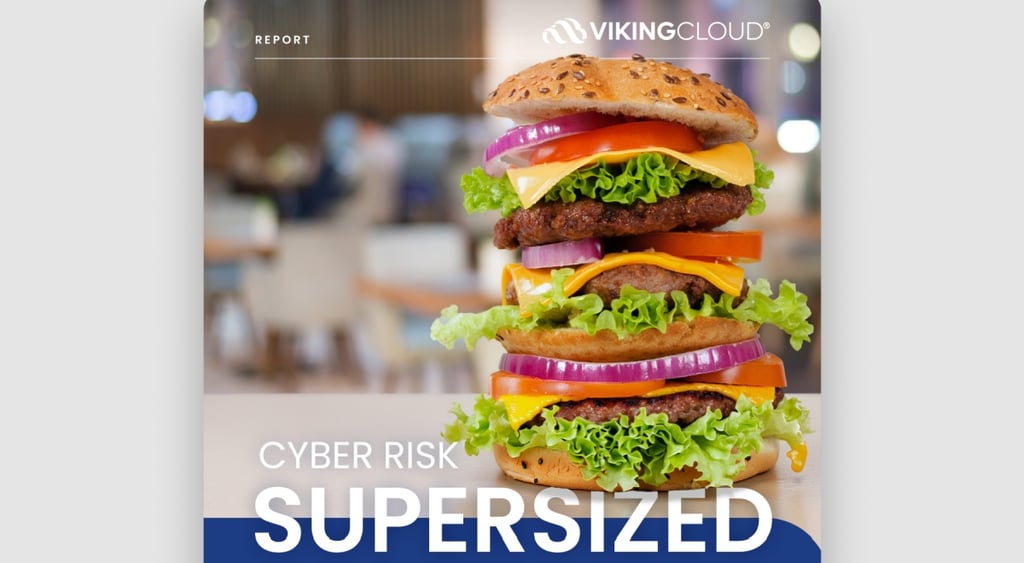
Wednesday’s report, “Cyber Risk, Supersized: The 2026 QSR & Fast Casual Restaurant Report,” also stated that 80% of leaders reported experiencing some form of social engineering attack – a trend bolstered by the growing use of AI tools to carry out attacks. But more on that later.
Payment data tops the menu
It’s not just customer data that is at risk, the cloud compliance services firm said.
Breaking down the numbers, the survey found that the sensitive data exposed during attacks over the past 12 months included:
- Payment card data (40%)
- Customer personal information (32%)
- Internal system credentials (30%)
- Employee payroll records (30%)
"Restaurant operators spend years building brands that earn customer loyalty and drive revenue. One cyberattack could put all of that at risk – yet leaders are minimizing the threat of their complex ecosystem," said Kevin Pierce, President and COO of VikingCloud.
"A 500-location chain could have hundreds of different digital environments, connected by shared vendors, systems, and credentials. One weak location is all it takes to open a door into the entire enterprise,"said Pierce.
AI-powered scams and third-party vendors widen risk
VikingCloud says AI is helping cybercriminals create more convincing social engineering scams – from fraudulent customer refund requests to employee-targeted IT help desk schemes – and a good portion (36%) of franchise owners feel either somewhat or completely unprepared to counter them.
Other widely used AI-fueled scams include AI-generated vishing and phishing attacks to steal staff credentials and bypass multi-factor authentication, QR code or signage tampering that redirects customers to phishing sites, and bad actors posing as vendors or suppliers to collect payment for fake invoices.

Direct attacks on third-party vendors are also raising the stakes, as more than two-thirds of restaurant chains are linked to at least six outside vendors, with another 14% reportedly using about a dozen.
"Each integration – delivery app, POS system, payroll provider, ISP – runs through infrastructure someone else controls," VikingCloud said, noting that a single establishment could have anywhere from 26 to 99 IoT-connected devices, giving an attacker multiple angles of entry.
This leads to the issue of a restaurant chain with hundreds, if not thousands, of locations. Citing the sandwich chain Jersey Mike's and its nearly 3,300 locations, the report points out that with inconsistent security across multiple locations, a cyberattack at one establishment could easily give hackers keys to an entire enterprise.
Central security strategy lacking
Several shocking facts that came out of the research related to data breach reporting procedures, an integral part of any good cyber strategy, and something VikingCloud says has likely led to a significant underreporting of incidents across the sector.
The first is that more than one-third of the security leaders surveyed said they initially mistook a real cyberattack for a routine technical glitch, leaving many incidents unrecognized.
And for material breaches that were recognized, VikingCloud found that nearly half of leaders admitted to keeping that information from C-suite executives or the board.



Stay updated with our latest stories and follow us on social media
Be the first to discover new stories, ideas, and updates from our team.
The VikingCloud report also says that only about a third of restaurant chains have standard cybersecurity procedures in place, such as 24x7 monitoring and tested incident response plans.
78% of leaders said they have postponed system patching to avoid disrupting service, with over a quarter doing so frequently, and nearly half say their employees are also bypassing standard security protocols to prioritize speed and customer service.
Check if your data has been leaked
