The internet really is a bunch of tubes: they’re fiber-optic and underwater
It might seem that the internet is up there in the cloud, airdropped everywhere, and catching signals from the sky. Actually, this apparent weightlessness of the world’s most important commodity relies on terribly earthly infrastructure, writes Samanth Subramanian.

Image by Cybernews.

 Follow us
It might seem that the internet is up there in the cloud, airdropped everywhere, and catching signals from the sky. Actually, this apparent weightlessness of the world’s most important commodity relies on terribly earthly infrastructure, writes Samanth Subramanian.
Nearly two decades ago, those “in the know” laughed when US Senator Ted Stevens of Alaska described the internet as a “series of tubes” during a congressional debate over net neutrality.
What tubes? Is he nuts? The web is in the air, the cyberspace is virtual – let’s all forget those wires, cables, and switchboard operators.
Stevens died in 2010, four years later, but his remark lives on as a meme and as a discriminatory idea that the aged shouldn’t interfere with the affairs of the young.





Actually, though, he wasn’t that wrong, as Subramanian’s book “The Web Beneath the Waves: The Fragile Cables That Connect Our World” makes clear.
The internet isn’t an abstraction: it indeed relies on truly earthly infrastructure, depending on very physical cables, most running deep under the world’s oceans. Yes, they’re tubes, of the fiber-optic kind – and they’re also the world’s information superhighways.
“Gray zone” activities
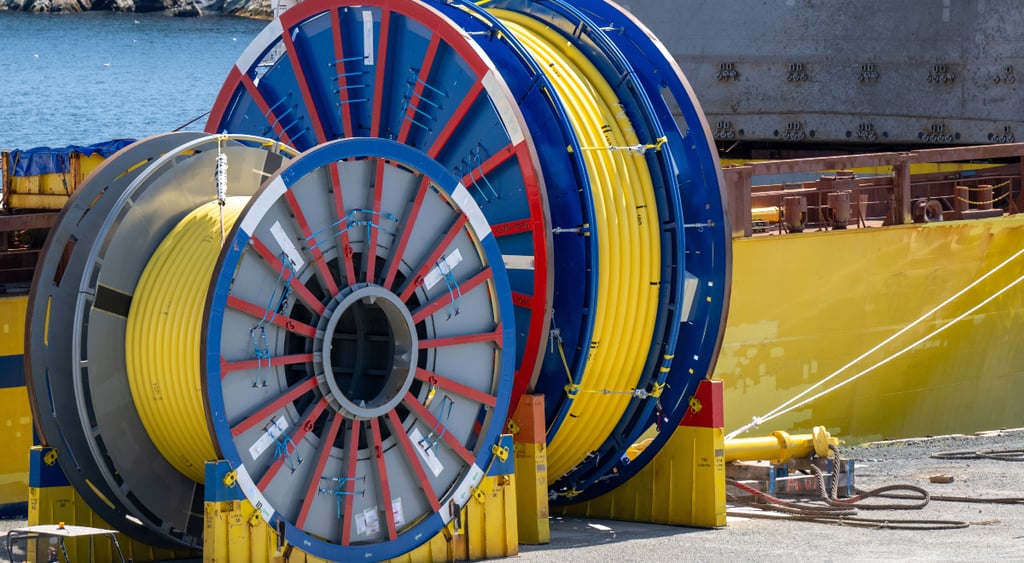
The details are impressive. The core of a typical data cable consists of fibers of glass, each no thicker than a human hair, through which light transmits information at roughly 125,000 miles per second – satellites, even constellations of satellites, have no chance here.
Most of these cables sit on the sea floor silently and conduct 95% of the world’s internet traffic. There are 870,000 miles of these cables under our oceans, connecting the US East Coast to the UK, France, or Spain, running between Newfoundland and Greenland or various Asian coasts.
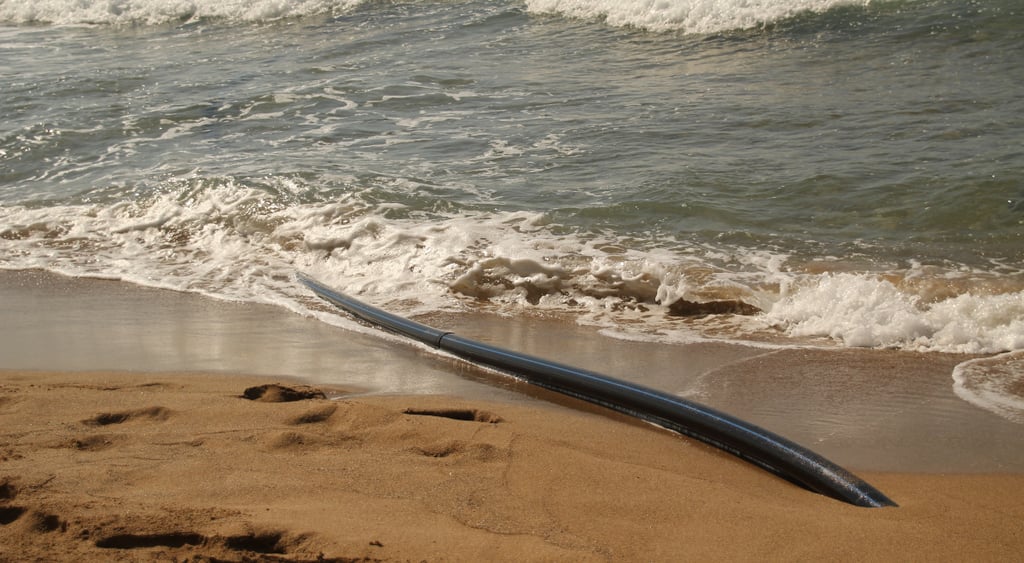
Among the shortest cables anywhere is the forty-one-mile tyke between the Isle of Man and Northern Ireland. Among the longest is 2Africa, which spans 28,000 miles and has branches in many different countries.
One brief cable even stretches between Guningtou in Taiwan and Dadeng Island in China, countries that otherwise have little to do with each other.
“For now, Antarctica is the only major uncabled landmass on Earth, but it won’t be for long. The US has plans,” Subramanian wrote – before Donald Trump began rambling about the need for America to claim Greenland from Denmark, of course.
The cables are also tremendously vulnerable: fragile, exposed to natural disasters, marine accidents, and sabotage.






Weirdly, even though Subramanian writes quite a bit about the strange happenings in the Taiwan Strait, he doesn’t really care much about damaged cables in the Baltic Sea, where the obvious suspect of such shenanigans is Russia.
In December, The Sunday Times also reported that Russian vessels and submarines have been actively surveying undersea gas and communications links around the UK and Ireland.
But Subramanian is, of course, right to talk about China and Taiwan as an example of how blurred the lines between sabotage and an accident are.
In 2023, for example, a couple of Chinese ships cut two domestic undersea cables running out from Taiwan’s main island to Nangan, a smaller island located near mainland China.
The cables are tremendously vulnerable: fragile, exposed to natural disasters, marine accidents, and sabotage.
On paper, the ships were a fishing boat and a cargo vessel, but the Chinese navy so frequently uses ostensibly civilian craft for quasi-military “gray zone” activities that it’s impossible to be certain whether the cuts to these cables were accidental or not.
Snooping on the sea floor
For Taiwan, a heavily digital island nation, the preoccupation with protecting its cables – always implicitly from China – is almost existential because when the connection vanishes, life simply stops.
People can’t pay taxes, get paid, order food, or register for medical care. If a country or a region is offline, it’s almost as if it doesn’t exist.
Plus, there’s snooping. With fiber optics, devices known as “intercept probes” can be installed in cable landing stations, reading and storing copies of the data as it transits through the junction.
Out at sea, one can tap fiber optic cables on the ocean floor – a task so seemingly straightforward that the very internet carried by these cables offers assistance for aspiring tappers, Subramanian writes.
Astonishingly, on the Fiber Optic Association’s antique website, for instance, a “How to” guide admits: “First of all, tapping fiber is easy. You can buy optical splitters that plug into the network like a cable and divert a small amount of the light to a separate receiver.”
Sure, sure, the majority of internet data flowing through these cables today is encrypted – but it can still spill all kinds of beans. Free and open internet? Forget it, says Arturo Filasto, the executive director of the Open Observatory of Network Interference.
Even if security agencies aren’t able to access the encrypted data itself – the contents of an email, or the numbers in a spreadsheet on the cloud, or the amount of money in a bank transfer – they can glean the metadata, the data about the data.
“And that can be quite juicy by itself,” Filasto said. And here’s what Michael Hayden, a former director of the NSA, said a decade ago: “We kill people based on metadata.”
According to Subramanian, countries tap each other’s cables all the time, and nowhere is that more evident than in the dynamic between the two great powers of our age, the United States and China.
The US usually quite bluntly tries to stymie China’s rise in cable laying, employing the help of institutions like the World Bank. The Chinese have also been engaging their own throttle, delaying permits to any cables planned through the South China Sea.
Big tech politics
The geopolitical angle of the undersea cable ecosystem isn’t surprising. If you control transmission lines of information, well, the wheel is yours. Submarine telegraph cables were integral to British dominance in the 19th century, after all.
Today, though, what the cables signify is the dominance of the big tech overlords. Sure, powerful nations can assert sovereign control over how data is used and where it’s stored – but the poorer ones find that if they want better connections at all, they must relinquish some of their sovereign control to Western tech giants.

Those giants are, of course, not states but companies: Google, Amazon, Meta, Apple, and others.
It’s no secret that tech giants have controlled a large majority of web traffic for some years. What is less well known is that undersea fiber-optic cables themselves are also increasingly becoming controlled by the world’s most powerful tech companies.
Such projects can only be taken on by players with the deepest pockets, and the techies certainly are. 2Africa has been spearheaded and principally funded by Meta at an estimated cost of $1 billion.
Another cable called Waterworth is envisioned to nearly circumnavigate the globe from the US East Coast to California via South Africa and Australia will run considerably more, and will also be funded by Meta.
If you control transmission lines of information, well, the wheel is yours. Submarine telegraph cables were integral to British dominance in the 19th century, after all.
Subramanian points out that while today’s tech conglomerates are not official state actors, such companies are just as enmeshed in geopolitical concerns.
“Neither Meta nor Google is likely to sell capacity to Chinese or Russian companies, requiring those countries to lay bigger cables of their own,” says the author.
“Not very long ago, it made little sense to speak of ‘American cables’ or ‘Chinese cables.’ But as Meta and Google engirdle the earth in cables, and as governments panic about security, the corporate and nationalist constrictions of the internet will align and overlap.”
Unlock exclusive Cybernews content on YouTube.