Higher screen exposure in infancy linked to anxiety later in life
Sure, getting a few minutes peace and quiet by sitting your little one in front of a tablet or a smartphone sounds tempting. But this could lead to slower decision-making and higher anxiety later in your kid’s life.

Image by Cybernews.

 Follow us
Sure, getting a few minutes peace and quiet by sitting your little one in front of a tablet or a smartphone sounds tempting. But this could lead to slower decision-making and higher anxiety later in your kid’s life.
Researchers from Singapore studied 168 children for more than a decade and found that those exposed to screen time in infancy (that’s before they turn two) showed “accelerated maturation of brain networks involved in visual processing and cognitive control.”
Sure, one could interpret this as good news: after all, the world we live in today revolves around images, especially online.
However, that then translates into slower-decision making in childhood and higher anxiety symptoms in adolescence.
“Higher infant screen time was associated with a steeper decline in visual-cognitive control network integration from ages 4.5-7.5 years. Deliberation time, in turn, was associated with greater anxiety symptoms at age 13,” the study found.












Dr Huang Pei, the study's first author, further explained that “accelerated maturation happens when certain brain networks develop too fast, often in response to adversity or other stimuli.”
“During normal development, brain networks gradually become more specialized over time. However, in children with high screen exposure, the networks controlling vision and cognition specialized faster, before they had developed the efficient connections needed for complex thinking,” said Pei.
“This can limit flexibility and resilience, leaving the child less able to adapt later in life.”
The study tracked the same children over more than a decade, with brain imaging at multiple time points, to map a possible biological pathway from infant screen exposure to adolescent mental health.
Screen time is not recommended at all for 1-year-olds and should be limited to no more than one hour per day for 2-year-olds.
This is the first paper on screen time to incorporate measures spanning over ten years, highlighting the long-lasting consequences of screen time in infancy.
Screen exposure in infancy was measured through self-reporting by the children’s parents, and MRI scans were taken of the kids’ brains at ages 4.5, 6, and 7.5 to examine the physiological changes.
Children were also given cognitive tests at age 8.5 to measure their decision-making behavior. Finally, they had to complete an anxiety questionnaire at age 13.
What is to be done? Well, the World Health Organization puts it like this: “To grow up healthy, children need to sit less and play more.”
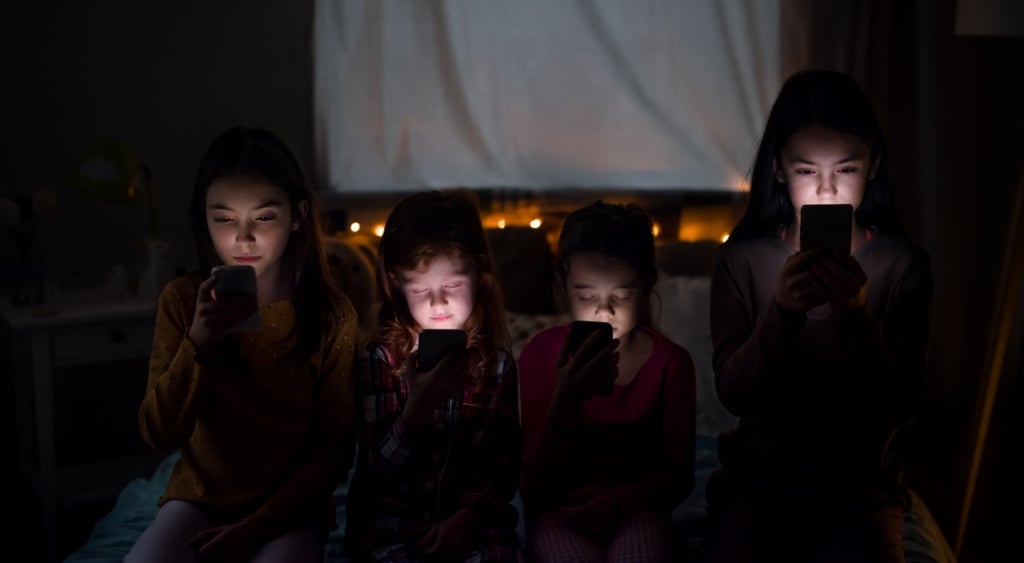
Screen time is not recommended at all for 1-year-olds and should be limited to no more than one hour per day for 2-year-olds.
Clearly, the researchers say, the levels of screen time diverge from WHO recommendations. What’s worse, they examined data mostly collected between 2010 and 2014, before the COVID-19 pandemic, when everyone was sitting at home: levels of screen exposure are surely even higher today.
The researchers suggest that shared reading may provide the kind of enriched, interactive experience that passive screen consumption lacks, including back-and-forth engagement, language exposure, and emotional connection.
We’ll just add that touching some grass outside is also a good idea, but yes, if you can’t, grab a book or engage with your child in any other way but the screen.
Unlock more exclusive Cybernews content on YouTube.