Waymo responds: overseas assistants don’t remotely drive US robotaxis
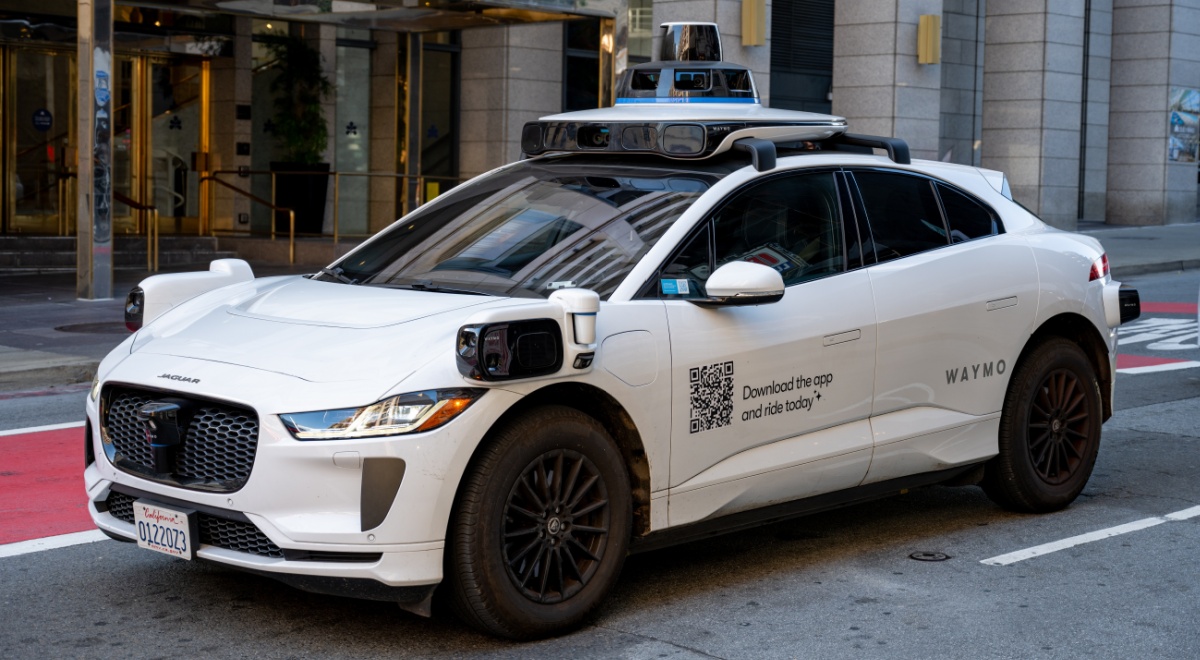
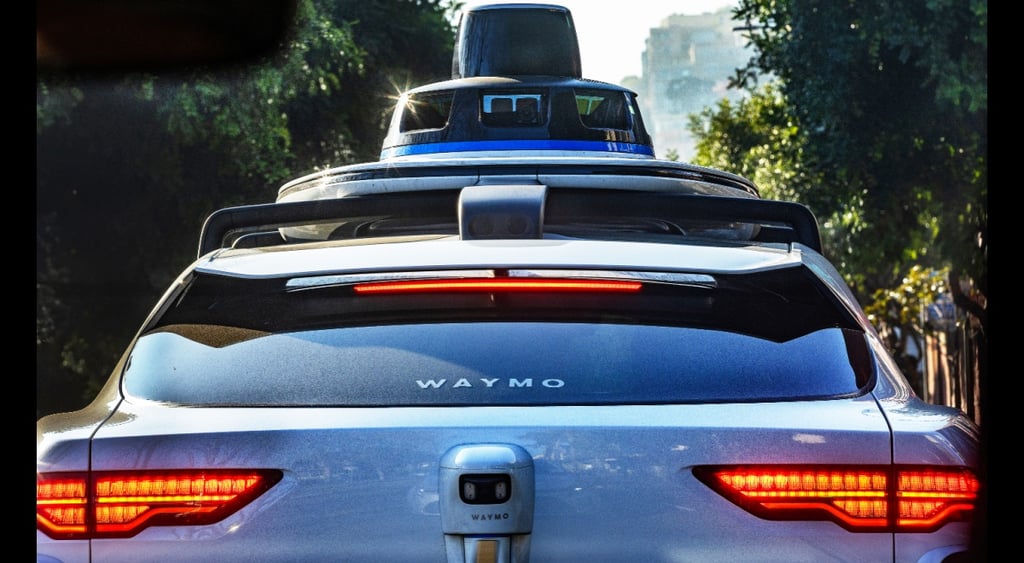
Waymo, in a letter addressed to US lawmakers on Tuesday, defended its use of remote human assistants in the Philippines to help “guide” its robotaxis in complex driving scenarios – stating that only in “rare circumstances” could human helpers direct an autonomous vehicle to actually drive.
Smith Collection/Gado/Getty Images

 Follow us
Waymo, in a letter addressed to US lawmakers on Tuesday, defended its use of remote human assistants in the Philippines to help “guide” its robotaxis in complex driving scenarios – stating that only in “rare circumstances” could human helpers direct an autonomous vehicle to actually drive.
- Waymo insists its overseas assistants do not remotely drive US robotaxis – but a tense Senate hearing left lawmakers demanding far more transparency.
- Questions now center on where remote operators are located, how much influence they actually have, and what safeguards protect the systems guiding US vehicles.
- As autonomous fleets expand, regulators are warning that real-time remote access could raise privacy, cybersecurity, and even national security risks.
Key Takeaways by nexos.ai, reviewed by Cybernews staff.
The Alphabet-owned autonomous vehicle (AV) maker has been under fire since Waymo’s Chief Safety Officer (CSO), Dr. Mauricio Peña, admitted in Senate testimony on February 3rd that its self-driving vehicles are sometimes guided by humans in difficult driving situations.
Now, it appears Waymo has sought to clarify what that human involvement actually looks like, according to a Reuters report published on Tuesday.





Senate scrutiny pushes Waymo to clarify remote assistance
Leading the charge during that Senate Committee on Commerce, Science, and Transportation hearing, Senator Ed Markey of Massachusetts had called the use of “transatlantic backseat drivers” to make decisions about AVs navigating US roadways “completely unacceptable.”
The Senator also raised concerns about the cybersecurity risks posed by overseas "critical safety employees," questioning whether the operators held US driver’s licenses or even understood American traffic laws.
Peña told the lawmakers, “They do not remotely drive the vehicles. Waymo asks for guidance in certain situations and gets human input. But the Waymo vehicle is always in charge of the dynamic driving task.”
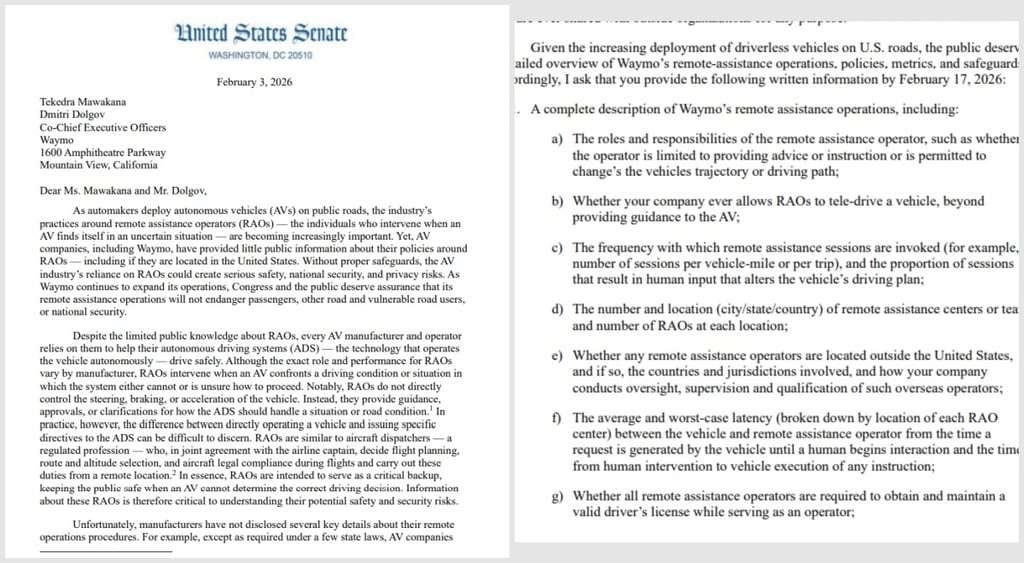
Still, the entire hearing seemed to raise more questions than it answered, prompting Markey to launch an industry-wide investigation into the practice of employing remote human operators and to ask Waymo (and other AV companies, including Tesla and Zoox) to clarify whether remote workers can control steering, braking, or acceleration.
The five-page letter also pressed the self-driving units on how many operators were employed and where they were physically located; what communication latency exists between vehicle and human assistant; how often remote interventions occur; and what training, oversight, and cybersecurity safeguards govern those systems.
Waymo says no remote driving in live operations
In its response to Markey's official inquiry – and February 17th deadline – Waymo said it has not used remote driving or “tele-operations” to perform driving tasks in on-road robotaxi operations, Reuters reported.
The company reportedly told Markey that, in rare circumstances, some US-based personnel could prompt a stopped autonomous vehicle to move forward at about 2 miles per hour for a short distance to exit a travel lane – but that such instances have not occurred outside of training scenarios.
The clarification aims to narrow the scope of human involvement following scrutiny of whether overseas assistants – including those in the Philippines – play a more direct operational role.
"Without proper safeguards, the AV industry’s reliance on RAOs could create serious safety, national security, and privacy risks."US Senator Edward Markey (D- MA)
Waymo has previously acknowledged that remote personnel provide support when vehicles encounter unusual or complex situations, even publishing a Waypoint blog about using remote assistance operators (RAOs) in 2024.
"Much like phone-a-friend, when the Waymo vehicle encounters a particular situation on the road, the autonomous driver can reach out to a human fleet response agent for additional information to contextualize its environment," the company stated in the post.
Waymo also maintains that these assistants do not steer, brake, or accelerate vehicles during live public-road operations and would have no ability to actually hack into the AV's system to take over the vehicle – addressing at least one of the more than a dozen questions raised in the oversight inquiry.
Still, the distinction between “guiding,” “prompting,” and “driving” remains murky, as Markey’s oversight letter requested far more than a simple yes-or-no answer about tele-operations.
Furthermore, while Reuters reported on portions of Waymo’s response, the full text of the company’s letter has not been made public.
It remains unclear whether Waymo addressed each of Markey’s detailed questions or provided additional technical data on operator locations, intervention frequency, or system security controls beyond the statements summarized in media coverage.
Multiple investigations are already underway by the National Transportation Safety Board and the National Highway Traffic Safety Administration (NHTSA) into school bus safety issues, following a Waymo robotaxi hitting a child last month.
Senate letter raises cybersecurity and national security concerns
Waymo’s previous blog post describes its remote support structure as its “fleet response” system.
In demonstration videos, the company shows how a vehicle can request additional context from a remote support agent when it encounters an ambiguous scenario.
The agent reviews live camera feeds and a 3D visualization of what the vehicle perceives, then may provide guidance or propose a path for the vehicle to evaluate – transmitting real-time roadway imagery and sensor data beyond the vehicle itself.
Waymo says the car remains in control and makes the final decision. But the movement of live camera feeds – potentially capturing pedestrians, license plates, homes, and infrastructure – further raises privacy questions about how that data is secured, stored, and whether it crosses international borders.
Accompanied by several demonstration videos, Waymo explains that when a vehicle encounters an ambiguous scenario, it can request additional context from a remote support agent.

The agent reviews live camera feeds and a 3D visualization of what the vehicle perceives, then may provide guidance or propose a path for the vehicle to evaluate – meaning real-time roadway imagery and sensor data are transmitted beyond the vehicle itself.
Waymo says the car remains in control and makes the final decision on how to proceed.
But the transmission of live camera feeds – potentially capturing pedestrians, license plates, homes, and critical infrastructure – raises broader privacy questions about where that data is routed, how it is secured, and whether it crosses international borders.






Other autonomous vehicle developers have publicly acknowledged similar human-in-the-loop systems, arguing that remote assistance helps vehicles safely navigate edge cases that artificial intelligence alone may struggle to interpret.
In a separate inquiry in Missouri, state Senator Stephen Webber requested more information about remote call centers used when law enforcement needs to communicate with Waymo vehicles.
In that response, Waymo said it maintains a US-based event response team trained to serve as a direct point of contact for officers at incident scenes, providing operational decisions and technical assistance.
Still, for regulators, the issue may extend beyond whether remote workers are technically “driving” the cars.
Real-time data transmission and remote system access introduce cybersecurity and oversight considerations that go beyond marketing definitions of autonomy.
Lawmakers have also cautioned that increasingly connected vehicles could pose national security risks if compromised – particularly as transportation systems are considered critical infrastructure and vehicles have been weaponized in past attacks.
Unlock more exclusive Cybernews content on YouTube.