Waymo admits robotaxis are “guided” by humans in the Philippines
Waymo's Chief Safety Officer (CSO) has acknowledged that its robotaxis sometimes rely on live human guidance from overseas operators – a practice raising major security concerns among US lawmakers.

Image by Rosemarie Mosteller | Shutterstock

 Follow us
Waymo's Chief Safety Officer (CSO) has acknowledged that its robotaxis sometimes rely on live human guidance from overseas operators – a practice raising national security and cybersecurity concerns among US lawmakers.
- Waymo markets its robotaxis as fully autonomous — but lawmakers just learned humans overseas sometimes step in.
- Senators warn that remote assistance could introduce cybersecurity and national security risks few consumers understand.
- The revelation lands as federal safety investigations into Waymo’s school-zone incidents continue to widen.
Key Takeaways by nexos.ai, reviewed by Cybernews staff.
The “fairly shocking” revelation surfaced during a two-hour Senate Commerce Committee hearing, where Waymo CSO Dr. Mauricio Peña and other Waymo and Tesla executives testified on the future of autonomous vehicles and the push for a federal safety standard.
Senators stunned by "human-assisted" autonomy
“I want to start with a little-known fact about autonomous vehicles," US Senator Edward Markey (D-MA) said as he opened his questioning.





“When an AV such as a Waymo encounters a situation on the road that it doesn't know how to handle, the Waymo phones a human friend for help,” Markey asked rhetorically.
Markey identified that "human friend" as a “so-called remote assistance operator human being" – whose job it is to help guide the self-driving car through a difficult driving environment.
Peña, attempting to downplay the disclosure, explained that the human agents were only there to “provide guidance” to the robotaxis.
“They do not remotely drive the vehicles. Waymo asks for guidance in certain situations and gets human input. But the Waymo vehicle is always in charge of the dynamic driving task,” Peña said.
The senator, seemingly unimpressed by the answer, repeated the question yet again. "Yes or No. Does Waymo employ humans remotely to help its vehicles navigate difficult driving scenarios?"
Overseas operators raise cybersecurity red flags
Waymo touts its robotaxis as fully autonomous and solely reliant on AI to navigate, actually referring to its artificial intelligence as "The Waymo Driver."
Furthermore, instead of “human agent,” Waymo calls these remote assistants “live agents” or “rider agents” (notably absent is also “AI agent”).
“But the human being helps the vehicle to navigate those difficult driving conditions. Is that correct?” the senator asked again.
“Yes,” said Peña.
Calling the entire premise "completely unacceptable," the senator remarked on how “the public knows almost nothing about those people, despite the crucial role these operators play in AV safety.”
“Having a transatlantic backseat driver is downright dangerous in our country,” he said.

Markey said the security implications of hiring “critical safety employees” in the Philippines, who "may need to intervene in a split second" to help navigate AVs located in the United States, were unprecedented.
"Having people overseas influencing American vehicles is a safety issue," Markey said, rattling off a list of security concerns, including the introduction of “tremendous cybersecurity vulnerabilities.”
Additionally, the senator questioned whether the overseas operators held US driver’s licenses, whether they understood US road rules, if there was a chance the human agents could receive “out-of-date information,” and why Waymo was shipping American jobs overseas.






In response, Peña assured the senator that Waymo also had live human agents operating in the United States, although when asked for a breakdown, the CSO could not provide the number of agents working domestically or abroad.
"I find that very curious that someone who's running the program has no idea how that workforce breaks down," Markey commented.
Markey said the discovery has prompted a new investigation into the use of remote assistance operators across the entire robotaxi industry, suggesting that other US autonomous vehicle manufacturers may also be engaging in the same practice.
On a positive note, when asked by another lawmaker about Waymo's cybersecurity protections, Peña responded that “we take a number of measures to identify vulnerabilities, perform risk assessments, and then mitigate those vulnerabilities.”
He cited one design example in which Waymo AVs critical safety systems are protected from external connections, explaining that "you cannot actually hack into it, connect to it, and drive it remotely.”
Safety scrutiny intensifies after school-zone incidents
The overseas "live agent" admission comes barely two weeks after a Waymo robotaxi struck a child in front of an elementary school in California on January 23rd.
Thankfully, the child was not seriously injured, but the accident quickly triggered yet another federal safety review of Waymo’s self-driving vehicles and how they operate around school buses.
Multiple investigations are already underway by the National Transportation Safety Board and the National Highway Traffic Safety Administration (NHTSA) following several incidents in which Waymo vehicles drove past school buses while students were getting on or off.
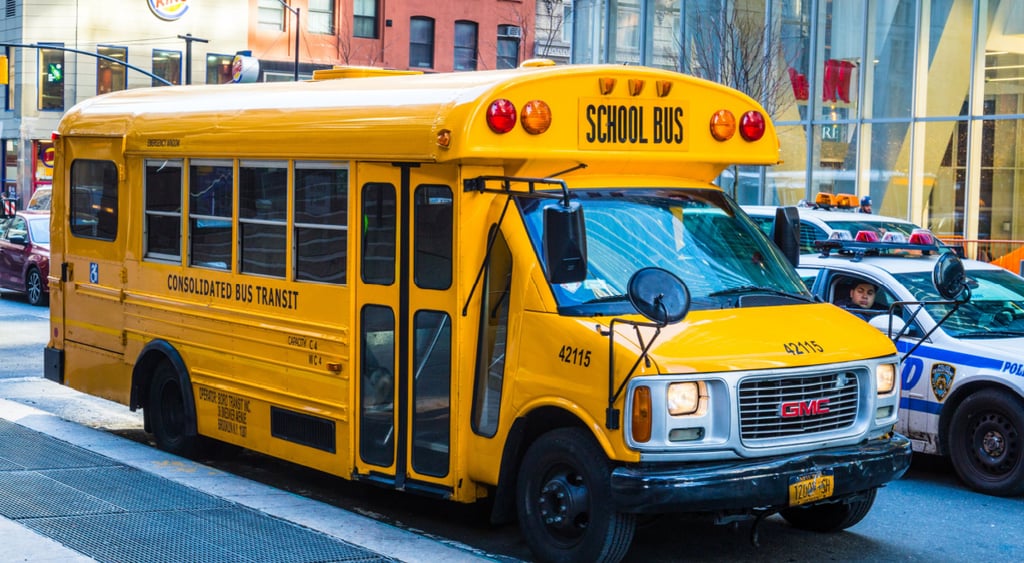
The school bus safety concerns also prompted Waymo to update the software on over 3,000 self-driving vehicles in December.
Currently, Waymo has over 2,000 autonomous vehicles operating in Phoenix, San Francisco, Los Angeles, Austin, and Atlanta, with its robotaxi service set to launch in Miami, Dallas, Houston, San Antonio, and Orlando over the coming months.
According to Waymo, its vehicles perform over 50,000 "fully driverless" public rides each week.
Unlock more exclusive Cybernews content on YouTube.