Incogni vs DeleteMe vs Aura: which data removal service wins?
Being behind major reports like The Mother of All Breaches and RockYou2024, our in-house cybersecurity experts and journalists provide unbiased, real-world testing and in-depth analysis.
We maintain complete transparency by openly sharing our testing methodologies with our audience.
Learn more

Almost every website you’ve ever signed up for stores some part of your personally identifiable information (PII). While this has become a normal part of using the internet, many of these sites also share or sell user data to third parties. When that information circulates online, it can increase the risk of spam, scams, and even identity theft.
This is where data removal services like Incogni, DeleteMe, and Aura come in. Each promises to track down and remove your personal information from data broker databases and other online sources. While all three services offer solid protection and are worth considering, I wanted to find out which one is the best choice for users who only plan to use a single service.
Together with the Cybernews research team, I took a closer look at how these tools perform in a head-to-head comparison of Incogni vs DeleteMe vs Aura. We evaluated each service across multiple categories to see how they stack up – and below are our findings.
Incogni vs DeleteMe vs Aura overview
Before I explore these tools in detail, let’s first take a look at their most important features:
| Service | Incogni | DeleteMe | Aura |
| Rating | |||
| Overall rank | #1st out of 5 data removal tools | #3rd out of 5 data removal tools | #4th out of 5 data removal tools |
| Availability | USA, Canada, UK, Switzerland, Norway, Iceland, Liechtenstein, and the EU | USA, Canada, Brazil, UK, Ireland, France, Belgium, the Netherlands, Germany, Italy, Singapore, and Australia | USA |
| Coverage | 420+ (3,420 with custom removals)+ data brokers | 850+ data brokers | 140+ data brokers |
| Support | 24/7 | 24/7 | 24/7 US-based |
| Free version | ❌ No (but there’s a free digital footprint checker) | ❌ No (but there’s a free scan) | ❌ No |
| Free trial | ❌ No | ❌ No | ✅ Yes (14 days) |
| Credit monitoring | ❌ No | ❌ No | ✅ Yes (3 bureaus) |
| Price | From $7.19/month when billed annually (with a code CNDEAL) | From $8.71/month when billed annually | From $12/month when billed annually |
| Discounts | Up to 55% off annual plans with code REMOVEME | Up to 40% off | Up to 75% off |

About Incogni
Incogni was founded in September 2021 as a subsidiary of Surfshark, a VPN-focused company you likely already know. A year later, it became its own subscription-based data removal service that offers 24/7 monitoring and privacy protection.
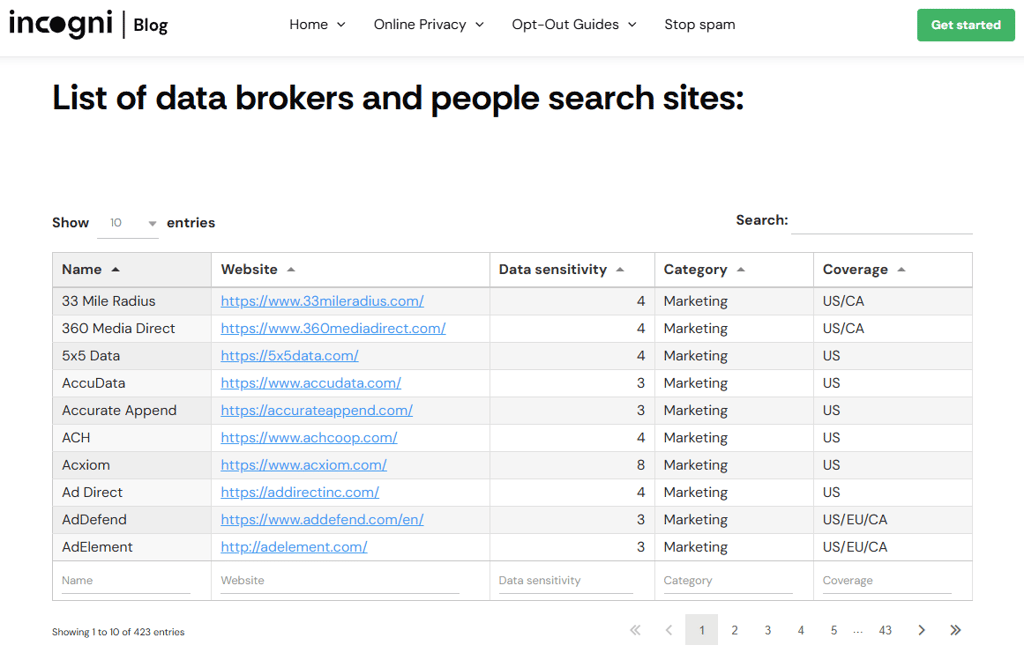
Today, Incogni covers over 420+ (3,420 with custom removals) data brokers, sending automated removal requests as soon as it finds your PII on these websites. While you can send these opt-out requests yourself, Incogni significantly simplifies and accelerates the process.
It also dispatches repeat requests to data brokers that don’t comply right away, submitting new requests every 60 to 90 days to ensure your data stays off the internet. This is Incogni’s advantage, as doing it yourself would require an enormous amount of time and effort.
About DeleteMe

DeleteMe is one of the veterans of the data removal industry. It was founded in 2010 and has since grown to cover a broad range of websites, sending removal requests to more than 850 data brokers.
That said, its entry-level plan covers only about a tenth of that. The rest sit behind pricier plans, while 550+ brokers are only there because of previously successful custom removal requests. And while that’s certainly a drawback, knowing you can get your data off such a vast number of sites is still great.
DeleteMe makes up for its fragmented coverage with extra features. It lets you mask your email address, phone number, and multiple credit card numbers, thereby significantly reducing spam.
About Aura
Founded in 2014, just 4 years after DeleteMe, Aura can also be considered a vet, as it has been in the data removal game for over a decade now. Back then, it was known as iSubscribed, but it changed its name after its 2019 merger with Intersections Inc.
This merger also vastly expanded Aura’s services. Today, the company offers a suite of digital safety tools, including comprehensive identity theft protection with 3-bureau monitoring, as well as a VPN, antivirus, and password manager.
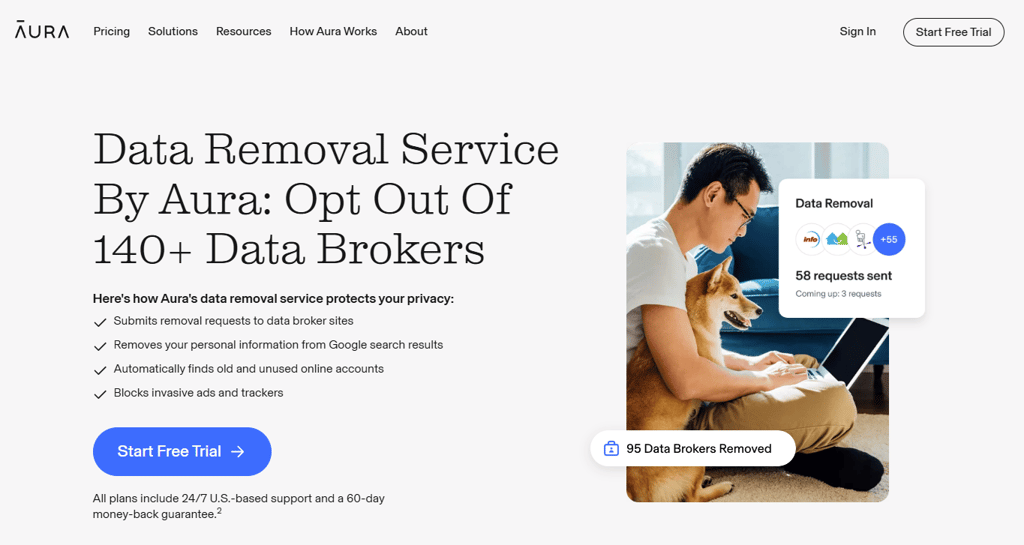
If we’re talking only data removal, Aura covers more than 140 data brokers. It scans all major people-search platforms and broker sites and sends automated opt-out requests in your name. It also offers daily re-scans and follow-ups via request re-submissions.
Incogni vs DeleteMe vs Aura: data broker coverage and removals
While all three services cover major data brokers, they also take slightly different approaches to data removal.
Incogni monitors more than 420+ (3,420 with custom removals) broker websites, both in and outside the US. And while that’s not the highest number here, the provider also offers a fully automated service. It works exceptionally fast and sends data removal requests without you lifting a finger.
Meanwhile, DeleteMe claims it can remove your data from more than twice as many data brokers. However, more than 550 of its 850+ covered websites require custom requests, of which you can submit only 40-60 per year, depending on your plan.
On the other hand, Aura keeps things simple. Its humble integrated database includes only about 140 people-search sites and data brokers, most of which are based in the US. So, although Aura also takes an automated approach like Incogni, it may not be ideal for international users.
Incogni vs DeleteMe vs Aura: pricing and plans
Shift the focus of the Aura vs DeleteMe vs Incogni comparison to pricing, and the latter takes the crown.
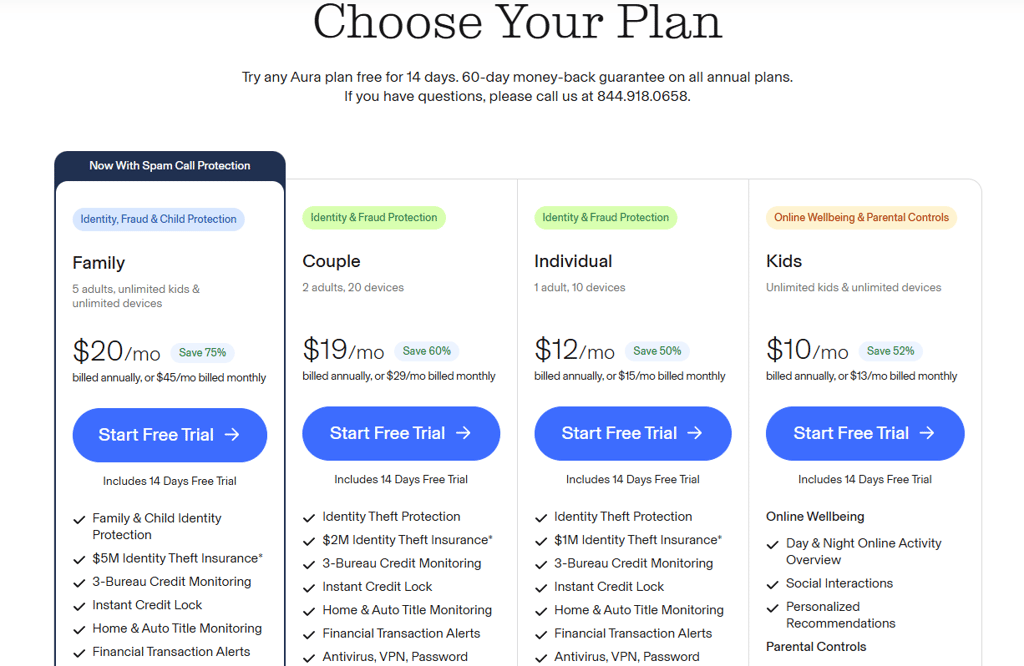
Aura is the least affordable, starting at $12/month for the Individual plan (annual subscription). That said, this covers up to 10 devices and includes VPN and antivirus protection, as well as a password manager. It bundles everything in with full-blown identity theft protection, 3-bureau credit monitoring, and up to $1 million in insurance. There’s also a 14-day free trial here.
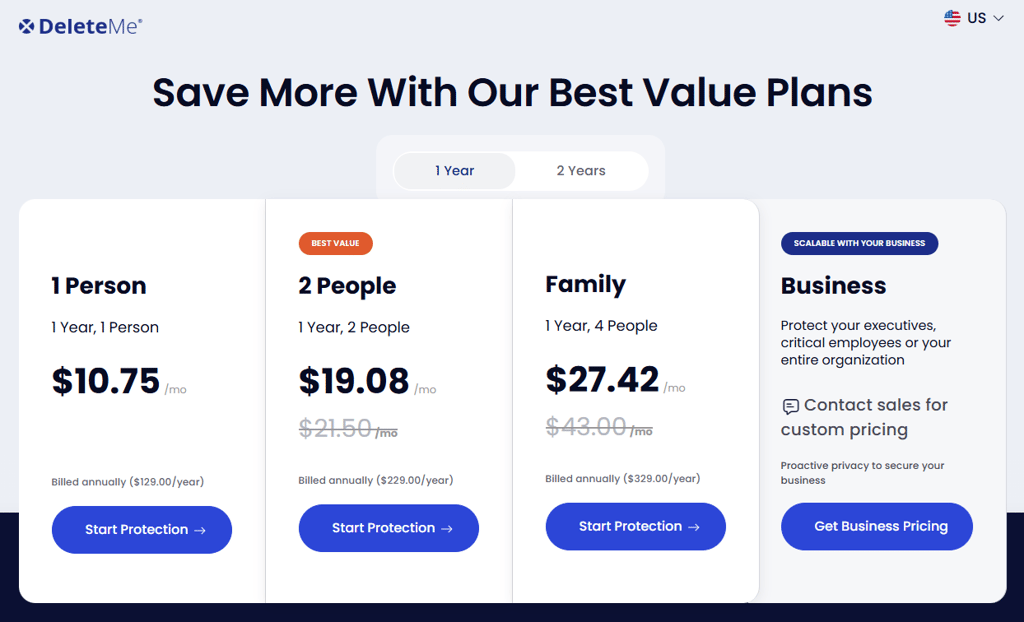
At $10.75/month with annual billing only, DeleteMe is slightly cheaper than Aura. It also offers stronger international coverage with more broker websites, though only for custom requests. But once you factor in that this only gets you data removal, the deal becomes less outrageous.
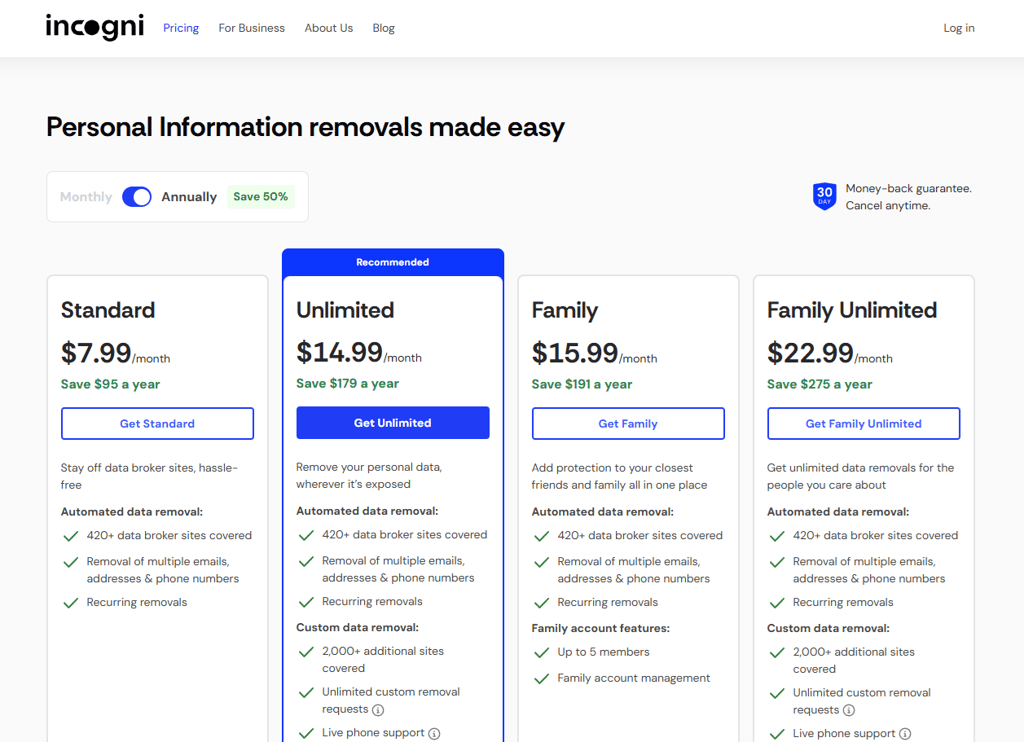
If you don’t want to commit, Incogni offers monthly and annual subscriptions, with yearly payments coming out to $7.19/month for the Standard plan (with a code CNDEAL). Meanwhile, Unlimited offers much the same, but with unlimited custom requests. Although there’s no free trial, all plans include a 30-day money-back guarantee.
Incogni vs DeleteMe vs Aura: security and privacy policy
After reviewing the privacy policies of each data removal service, I can confidently say that all 3 take security very seriously.
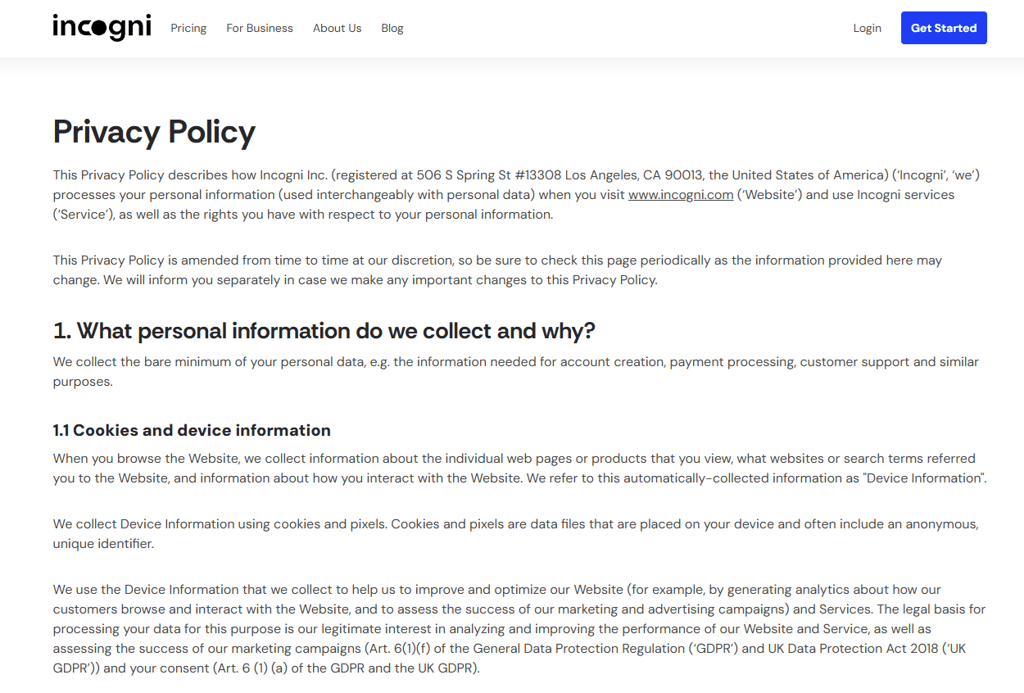
Although it’s the shortest of the bunch, Incogni’s privacy policy clearly outlines everything you need to know. It describes the provider’s compliance with GDPR and CCPA, explains what data it collects and with whom it shares it, and states that it doesn’t sell your PII.
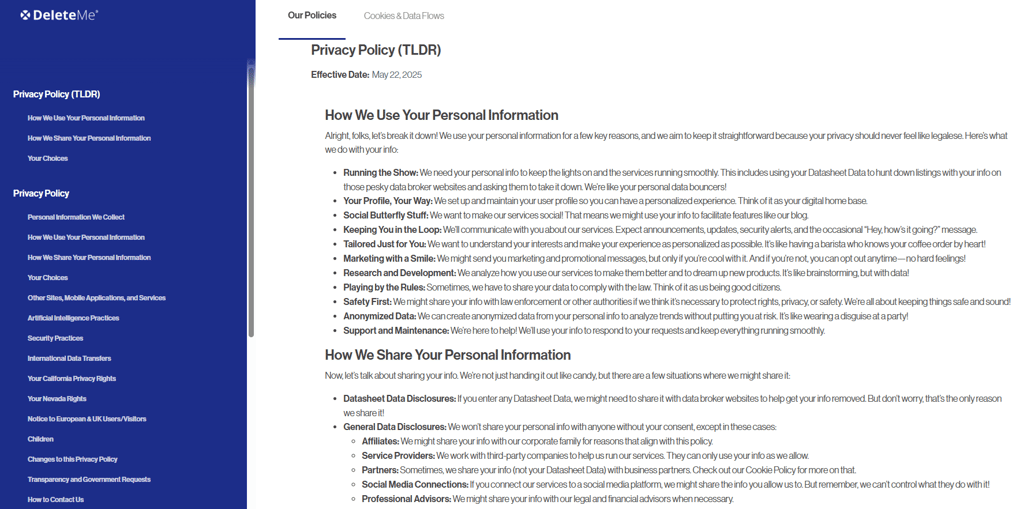
While longer than Incogni’s, DeleteMe’s privacy policy was also a breeze to go through. I really appreciated the TL;DR version, which explains the basics of how your data is used and shared. And just like Incogni, DeleteMe complies with CCPA, and it doesn’t sell your data either.
Aura’s privacy policy was the longest, but that’s because Aura offers a much broader range of services. Nonetheless, it, too, was clear about its GDPR compliance and its commitment not to sell your data, while explaining with whom it shares it and how.


Incogni vs DeleteMe vs Aura: user experience
As far as ease of use is concerned, Aura edges slightly ahead of the competition in this Aura vs Incogni vs DeleteMe showdown.
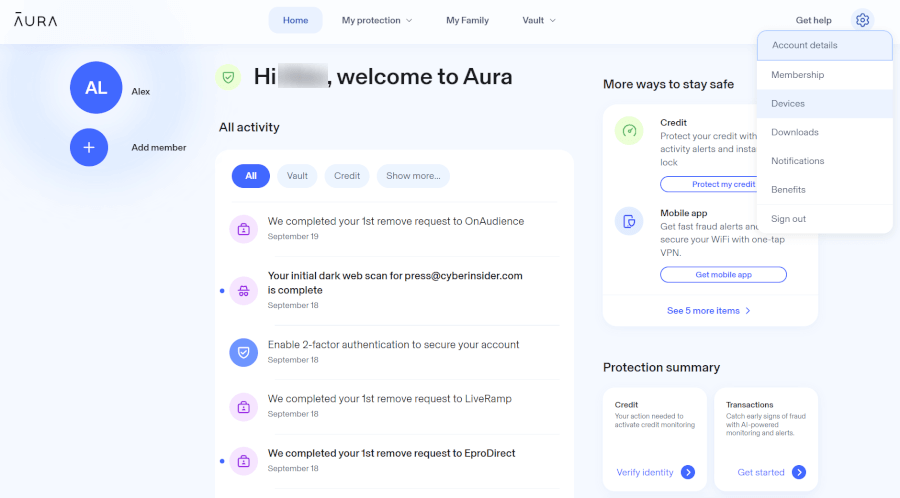
Its dashboard makes it super easy to set everything up and see what’s been done so far and what’s pending. Aura will also update you on any new requests with detailed and precise reports, so you’ll know exactly what’s happening at all times.
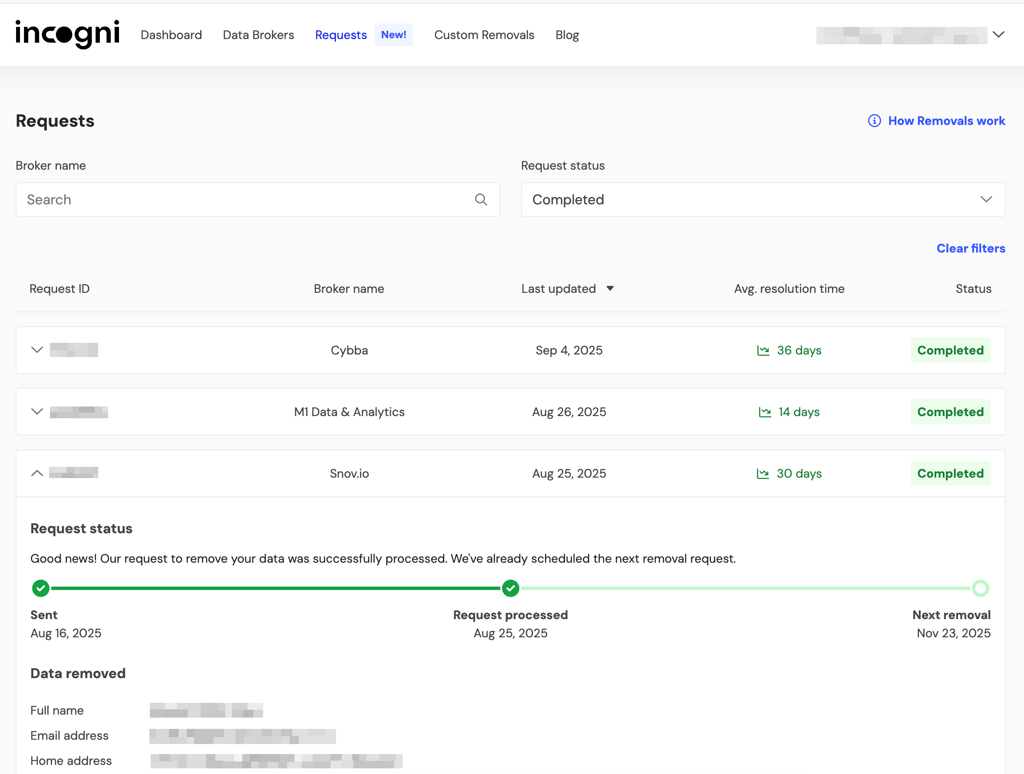
Incogni’s browser-based dashboard is just as easy to navigate. It offers quick access across all operating systems and provides a detailed overview of all your data removal requests. That includes request status, average resolution time, and broker name. The search bar at the top also makes it easy to find what you’re looking for.
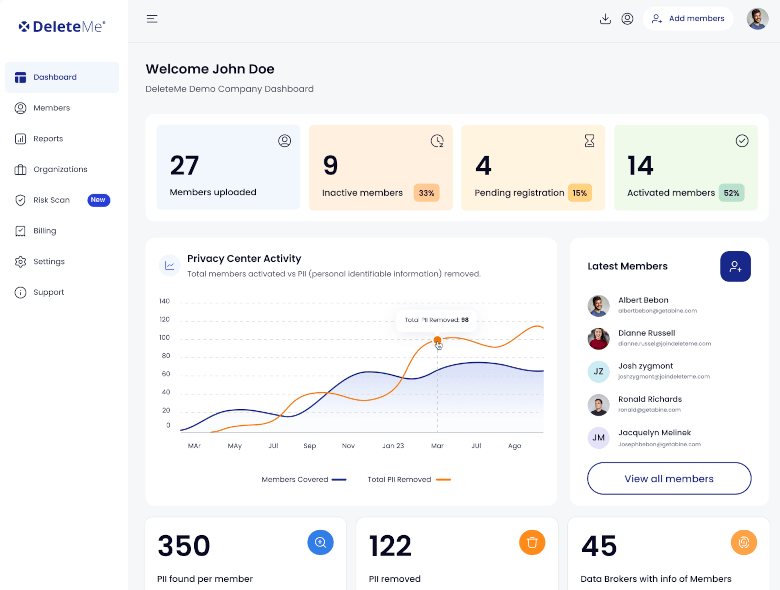
DeleteMe’s interface doesn’t pull any punches either. It’s well-organized into sidebar menus, so you’ll have no issues navigating reports and account options, or finding your way to DeleteMe’s privacy tools like email, phone, and credit card masking.

Our methodology: how we reviewed the tools
Let’s make one thing clear: there was no hands-on testing here. Instead, the team and I thoroughly analyzed all three tools and evaluated them based on the following criteria:
- Functionality (30%). First up, we looked at the number of data brokers covered and the depth of removal requests. We also examined each tool’s monitoring capabilities.
- Pricing and value (20%). From there, we reviewed the tools’ pricing plans and assessed their value based on what’s available in each tier.
- Privacy policy (20%). Up next, we dove into privacy policies to gauge transparency and check how each tool handles, shares, and protects your data.
- Ease of use (15%). Data removal tools are supposed to make life easier, so we also evaluated their interfaces and ease of setup.
- Reputation and feedback (15%). Lastly, we scoured the web for real-user reviews and expert opinions to gauge each tool’s online standing.
Incogni vs DeleteMe vs Aura: which one should you choose?
After compiling all the data the Cybernews crew and I gathered for this Incogni vs Aura vs DeleteMe comparison, I’m confident that you can’t go wrong with any of these services.
Incogni kicks things off with broad coverage of data brokers. It also excels at automation, handling removal requests with zero work. That’s precisely what makes it the perfect choice for users who want a low-effort service they can set up once and forget about.
Aura, on the other hand, covers only a third of people search websites and brokers that Incogni does. However, it also includes a full security suite with identity theft protection, 3-bureau credit monitoring, and a range of extras, such as a VPN and antivirus. This makes it the go-to option for users who want an all-in-one tool.
Then there’s DeleteMe, a data removal service that requires some manual verification and custom requests. But if you can get behind it, it offers the best overall coverage, both in terms of international availability and the number of brokers it deals with.
Other reviews from Cybernews:
Optery vs DeleteMe vs Incogni: which data removal service protects you best?
Kanary vs Incogni: Which data removal service is better for your needs?
Incogni vs Onerep: which data removal tool protects your privacy better?
Incogni vs Norton LifeLock: Which data removal service is right for you?
FAQ
Do Incogni, DeleteMe, and Aura work outside the U.S.?
Yes, all 3 data removal services offer international coverage. That said, Incogni is the best overall option here, as it covers the most countries and a wide range of brokers.
What types of data do these services remove?
Incogni, DeleteMe, and Aura focus on deleting PII. They remove your name and aliases, current and past residential addresses, phone numbers, email addresses, date of birth and age, employment history, marital status, and more.
Can I use more than one data removal service?
Yes, you can. In fact, doing so might be the best way to deal with data brokers, as these three services cover different websites and pack in unique features, like Aura’s identity protection.
Are data removal services worth the cost in the long run?
Absolutely! These tools can save you precious time by automating data removal requests and sending additional submissions if your data resurfaces later on.
How long does it take for data to be deleted from broker sites?
This depends on the data broker. Some comply within hours, while others drag out the process for weeks. In most cases, though, it’ll take between 7 and 14 days.