A spy in the sky? Flock’s first responder drones grow in popularity
“Instead of sending an officer first, you can send a drone.”
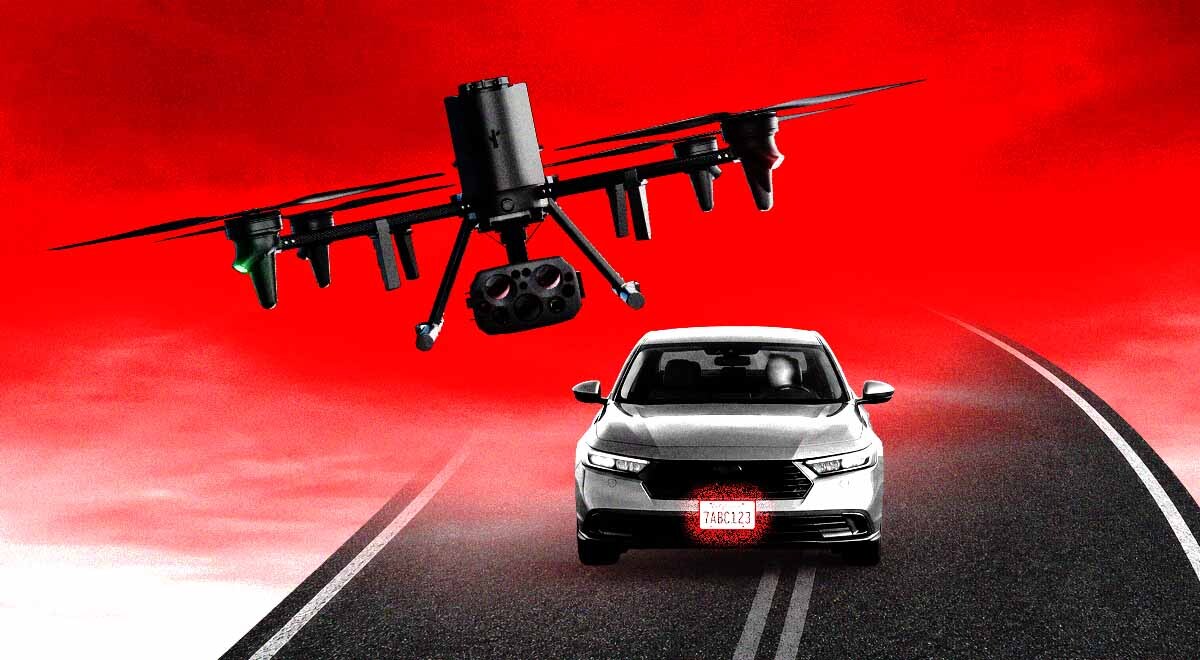
Image by Cybernews

 Follow us
- Flock Safety says drones are its fastest-growing business as police departments face backlash over license plate readers.
- Its drones launch from rooftop docks and can reach 911 scenes quickly before officers arrive.
- Flock has more than 200 drone customers, while over 1,000 agencies have FAA waivers for automated drone operations.
- Privacy advocates warn police drones could expand surveillance into yards, roofs, and windows without people knowing.
Key Takeaways by nexos.ai, reviewed by Cybernews staff.
Flock Safety CEO Garrett Langley says its fastest-growing business segment is drones.
An increasing number of police departments across the US are refusing Flock Safety automated license plate readers (ALPR) over privacy concerns and growing abuse cases.
The company, however, may not go out of business any time soon, as its Drone as First Responder (DFR) technology is finding its customers among emergency services.
“Drones are probably our fastest growing business right now,” Langley said during an appearance on the All-In podcast.




He explained that the drones sit in climate-controlled rooftop docks at police precincts or fire departments.
“When a 911 call happens, instead of sending an officer first, you can send a drone,” he added.




Stay updated with our latest stories and follow us on social media
Be the first to discover new stories, ideas, and updates from our team.
Langley shared a story about a woman from Dallas who called 911 to report a man who was walking with a gun in a gas station late at night, making her feel unsafe.
Instead of sending a human officer, the police launched a drone flying at 400 feet at 60 miles per hour, which reached the location in under a minute. Zooming in revealed that the man was carrying a lighter, not a gun.
A Flock Safety spokesperson told Business Insider that the company has over 200 DFR customers, including police departments and private companies.
Critics argue that Flock’s ALPR network, with around 120,000 cameras installed in 49 states, enables a new level of surveillance.
Unlike traditional license plate readers, Flock uses AI to capture and analyze details of every car that comes into view. The information is then uploaded to a searchable database, which can be accessed by police departments across state lines.
Whenever a car on a “hotlist” is captured by Flock’s cameras anywhere in the US, the system issues an alert.
“Jeopardization of privacy”
Flock is one of the many companies in the US developing DFR technology, so privacy concerns are only likely to grow.
As of February 2026, over 1,000 public safety agencies, including police and fire departments, had received Federal Aviation Administration (FAA) waivers needed to automate drone operations and launch a DFR program.
The Electronic Frontier Foundation (EEF) warns that the “normalization of police DFR programs jeopardizes privacy” in communities across the country.
Drones can capture footage from areas typically inaccessible to a human patrol officer, such as backyards, roofs, and even through windows, according to the EEF.
Because they can do it at a distance, subjects of surveillance are left “completely unaware of the spy in the sky.”
A growing backlash against Flock has led to its cameras being vandalized or blocked, while the open-source community is developing tools to help avoid being captured in ALPR view.
Hiding from drones, however, may prove to be a much more complicated task for both criminals and potential victims of abuse.
A recent Washington Post investigation reveals that at least 46 officers were accused of misusing the system to stalk their romantic interests or their ex-partners.