Your gut waste may be used to train AI
AI may be just as interested in learning about your gut health as you are.
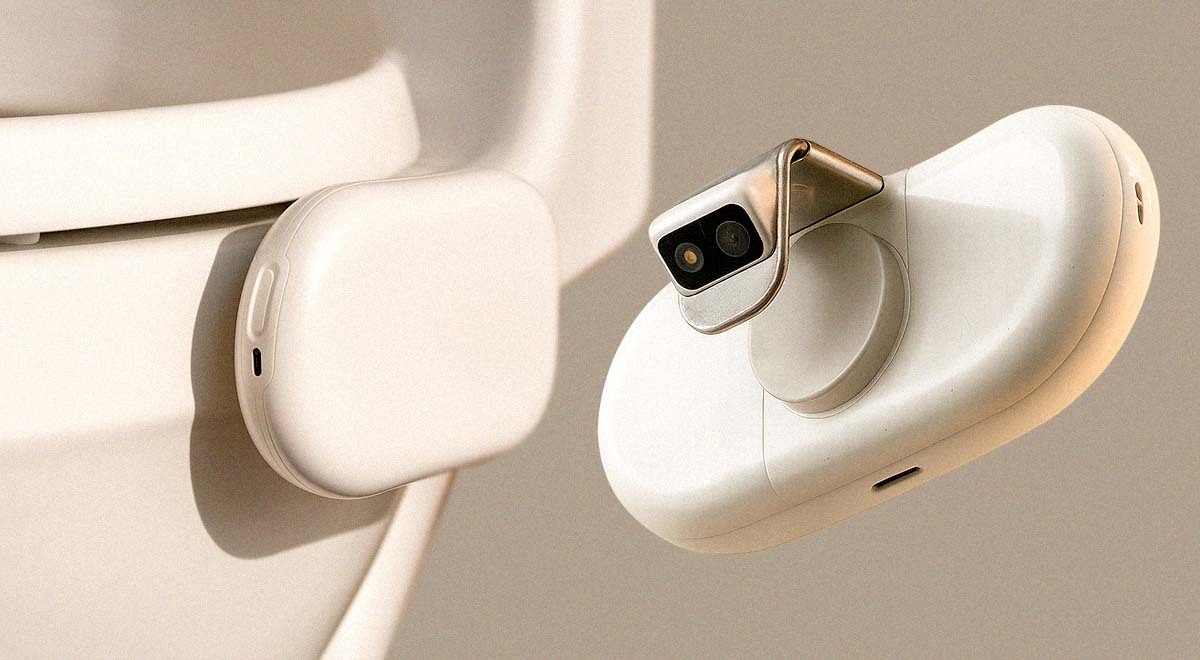
Image by Cybernews

 Follow us
AI may be just as interested in learning about your gut health as you are.
Kohler Health has launched Dekoda, a health tracker attached to a toilet to track users’ gut health and hydration.
The $600 device was created to provide users with health insights by analysing waste using camera and optical spectroscopy sensors. This data is then sent to the app for analysis.
One aspect that the company shares regarding the device is related to data security.
“Your data is personal. We have designed Dekoda so that it stays that way, thanks to features such as fingerprint authentication and end-to-end encryption,” notes the company’s website.
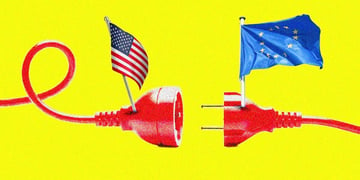

We’ve already heard about end-to-end encryption (E2EE), a method used to secure user conversations in apps such as WhatsApp or Messenger.
But how does it prove beneficial in this case? Does it secure the user’s data from the company?
In his blog post, Simon Fondrie-Teitler, a writer and senior technology advisor in the Federal Trade Commission's Office of Technology, shared that this isn’t entirely the case, as Kohler Health can access user data and may even use it to train AI models.






Why does Kohler Health use E2EE?
E2EE is a common method for securing data, often employed in messaging applications to ensure privacy between users, so that the information they share in their conversations wouldn’t be accessible to internet service providers, app developers, or any other interested third-party.
However, with Kohler Health using this type of security, it raises a question of how exactly it protects users, notes Fondrie-Teitler, as the method is applied for interaction between users.
The expert assumed that the company may be using another data protection method, known as “client-side encryption,” which encrypts data on a user’s device before sending it to the server.
Curious what others think about this story? Contribute your thoughts to the debate below.
After an exchange with the company, Fondrie-Teitler discovered that the other end they refer to in “end-to-end” encryption is actually Kohler Health.
The company shared that user data, which travels between the user and the company’s systems, is then decrypted, so that it can be processed and the analysis of its contents sent to users.
Kohler Health also added that the company designed the systems and processes “to protect identifiable images from access by Kohler Health employees through a combination of data encryption, technical safeguards, and governance controls,” shares Fondrie-Teitler.
The expert then explained that the E2EE method is actually an HTTPS encryption, a common security practice used in many applications.
How can user data be used by Kohler Health?
Fondrie-Teitler raised the question about what the company could be doing with its user data, speculating that it could be used to train artificial intelligence (AI) models.
What prompted this thought is the company’s privacy policy, which states:
“To create aggregated, de-identified and/or anonymized data, which we may use and share with third parties for our lawful business purposes, including to analyze and improve the Kohler Health Platform and our other products and services, to promote our business, and to train our AI and machine learning models.”
User reactions to “toilet camera” security
The blog post also started a discussion on Reddit, with many not missing a chance to make a few toilet jokes.
“Kohler is hiring front end and rear end developers,” wrote one user.
“As wild as 2025 has been, most of our bingo cards did not have: Toilet company breaks cryptography,” joked another netizen.
Kohler Can Access Data and Pictures from Toilet Camera It Describes as “End-to-End Encrypted”
byu/Specialist-Sun-5968 intechnology
Some Redditors also questioned the severity of situations, stating that it’s quite obvious that the E2EE method involves the company as the second “end.”
“End to end encryption implies that there’s two ends. Your bathroom is one end. The other end is at Doug’s desk in Kohler’s IT department. He’s been enjoying the pictures. Keep ‘em coming,” shared one user.
“Given the other end of the end to tend encryption is the company (did anyone really think you’d be sending pictures to your friends) it seems blindingly obvious to me that the company would have access to the data. Too many people think of encryption like a magic spell,” noted another Redditor.
Unlock more exclusive Cybernews content on YouTube.