Employers are using your personal data to make you accept lower pay
Surveillance pricing was just the beginning.

Image by Cybernews

 Follow us
- Employers can use personal data to estimate the lowest pay a job candidate may accept.
- Data sources may include financial signals, social media activity, and third-party worker profiles.
- Experts warn wage surveillance can deepen discrimination, especially for disabled and financially vulnerable workers.
- Some states ban surveillance pricing, but individualized wage-setting remains largely unresolved.
Key Takeaways by nexos.ai, reviewed by Cybernews staff.
If finding a job in the current economy wasn’t hard enough, technology-enabled surveillance now helps employers offer new hires the lowest possible pay.
Algorithmic horrors don’t stop at surveillance pricing, in which companies use consumers’ personal data to set individual prices.
Employers, too, are feeding personal data of candidates – often without their knowledge – to an algorithm to figure out the lowest acceptable pay, according to a 2026 report by Morningstar, a financial services and investment research firm.
While companies have always sought to hire new people while paying as little as possible, the new technology-enabled surveillance wage-setting opens new possibilities for underpaying workers.
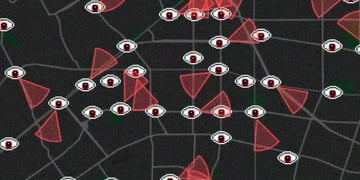





Nina DiSalvo, policy director at labor advocacy group Towards Justice, says that some systems use signs of financial vulnerability, such as a recent payday loan or a high credit card balance.




Stay updated with our latest stories and follow us on social media
Be the first to discover new stories, ideas, and updates from our team.
Employers can go as far as to scrape candidates’ social media accounts to determine whether they are more likely to join a union or become pregnant.
The consequences of “wage surveillance” persist after the candidate is employed, with personal data used to determine pay increases. Experts say it crosses the line into discrimination, according to the Morningstar report.
The Federation of American Scientists warns that third parties, such as verification services or data brokers and resellers, can collect and commercialize worker-related data and feed it back into workplace tools.
The data may come in the form of aggregated scores, flags, or “risk/reliability” signals, which can further affect wages.
A 2025 analysis of 500 labor-management AI companies found that employers in the healthcare, customer service, logistics, and retail industries are customers of vendors that offer “wage surveillance” tools.
Disabled individuals are most at risk
While surveillance wage-setting is bad news for everyone, disabled people may feel the negative effects of the practice, according to a Tech Policy Press analysis.
Disabled individuals may be disproportionately likely to work in “gig economy” jobs where the practice is common. Moreover, they are already more financially vulnerable, and companies can learn it through surveillance wage-setting datasets.
Have thoughts about this topic? Others do, too. Join them in the discussion.
Three US states – Maryland, Connecticut, and New Jersey – now ban surveillance pricing, but surveillance wage-setting remains in the gray area, while efforts to ban it face opposition.
Colorado Governor Jared Polis vetoed a bill in June 2026 that would have prohibited corporations from using someone’s personal data to set individualized wages.