Tor Project, Tuta Mail publish open letter to Russia: "stop building a surveillance state"
In an open letter published on Thursday, privacy-first online platforms Tuta Mail and the Tor Project are calling on the Kremlin’s media watchdog to stop blocking its citizens' access to encrypted communication platforms, citing the violation of human rights and freedom of expression.
Image by Georgy Dzyura | Shutterstock

 Follow us
In an open letter published on Thursday, privacy-first online platforms Tuta Mail and the Tor Project are calling on the Kremlin’s media watchdog to stop blocking its citizens' access to encrypted communication platforms, citing the violation of human rights and freedom of expression.
- Tuta Mail and the Tor Project, backed by 29 digital privacy advocates, urge Russia to stop blocking encrypted messaging platforms like Signal and WhatsApp.
- Groups say the bans and VPN restrictions violate human rights, calling encryption a “lifeline” for journalists, activists, and citizens.
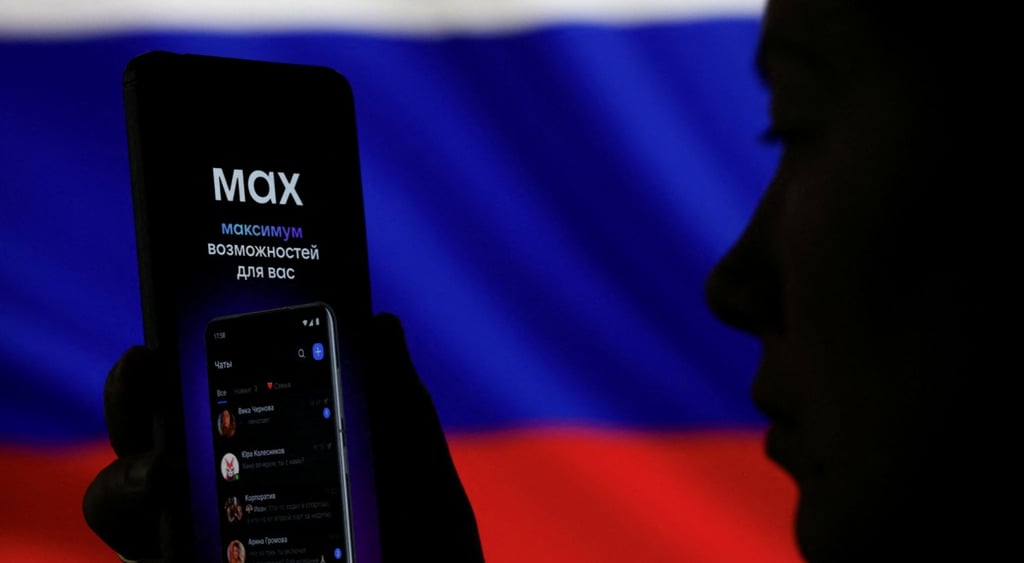
- Russia has been pushing citizens to use the state-run “Max” app, while continuing broad internet censorship modeled after China’s “Great Firewall.”
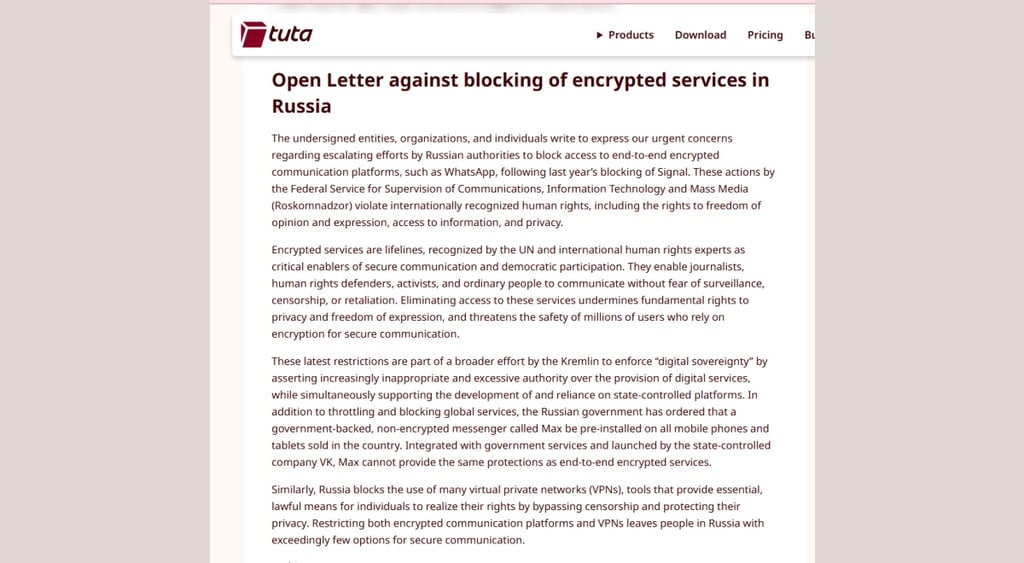
The letter aims to raise what Tuta calls “urgent concerns regarding escalating efforts by Russian authorities to block access to end-to-end encrypted communication platforms,” citing platforms such as Signal, WhatsApp, and others.
It also singles out the government’s cumulative restrictions on VPN use in the country, sought by many younger Russians to circumvent blanket social media bans imposed by Moscow’s Federal Service for Supervision of Communications, Information Technology and Mass Media, otherwise known as Roskomnadzor.
“Tuta(nota) was blocked in Russia in 2020, Signal in 2024, and next up is WhatsApp. We are standing up to stop Russia from building a surveillance state like China,” the German-based quantum-encrypted email provider said.





“Russia wants China's Great Firewall,” Tuta posted on X on Thursday. Normally a nickname associated with internet restrictions in China, "The Great Firewall" is often used as a descriptor for the Russian internet.
🇷🇺 Russia wants China's Great Firewall
undefined Tuta (@TutaPrivacy) September 18, 2025
After Tuta Mail, it's now also blocking #Signal & #WhatsApp to stop its citizens from using #encryption
Together with @torproject, @fightfortheftr and others we are standing up to say: Stop! ✊
Everyone deserves #privacy.
Read our open… pic.twitter.com/8zdrb5gzdJ
Method of government control
Led by Tuta Mail and the Tor Project, the open missive is backed by over two dozen digital privacy and civil rights organizations – including the Electronic Frontier Foundation (EFF), Center for Democracy & Technology (CDT), ARTICLE 19, and Fight for the Future – as well as several private corporations, such as Nord Security, and internationally recognized academics.
The letter argues that Russia’s actions violate internationally recognized human rights, including the rights to freedom of opinion and expression, access to information, and privacy.
"Encryption is a fundamental right," says Matthias Pfau, CEO of Tuta Mail.
"By blocking access to secure communication, Russia wants to control its entire population, including journalists, activists, and anyone having opposing ideas to the ruling class.”
The advocates say encrypted services are a “lifeline” for Russian citizens, and further charge that UN and international human rights experts have recognized encryption as “critical enablers of secure communication and democratic participation.”
“At Tuta, we fight for people’s right to privacy, and today we stand up in solidarity with anyone being oppressed by Russia," Pfau said.
Calling the restrictions “increasingly inappropriate” and a “broader effort” by the Kremlin to enforce “digital sovereignty,” the letter says eliminating access to these services seriously “threatens the safety” of millions of Russian users.
The advocates urge all like-minded companies, civil societies, and multistakeholder initiatives “to maintain and expand access to encrypted communication services for people in Russia and around the world.”
Forced use of unencrypted alternatives
Signal is just one of many social media apps banned by Roskomnadzor over the years.
Russian citizens have been subjected to internet blocks and slowdowns since Putin invaded Ukraine, with complete blackouts on almost all foreign apps reported earlier this month, due to "security concerns," according to the Kremlin.
In June, Russia had announced it was blocking the ability of WhatsApp and Telegram users to make voice and video calls on the encrypted platforms, coinciding with the summer launch of the Kremlin’s own Max app, designed to replace them.
MAX now comes pre-installed on all mobile phones and tablets sold in Russia, and as of this month was reported to have 30 million users. WhatsApp and Telegram both had over 90 million users in Russia recorded in July, according to Mediascope data.
In July, the Kremlin also blocked internet access to millions of major websites protected by Cloudflare, with local internet service providers (ISPs) throttling connections to a halt without any formal notice.
Even more egregious, Moscow passed an amendment this summer, making it illegal for Russian citizens to “search or access known extremist materials” using any encrypted service or VPN, which would basically cover most any foreign news source outside of Russia’s state-run media.
Discord was banned by the government in 2024, following 2023 blocks on Snapchat, Microsoft Teams, Skype for Business, European-based encrypted messaging apps Threema and Viber, as well as the Chinese-owned WeChat, and previous bans on WhatsApp and Telegram.




In retaliation against Google’s YouTube – which began removing access to thousands of Russian (and Chinese) disinformation channels in July – regulators additionally began throttling YouTube, essentially blocking citizens' access to that American video platform as well.
Not to be left out, Meta's Facebook and Instagram were blocked by Roskomnadzor back in 2022, with Putin convicting Meta’s Head of Communications, Andy Stone, in absentia last April, branding the PR exec a “terrorist,” and the Zuckerberg-owned company he works for an “extremist organization.”
Unlock more exclusive Cybernews content on YouTube.