US Army gynecologist accused of filming 44+ patients, storing 500GB sensitive data
A US Army gynecologist at Fort Hood, Texas, has been criminally charged for secretly recording 44 patients during routine medical exams and hoarding more than half of 1TB worth of victim data – exposing a slew of privacy violations and tech vulnerabilities across multiple military medical facilities.


 Follow us
A US Army gynecologist at Fort Hood, Texas, has been criminally charged for secretly recording 44 patients during routine medical exams and hoarding more than half of 1TB worth of victim data – exposing a slew of privacy violations and tech vulnerabilities across multiple military medical facilities.
- A US Army doctor based out of Fort Hood faces 54 counts for secretly recording images and video of at least 44 patients during gynecological exams throughout 2025.
- Complaints of misconduct dating back to 2021 were allegedly dismissed by Army leadership, prompting outrage and calls for further investigations by members of Congress.
- Over 125 patients now claim to be subject to McGraw’s indecent recordings, potentially making the case the largest sexual misconduct scandal in US military history.
Key Takeaways by nexos.ai, reviewed by Cybernews staff.
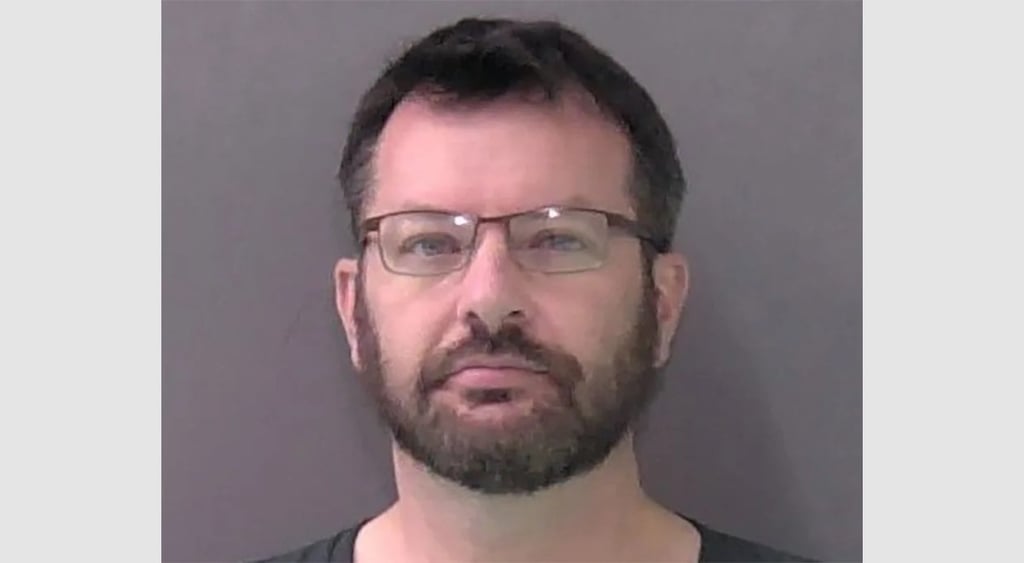
The digital predator, 47-year-old US Army Maj. Blaine McGraw was charged on Tuesday with 54 counts of indecent visual recording, along with multiple charges of conduct unbecoming of an officer, willful disobedience, and making false statements.
The recordings were said to have taken place from January through December 2025 while McGraw served as an obstetrician-gynecologist at the Carl R. Darnall Army Medical Center at Fort Hood, Texas, considered the largest US military installation in the world, with a population of over 600,000.
The accusations came to light after one of McGraw's patients filed a civil suit against the doctor in October, triggering an official investigation and prompting the US Army to send out thousands of letters to McGraw's former patients apprising them of the charges.





As of Wednesday, another 81 alleged victims have joined the amended lawsuit (filed in November), which states patients were “subjected to invasive, unnecessary, and degrading touching, voyeurism, and covert filming,” CNN reported.
Digital evidence recovered during an inquiry by the Army's Criminal Investigation Division exceeded 500GB, raising further concerns about the security of patient data.
The US Army Office of Special Trial Counsel, handling the case, said the charges cover only the 44 victims from 2025, but that the investigation remains open, a New York Times report stated.
Extreme violation of privacy
According to civil lawsuits, McGraw allegedly positioned his phone strategically during exams, often propping it against his uniform nameplate to record patients unobstructed.
Victims say McGraw would pretend to take calls or use the device for professional purposes, but instead was capturing highly invasive images, often filmed during pelvic exams.

One victim, who recently saw McGraw in October, alleged the Army doctor had “pretended to take a call from a nurse on his phone and then slipped the phone into his breast pocket with the camera facing outward,” the Times said.
Three days later, that same victim said she was contacted by Army officials and was told they had recovered images of her body from McGraw's phone.
In another horrifying incident, McGraw is accused of secretly taking photos of a patient during a rape kit examination, compromising forensic evidence, and obstructing justice.
The victims further accuse McGraw of making “lewd sexual advances and comments towards them.”
Ignored complaints date back to 2021
McGraw previously worked at the Tripler Army Medical Center in Honolulu, Hawaii, from 2019 to 2023, before being stationed at Fort Hood. McGraw’s residency was also said to have included mandatory and elective clinical rotations at civilian institutions.
The lawsuit states that previous complaints about covert recordings by the doctor, in both Hawaii and Texas, were dismissed or ignored by the Army chain of command, allowing McGraw to continue practicing and victimizing unsuspecting patients.
“The Army gave cover to a predator in uniform,” the filing states.
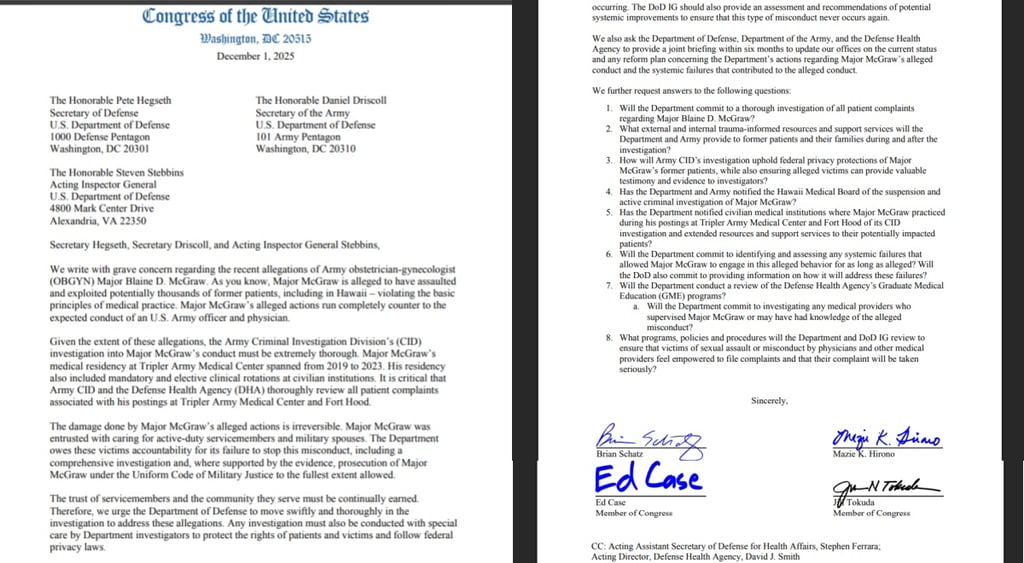
On Monday, more than fifty Congressional Democrats called on the US Department of Defense Inspector General (DOD-OIG) to conduct a separate investigation into the Army’s repeated inability to prevent the digital exploitation, stating the delayed response was "unacceptable."
"Female servicemembers and patients noted that the lack of adequate response from Army leadership was a recurring issue," the lawmakers wrote in a six-page letter addressed to the DOD's Acting Inspector General Steven Stebbins.
“When victims and their loved ones tried to make complaints with Army leadership, they were 'refused meetings at every level,'” the letter states.
Meanwhile, Fort Hood brass says they acted quickly after the initial October complaint, immediately suspending McGraw, revoking his access to medical records, and alerting the current and former patients.
The civil suits now include over 125 alleged victims, claiming sexual misconduct, unconsented procedures, and invasive recordings across Texas and Hawaii – and potentially during prior assignments at Fort Campbell, Kentucky.
If the allegations are true, McGraw’s case could “constitute the largest sexual misconduct case in US military history," the lawmakers said.
Digital abuse in medical settings
By secretly recording patients during intimate medical exams, advocates say McGraw exploited both his position of trust and current technology to create what they say are "permanent, unauthorized records of victims’ bodies."
Although not explicitly named as part of the McGraw case, the introduction of AI has fueled a dramatic increase in digital violence and abuse against women, according to a UN Women report released this week.
This includes not only digital tools, such as smartphones and cameras, but also unsecured data that becomes weaponized to violate a woman’s privacy and perpetrate sexual violence.






And while the Army claims to have created hotlines for patients and is reviewing policies, victims and advocates warn that institutional culture and outdated privacy safeguards have allowed digital voyeurism to persist for years.
Undersecretary of the Army Mike Obadal and Army Surgeon General Lt. Gen. Mary Izaguirre visited Fort Hood this week to evaluate Defense Health Agency policies, citing the need for “swift action to prioritize patient safety.”
Critics say without systemic reform – particularly regarding digital security and monitoring in medical environments – the potential for similar privacy violations remains high.
McGraw has been held in custody under pre-trial confinement since December 2nd.
Unlock more exclusive Cybernews content on YouTube.