CES 2026 highlights: expert picks and the most innovative tech breakthroughs


January is probably the only time of the year when Las Vegas takes a short break from being the gambling capital of the world to host the Consumer Electronics Show (CES). CES 2026 is now underway, with attendance expected to exceed last year’s turnout of more than 140k visitors.
If you’ve been following us, you know we had to be there one way or the other. This is the official Cybernews CES 2026 update page, crafted to help you stay on top of the latest product launches.
In this article, I discuss the latest advancements in AI, robotics, health tech devices, and more. By following official launches and press releases, I’ll keep this article up to date so you can find all the details before, during, and after the show.
CES 2026 award-worthy innovations
The year's biggest tech showcase has introduced us to new favorites across various fields. Innovation shows no signs of slowing, especially with the proliferation of AI products and systems. With that in mind, below we introduce the top innovations worth mentioning.
Best AI product (CES 2026) – Naqi Neural Earbuds (Naqi Logix)
Naqi Neural Earbuds stood out at CES 2026 for presenting one of the most practical applications of AI-driven human-computer interaction shown at the event. The earbuds translate subtle neural and facial muscle signals into digital commands. As such, it enables hands-free, voice-free control of devices.
Importantly, the system is non-invasive and designed to work with existing consumer hardware, which differentiates it from more experimental brain-computer interfaces.
Recognized with a CES Best of Innovation award, Naqi’s technology has clear implications for accessibility, productivity, and assistive computing, positioning it as one of the most technically mature AI products showcased this year.
Honorable mentions
- OMI (Wearable ChatGPT). It’s a strong contender that brings conversational AI into an always-on wearable format, highlighting how AI assistants are moving beyond phones and laptops into ambient, hands-free use.
- Motorola AI Companion. Positioned as a context-aware digital assistant within Motorola’s ecosystem, it showcases how major brands are embedding AI deeper into everyday device interactions, even if it’s less disruptive as a standalone product.
- Lenovo AI Glasses. An early but notable example of AI-enhanced glasses, combining visual overlays with contextual assistance, signaling Lenovo’s long-term ambitions in spatial and wearable AI experiences.

Best health tech innovation (CES 2026) – CERAGEM home therapy booth 2.0 with AI mental coach
CERAGEM’s home therapy booth 2.0 represents a notable shift toward integrated, AI-driven wellness technology. The system uses computer vision and multimodal sensors to monitor respiration, heart rate, skin temperature, and contextual signals, adapting lighting, sound, and environmental conditions accordingly.
An AI mental coach provides guided stress-relief and relaxation support, positioning the booth as a preventive wellness solution rather than a clinical device.
As a CES 2026 Innovation Award honoree, CERAGEM stood out for combining physical therapy concepts with mental health support in a single, home-based system that reflects growing demand for personalized, technology-assisted well-being.
Honorable mentions
- MagitiQ. A compact health-tech solution that focuses on targeted therapy and recovery rather than broad wellness claims. While its scope is narrower than category leaders, it stands out for practical application and a clear focus on everyday pain relief and muscle support.
- Seattle UltraSonics C-200 chef’s knife. A surprising crossover between health and lifestyle tech, designed to reduce physical strain through ultrasonic cutting. Though not traditional health tech, it addresses ergonomics and injury prevention in repetitive manual tasks, expanding how wellness can be interpreted at CES.
- GLYDE smart hair clipper. An unconventional but noteworthy entry that brings sensor-based intelligence into personal grooming. While not a medical device, its precision controls and adaptive feedback hint at how health-adjacent tech can improve daily self-care routines.
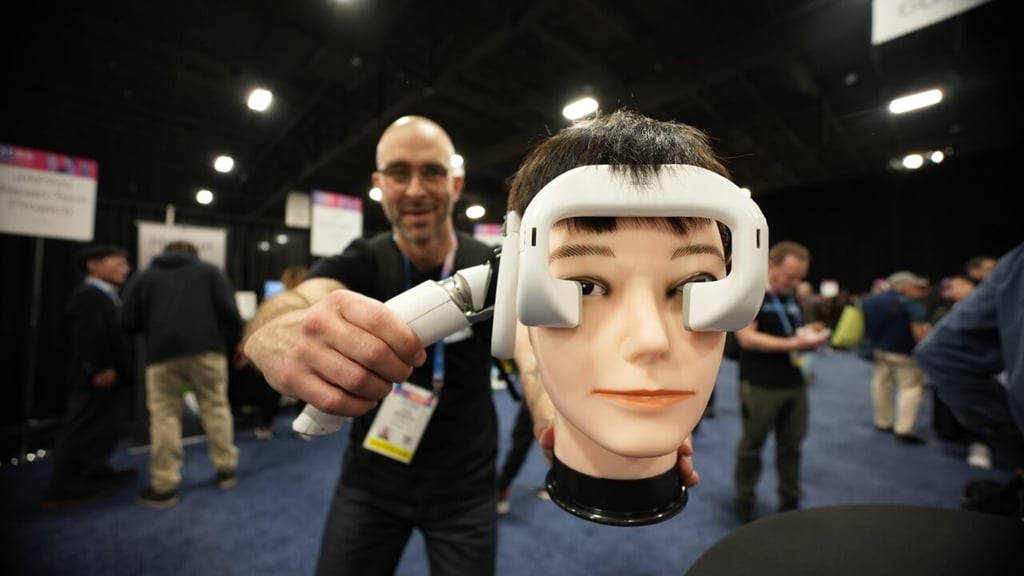
Most innovative wearable (CES 2026) – OMI (Wearable ChatGPT)
OMI emerged as one of CES 2026’s most innovative wearables by focusing on conversational AI as a constant, ambient companion. Designed to function as a wearable interface to ChatGPT-like systems, OMI emphasizes context awareness and real-time assistance rather than traditional fitness tracking.
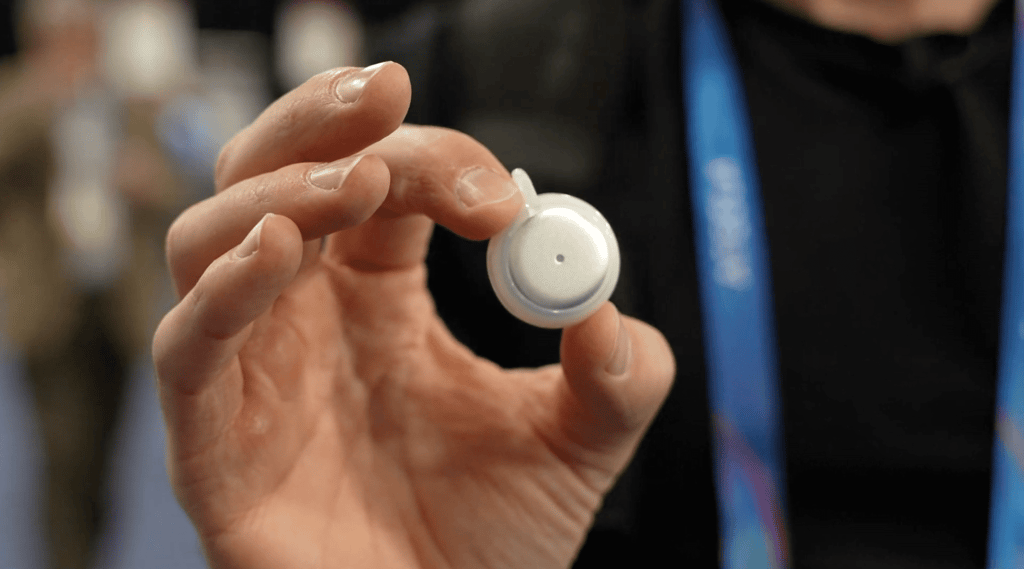
Its innovation lies in how it integrates AI into daily life without relying on screens or constant user input. While still early in its lifecycle, OMI demonstrates how wearables may evolve beyond passive data collection toward proactive, AI-powered interaction, making it a strong contender in a category often dominated by incremental hardware upgrades.
Honorable mentions
- Pebble (Round 2 & Index 01). Pebble’s return stood out as a single, cohesive comeback rather than separate products. While neither model redefines wearable tech in terms of sensors or AI, together they represent a deliberate push against feature overload, emphasizing longevity, simplicity, and user control – themes that resonated strongly at CES 2026.
- Cyber Fidget. A small but memorable wearable concept that explores how tactile interaction and biofeedback can be used for stress relief and focus. It’s early-stage, but notable for treating wearables as emotional-regulation tools rather than data collectors.
- Sweekar AI Pocket Pet. Positioned somewhere between a wearable and a companion device, Sweekar stood out for experimenting with emotional AI and presence. While niche, it highlights how wearables may evolve toward companionship and behavioral interaction, not just personal metrics.
Best smart home device (CES 2026) – mui Board
mui Board stood out at CES 2026 for its understated approach to smart home interaction. Instead of adding more screens or notifications, it integrates touch-sensitive controls into a natural wood surface, revealing information only when needed.
The device supports smart home management, messaging, and ambient information while prioritizing calm, low-distraction design.
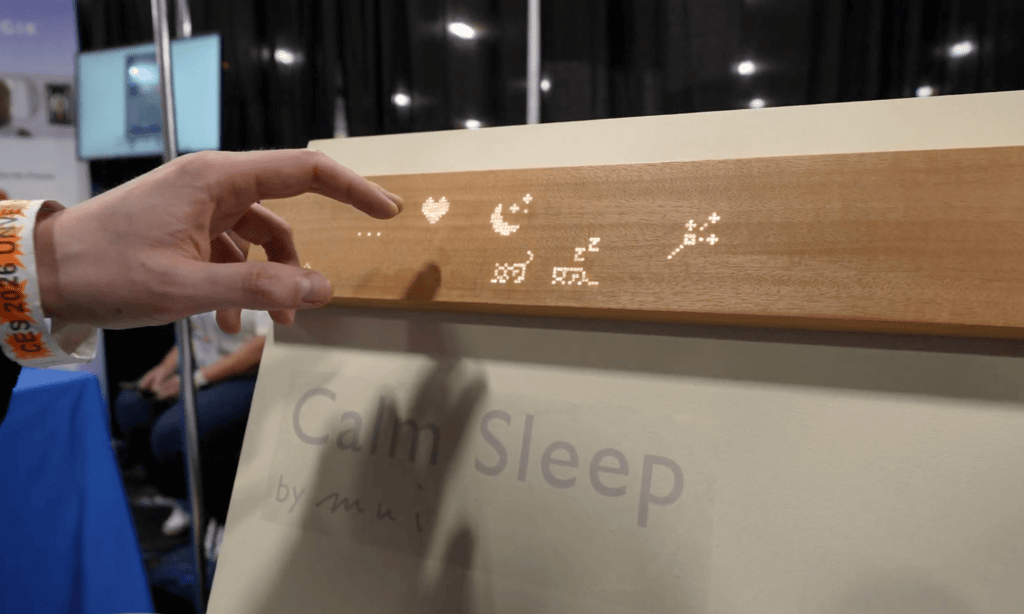
In a show filled with AI-heavy automation concepts, mui Board differentiated itself by focusing on human-centric interaction and emotional comfort. Its relevance lies not in technical spectacle, but in offering a smart home interface that blends seamlessly into living spaces without demanding constant attention.
Honorable mentions
- SwitchBot Niko AI Pet. A smart home companion designed to add emotional context to automation. While more playful than practical, it demonstrates how AI-driven presence and interaction may become part of future home environments.
- SwitchBot AI Art Frame. An ambient display that adapts artwork based on context, time, or user preference. It doesn’t redefine smart home functionality, but it introduces a softer, aesthetic-driven approach to home intelligence.
Most surprising tech reveal (CES 2026) – Lenovo ThinkPad Rollable XD
The Lenovo ThinkPad Rollable XD emerged as the most surprising tech reveal at CES 2026 by translating experimental display technology into a familiar, productivity-focused form factor.
Unlike earlier rollable concepts aimed primarily at spectacle, the ThinkPad Rollable XD frames flexible screens as a practical solution for multitasking, workspace expansion, and mobile productivity.
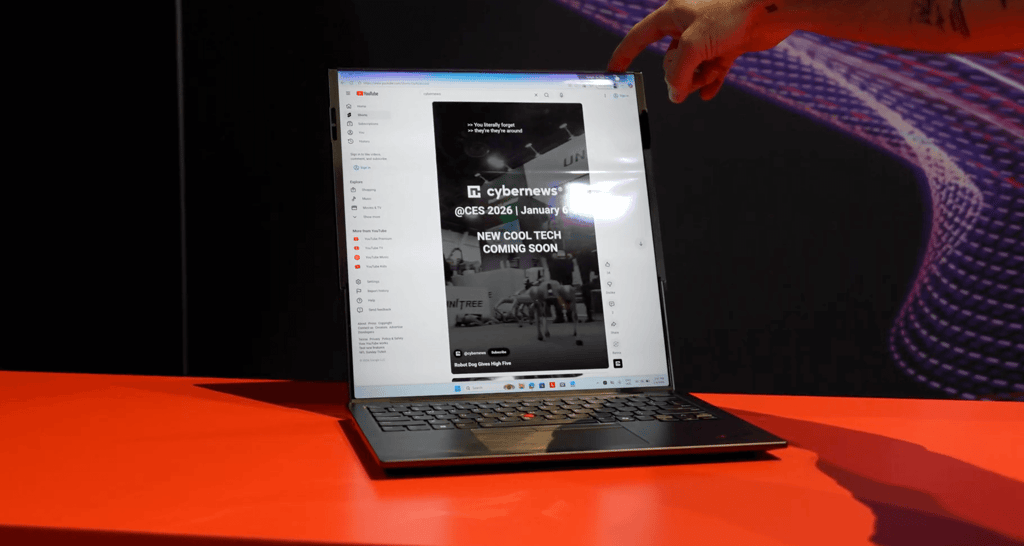
While still positioned as a concept device, its execution felt unusually mature, suggesting a plausible path toward commercialization. The surprise lies not in the novelty of rollable displays but in how seamlessly Lenovo integrated the technology into a mainstream laptop design without compromising usability or brand identity.
Honorable mentions
- Hyundai MobED Droid (Mobile Eccentric Droid). A low-profile, four-wheel robotic platform notable for its apparent readiness beyond the concept stage. MobED emphasizes stability, maneuverability, and AI-assisted navigation, signaling Hyundai’s intent to move service robotics toward real-world deployment.
- Legion Pro Rollable (POC). A visually striking proof-of-concept that brought rollable display technology into the gaming space. While not positioned for near-term release, it highlighted Lenovo’s willingness to experiment beyond traditional laptop form factors.
- Kamingo E-Bike Converter. A practical and unexpected mobility solution that converts standard bicycles into electric bikes without permanent modification. Its appeal lies in simplicity, accessibility, and a sustainability-focused approach rather than complex engineering.
How we’re covering CES 2026
With over 4500 companies showcasing their offerings at CES 2026, finding top picks across most categories is challenging. Here’s the rulebook I used to narrow the list down to the most valuable innovations:
- Official CES announcements: Our team is closely following this year’s product presentations, press conferences, and releases. We are also keeping track of the CES Innovation Awards by following reports published by the Consumer Technology Association.
- Company press releases and keynote presentations: It’s always fun to see how strategically timed the releases of new products are. We are evaluating exhibitions as they are officially released while crafting our innovations’ leaderboard.
- Live demos and media reports: We are also tracking public opinion and feedback following live demos and product presentations.
- Industry analyst commentary: Last but not least, we will follow up with official analyst commentary to see what sector-specific experts had to say about each newly released product.
As CES 2026 approaches, I will update this article as more products are announced and released. I’ll include information to help you determine whether a given product is in the speculative phase or has been officially reviewed after release.
Key CES 2026 tech categories to watch
Unsurprisingly, the focus of CES 2026 is mainly on AI devices and generative AI in electronics. However, that’s just a small taste of what’s coming, so here’s our breakdown of the top categories to keep an eye out for:
Artificial intelligence (AI)
Artificial intelligence has been a focus at CES for years, but this time the narrative shifted slightly. AI has come a long way from something that seemed almost surreal to a part of our everyday life, with the focus shifting to on-device AI, generative AI in electronics, and AI assistants.
Robotics and automation
This year, we also saw an interesting battle in the robotics category, walking the line between pure luxury and genuinely helpful automation in everyday life.
The exhibit featured consumer robots, including home assistants, and I don’t mean just automated vacuum cleaners. The focus is on human-robot interaction models in both consumer and industrial settings.
Smart glasses and wearables
Eyewear-based wearables were off to a slow start for a couple of years, but now it seems they’re making a triumphant return. From AR glasses with integrated AI functions to next-gen smart watches and devices designed for specific everyday use cases, it’s all on display.
It’s like a reimagining of the Ray Ban Metas all over again, and we’re here for it! Plus, I appreciate the focus shifting from products made for profit only to actually usable wearables that make everyday tasks a bit simpler.
Health tech and digital wellness
Health tech is a sensitive topic for many users, as some products showcased in the years leading up to CES 2026 had limited real-world value. This year, we can expect more sophisticated devices with build quality comparable to medical equipment.
Don’t get me wrong: health tech devices are still far from replacing clinical diagnostics and monitoring. Still, this year’s products are poised to shake things up with precise vital-sign tracking, cardiac monitoring, and blood pressure tracking.
Smart home and IoT
It’s impressive seeing how much the Internet of Things has advanced. Consumers seeking connected home devices and automated smart home technology will find a strong focus on security, privacy, and sustainability at CES 2026.
Mobile and personal devices
CES 2026 might see the debut of the S26 series of next-gen Samsung smartphones. It will also be exciting to see how other manufacturers will compete with the increased use of AI, increased battery life, and sustainable production.
Top CES 2026 announcements
Emerging trends from CES 2026
This is where I will present all CES 2026 findings on emerging trends. So far, I’ve made a recap of the latest changes based on product announcements, but I’ll also update the page during and after the exhibit to share my impressions. So far, these trends stand out as likely:
- Throwing AI into everything, everywhere: The way things are now, you’ll be seeing the “AI-powered” stamp on all the latest tech products. It’s becoming mainstream, so the real question is: which of the exhibited products does not include AI?
- Health tech making the logical next step: For years, the biggest barrier for potential health tech users has been the precision gap between real medical devices and basic at-home tracking tools. In my view, wearables are now as close as they’ve ever come to real medical use.
- Shifting the narrative of wearables: In the past few years, wearables have become the norm, and even those who don’t use performance-tracking features still wear smartwatches. Now, manufacturers are slowly transitioning from flashy, cool accessories to features that increase comfort.
What CES 2026 means for consumers
CES is always fun, but the line between hype and practicality oftentimes gets blurry. Sure, there are many fun products, but only a handful offer real-world utility. Here’s what you can expect to buy in 2026 based on my research and the scheduled announcements:
- Smartphones and laptops with fully integrated generative AI
- Affordable smart home devices with efficiency as a priority
- Smart glasses with practical features for everyday users
- Electric vehicles with a higher range and full driving autonomy
- Health wearables with real monitoring and measuring capabilities
- Consumer robots with consumer features in mind
Despite all the hype, 2026 won’t be the year when futuristic products like humanoid robots or flying cars enter the market. Still, all we can do is hope and strive towards more innovation, and I’d be willing to bet my paycheck that we’ll see at least a few futuristic concepts that will blow our minds.