Vanderbilt University cyberattack hits campus devices, systems
The BYOD ransomware gang claims to have encrypted the university’s databases.
Vanderbilt University has suffered a cyberattack. By Shutterstock / Cybernews.

 Follow us
- Vanderbilt University is investigating an active cyberattack that may affect university devices, systems, and cloud services.
- The university told students and employees to shut down devices, leave Vanderbilt Wi-Fi, and contact IT support for suspicious activity.
- The BYOD ransomware gang claimed it encrypted databases and stole sensitive student and employee data, including Social Security numbers.
- BYOD is a newer extortion group that has targeted universities, healthcare centers, and companies since late September.
Key Takeaways by nexos.ai, reviewed by Cybernews staff.
Nashville-based Vanderbilt University has announced a cyberattack and warned that its students and employees may be affected. Everyone needs to shut down their devices, the university said.
“We are currently responding to an active cybersecurity incident that may impact university devices, systems, and cloud-based services,” the university said in a lengthy X post.
“Our Information Technology team is actively investigating and working to contain the situation.”
The university has asked all members of the community to shut down university devices, disconnect from Vanderbilt’s Wi-Fi, and “remain extremely vigilant.” Any unusual or suspicious activity on their devices should prompt immediate action.






According to the university, signs of compromise would include unexpected pop-ups or security notifications, unusual changes to files or permissions in cloud storage platforms, missing or modified files, unfamiliar applications, and unexpected authentication requests.
Students and employees shouldn’t attempt to investigate or troubleshoot any issue themselves. They should shut down their devices and contact IT support.


Stay updated with our latest stories and follow us on social media
Be the first to discover new stories, ideas, and updates from our team.
A few hours later, the BYOD ransomware gang took credit for the cyberattack and said it had both encrypted Vanderbilt’s databases and stolen sensitive student and employee data.
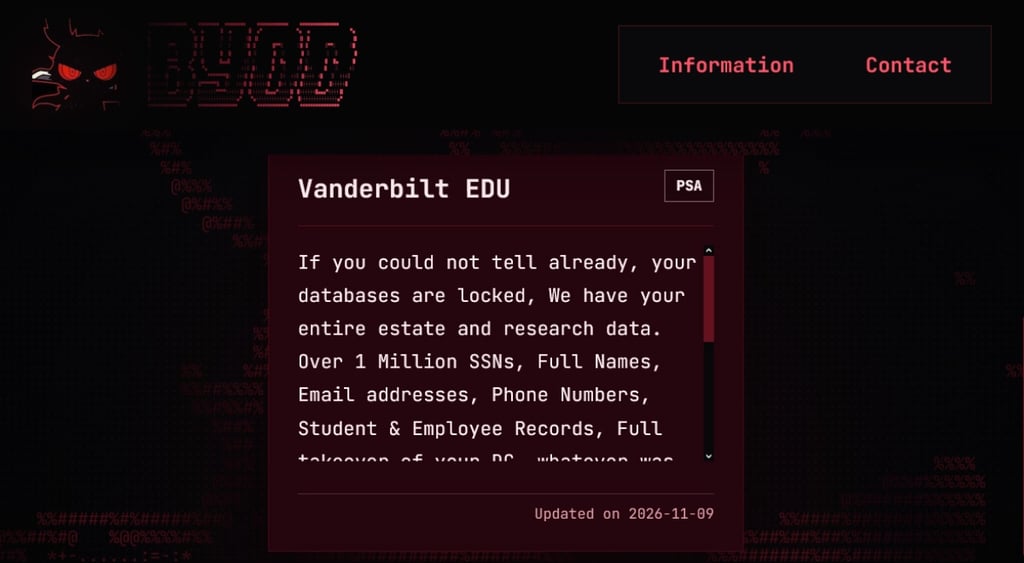
“If you could not tell already, your databases are locked. We have your entire estate and research data. Over 1 Million SSNs, Full Names, Email addresses, Phone Numbers, Student & Employee Records, Full takeover of your DC, whatever was on your network, we possess,” said BYOD.
BYOD, a new and active gang
Typical for ransomware operators, the gang is threatening to release the stolen data if Vanderbilt does not negotiate with it.
There’s also a YouTube video showing how infected university devices are playing a warning that the network has been breached by BYOD.
BYOD is a relatively new extortion gang that only became active in late September. The group primarily targets higher-education institutions, healthcare centers, and corporate entities.
A BYOD cyberattack on the University of New Mexico (UNM) Health Sciences Center in late October caused alarm since it forced one of the state’s only top-tier hospitals to turn away ambulances. Operations resumed soon, however, without UNM giving in to the hackers’ demands.