Experts hacked Volkswagen systems to turn up heat and secretly listen to drivers
It took Volkswagen 18 months to fix the issue.
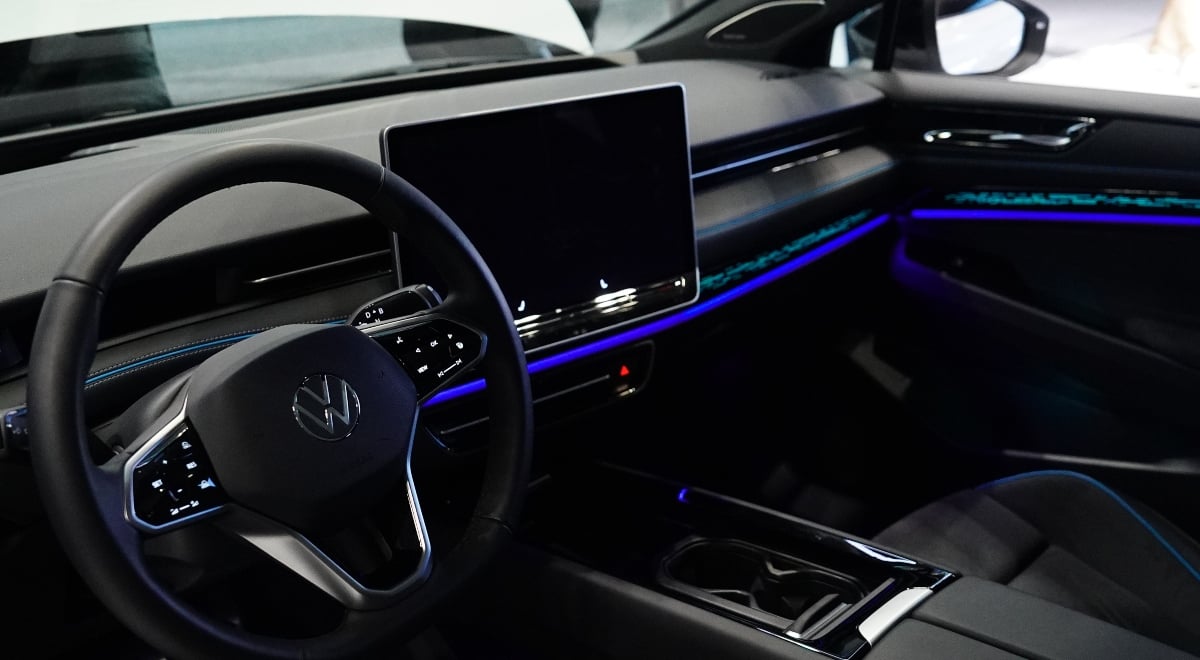
Hackers breached the Volkswagen ID.4 systems. By Getty/Bloomberg.

 Follow us
- Researchers hijacked a Volkswagen ID.4 through Bluetooth flaws and controlled features like heat, wipers, and sunroof.
- They tracked the car, recorded an in-car conversation, and accessed messages and contacts on a connected phone.
- Volkswagen says customer safety was not at risk and is rolling out updates for affected cars worldwide.
- PCA reported 345 new automotive vulnerabilities in one quarter, with high-severity cases more than doubling.
Key Takeaways by nexos.ai, reviewed by Cybernews staff.
Hackers have remotely hijacked the systems of a Volkswagen EV to track the car, listen to people in it, access a connected phone, and control the vehicle’s functions from afar. Flaws in the car’s Bluetooth system are at fault.
It may seem like something the new James Bond, Robert Pattinson would do with one of his gadgets. But researchers truly managed to hack the Volkswagen (VW) EV, the ID.4, and demonstrated it to The Times in their lab in Budapest.
After virtually hijacking the vehicle, the hackers from PCA Cyber Security, a cybersecurity firm, also showed they could turn up the heat in the car, turn the wipers and sunroof on and off, and even send a message to people inside.
Bluetooth flaw at fault




How did they get inside? A flaw in the VW system’s Bluetooth software, discovered by PCA Cyber Security in 2025, helped.
Plus, the administrator account had no password so the hackers were able to increase their access once inside, before breaking into the car further using two other vulnerabilities.


Stay updated with our latest stories and follow us on social media
Be the first to discover new stories, ideas, and updates from our team.
According to The Times’ report, thanks to the Bluetooth flaw, the researchers could access the text messages and contacts on a connected phone. They also recorded a conversation between the driver and passenger using a microphone designed for talking to the emergency services.
The car’s exact location was also easily tracked – while on the move. Researchers even found a way to send a voice message into the car using text-to-speech and show a slide that said “hacked by PCA” on the infotainment screen.
The Bluetooth flaw had been to all car manufacturers after discovery, the cybersecurity firm said. But it seems they had to inform VW of the vulnerabilities separately.
VW is now – 18 months later – rolling out software updates for hundreds of thousands of affected cars worldwide. However, according to Danila Parnishchev, head of security assessment at PCA, the response was alarmingly slow.
We have to speed it up, especially in the era of AI when everything speeds up, discovery of bugs speeds up as well,said Danila Parnishchev.
To The Times, VW said: “At no time has there been, or is there, any risk to the safety of our customers or our vehicles.”
Of course, in a real-world setting, hackers would have to be in Bluetooth range in order to breach the car. For example, they’d have to be driving close to the target vehicle. Besides, the car or a person driving it would need to be tricked into accepting the pairing.
Modern cars prone to being hacked
Still, the very idea of EV architecture, deliberately minimizing hardware components in favor of “over-the-air” software updates, makes the cars more vulnerable to hackers if and when they breach their systems.
The i newspaper reported last year that British defence firms working on sensitive government contracts have reportedly instructed staff not to connect phones to Chinese-made EVs.
Has your password leaked?
“Not only could your car download your journeys, but it could also scrape your text messages, voicemails, and even sensitive work documents from your mobile. That’s the sort of information the Chinese state might like to get its hands on,” one The i source said.
According to PCA’s Global Automotive Threat Intelligence Report, there were 345 new automotive vulnerabilities discovered in 2026 Q2. That’s up 30% from the first quarter, with high-severity findings rising from 75 to 161.
In other words, car security is now cybersecurity. Just this month, another group of researchers managed to bypass firewall defenses and use a default password to remotely track, unlock, and start connected vehicles from two major automakers.
However, unlike Volkswagen, both carmakers – not named by the researchers – patched the problem roughly two hours after receiving the findings.