Amazon and Lidl to sell solar panels in the UK to combat rising energy bills
Do you live in the UK and are worried about rising energy costs? Add solar panels to your grocery list next time you visit Lidl.
Image by Cybernews

 Follow us
Do you live in the UK and are worried about rising energy costs? Add solar panels to your grocery list next time you visit Lidl.
The American e-commerce giant Amazon and German supermarket chain Lidl are in talks with the UK government to sell plug-in solar panels to customers.
The decision comes after the conflict in the Middle East, which has driven up the prices of fossil fuels.
The latter made the UK Department for Energy Security and Net Zero (DESNZ) promise its users an easier way to install solar panels, reports Bloomberg.
It’s not yet known how soon UK residents will be able to install solar panels.

Still, the department stated that it should be available within months, as it’s working with Amazon, Lidl, and EcoFlow, a Chinese company specializing in portable power stations and home energy systems.
Due to the current situation, the UK expects its energy price cap to rise by 20% in July. For this reason, it’s looking for ways to help residents manage higher energy bills.
Solar panels are useful in this case because they turn sunlight into usable electricity, thereby saving energy and reducing electricity bills.
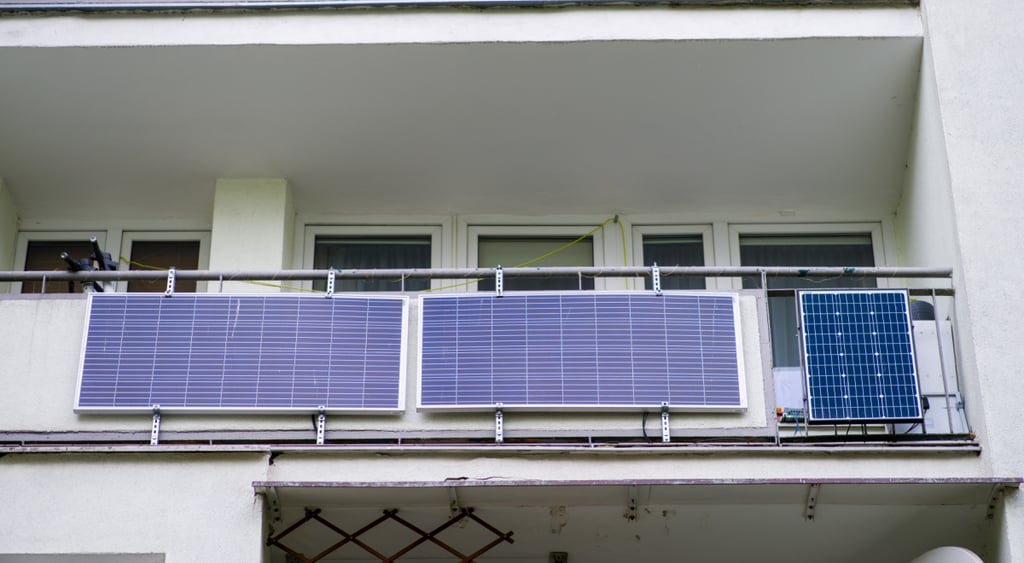
Plug-in solar or balcony solar panels are easy to use because they connect to a standard power outlet. It can be placed on a roof deck, balcony, or in the backyard.






On average, such a panel produces between 200 and 1,600 watts, which is enough to power a refrigerator or an air conditioner. Whereas a rooftop solar panel installation can produce from 3,000 to 9,000 watts.
Plug-in solar panels are also a comfortable choice because they don’t require an electrician to install them, unlike regular solar panels.
Solar panels are already in use in many European countries. In the UK, 1.6 million households have solar panels installed.
Strong password generator

Although solar panels are seen as a solution for minimizing electricity costs, they also come with cybersecurity-related disadvantages.
It has been previously reported that solar power devices can be exposed online. This happens when users check their solar panels' generation statistics online, this way allowing hackers to access the devices.
Last year, research discovered that 35,000 solar power devices were exposed and could be exploited by attackers. The researchers found 46 new vulnerabilities in the devices and listed an additional 93 known vulnerabilities.
Unlock more exclusive Cybernews content on YouTube.