Amazon’s satellites are bright enough to disrupt astronomical research
Amazon’s new fleet of internet-beaming satellites may be bright enough to interfere with astronomical observations, a study has found.
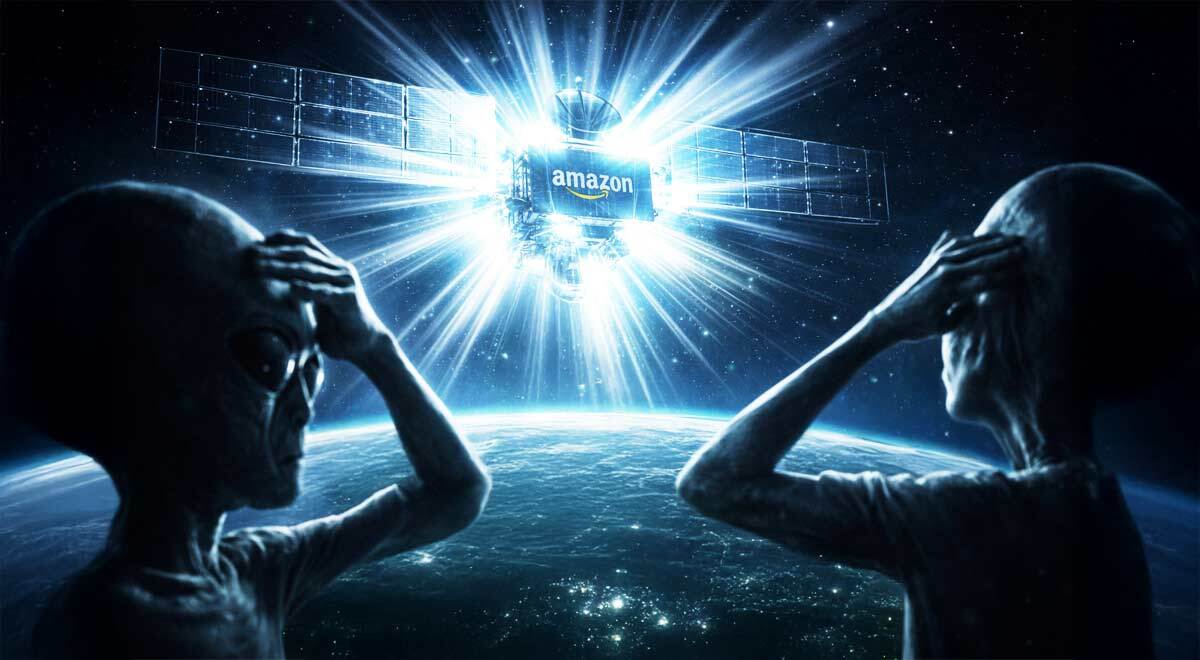
Image by Cybernews.

 Follow us
Amazon’s new fleet of internet-beaming satellites may be bright enough to interfere with astronomical observations, a study has found.
The scientific community has agreed: satellites up in space cannot exceed a specific brightness limit, otherwise they could disrupt astronomical research.
The agreement is documented and recommended by the International Astronomical Union (IAU) with the intention of making it easier for satellite networks to coexist with astronomical research.
It now appears that Amazon’s satellites could be outshining others and thus possibly interfering with cosmic research. This was the conclusion after research of almost 2,000 observations of the company’s Amazon Leo constellation.
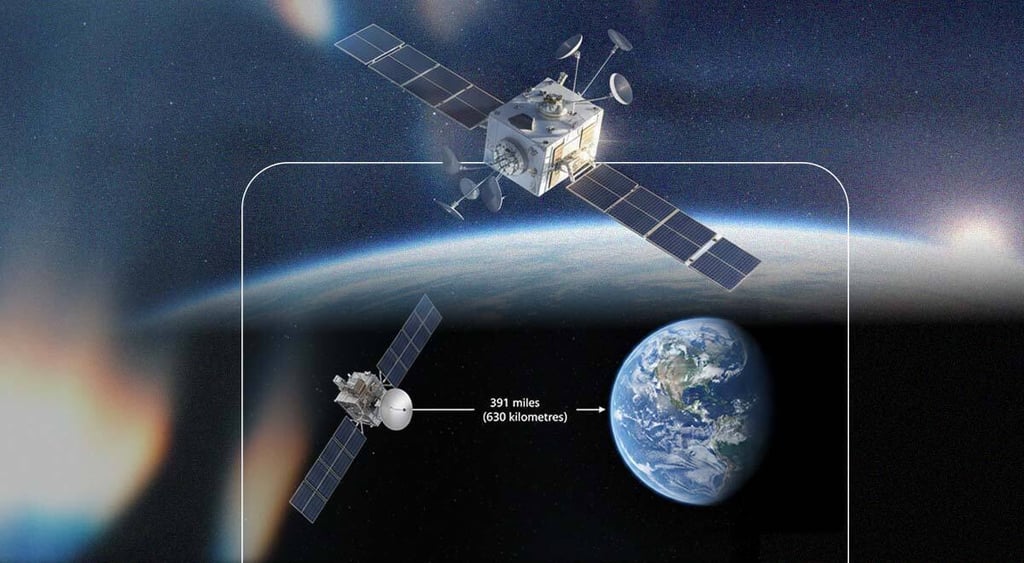
The satellites orbit Earth at about 391 miles (630 kilometres) above Earth's surface. Normally, people wouldn’t be able to spot them in the sky with their naked eye. However, about 25% of observations recorded the spacecraft as bright enough to be visible without telescopes.




According to astronomers via Space.com, this level of brightness is enough to disrupt both ground-based and orbiting observatories, including the Vera C. Rubin Observatory and the Hubble Space Telescope.
For example, the Vera C. Rubin Observatory is the largest digital camera ever built for astronomy. Located in Chile, it is designed to repeatedly scan broad areas of the night sky. Its goal is to create the most detailed time-lapse map of our universe ever made and to detect scientifically significant changes in it.
“Bright satellites are particularly troublesome for large-scale astronomical surveys… They can also interfere with orbiting observatories like Hubble,” said Anthony Mallama, lead author of the study and astronomer at the IAU’s Centre for the Protection of the Dark and Quiet Sky.
He also noted that satellites in the Amazon Leo constellation are slightly fainter than most Starlink satellites, which orbit at a lower altitude of around 300 miles (480 km). However, Starlink benefits from the company’s satellites being in the Earth's shadow for most of their orbital time. That makes their brightness less obtrusive.
Yet, according to John Barentine, an astronomer at the Silverado Hills Observatory in Tucson, Arizona (who did not participate in the new study), the Amazon Leo satellites appear especially bright during twilight.
Especially this time is problematic because the satellites are still illuminated by the Sun, but the ground is already dark. The contrast makes the satellites extra visible, and their glow can leave streaks of light across telescope images.
Amazon began launching its internet constellation in 2025. So far, 180 satellites orbit the Earth, but the company plans to expand its fleet to at least 3,200 spacecraft.






Unlock more exclusive Cybernews content on YouTube.