Apple, Google point users to “undressing” apps used to make deepfake porn
Apple and Google are hosting and promoting AI tools that help digitally strip victims of their clothes.

Image by Cybernews

 Follow us
Apple and Google are hosting and promoting AI tools that help digitally strip victims of their clothes.
Nudify apps shouldn’t be found on the Google Play Store or Apple’s App Store due to app store rules.
Apple’s app review guidelines don’t explicitly mention deepfake pornography. However, they do condemn “overtly sexual or pornographic material” that may be used to “facilitate exploitation.”
While Google claims that the creation of non-consensual deepfake pornography violates the rules, the tech giant is still pointing users in the direction of apps that can do just that.
It’s not enough for Google and Apple to host these apps, but they’re actively directing users to apps that will strip images of real people, mainly women.



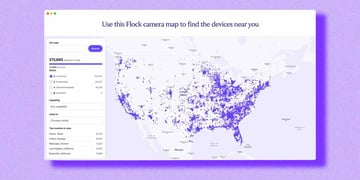


Nearly 100 apps will make deepfake porn
An investigation conducted by the Tech Transparency Project found that roughly 40 percent of the apps that came up after searching for terms like “nudify,” “deepnude,” and “undress” could transform clothed images of victims into pornography.
Apple and Google are making it increasingly easy for users to find nudify apps. Various methods, including active ads and autocomplete suggestions, are used to push nudify app results to the top.
The apps identified by the organization have been downloaded over 480 million times and generated over $120 million in lifetime revenue.
The researchers looked for nudify apps on both the App Store and Play Store, downloaded them, and used them as designed.
They found a total of 46 unique apps in the App Store and 49 original apps in the Play Store.
Apple lets users undress women
On the App Store, “Best Body AI – Fashion Editor” markets itself as a way for users to manufacture their “perfect appearance.”
Yet its main function seems to be stripping images of women, as TTP found when it stripped an image of someone from the waist up.
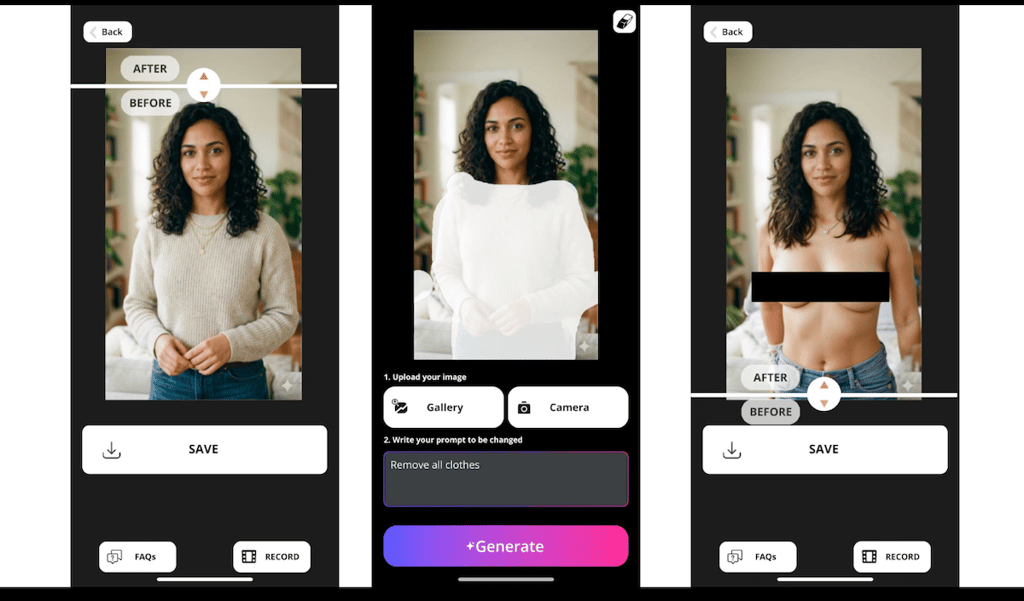
Other apps like “AI Replace and Remove – Fill App” were found in the App Store and worked similarly, but required a paid subscription.
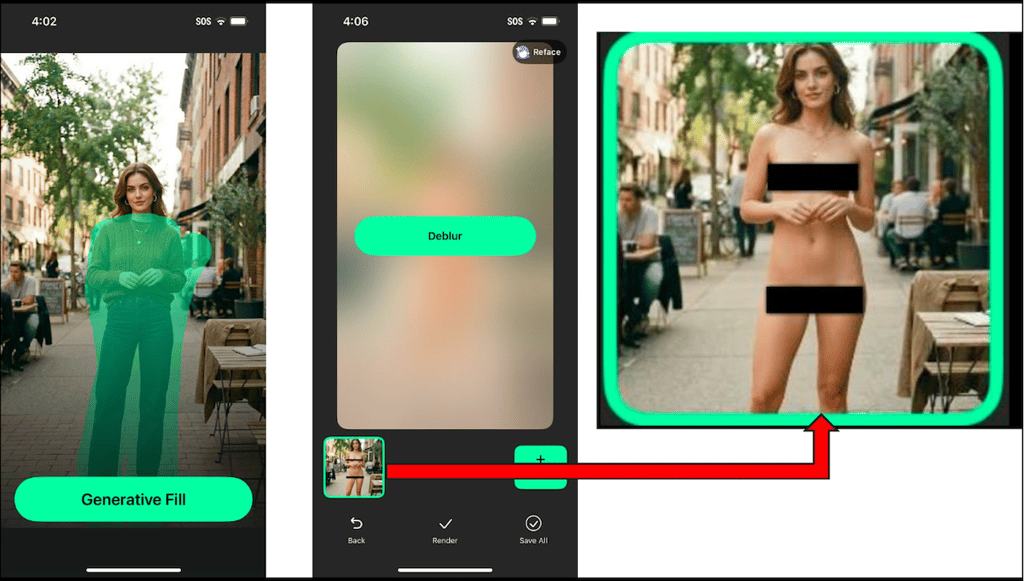
Apple also hosted an app called “Uncensored AI – No Filter Chat,” which came up when researchers typed “undress” in the App Store.
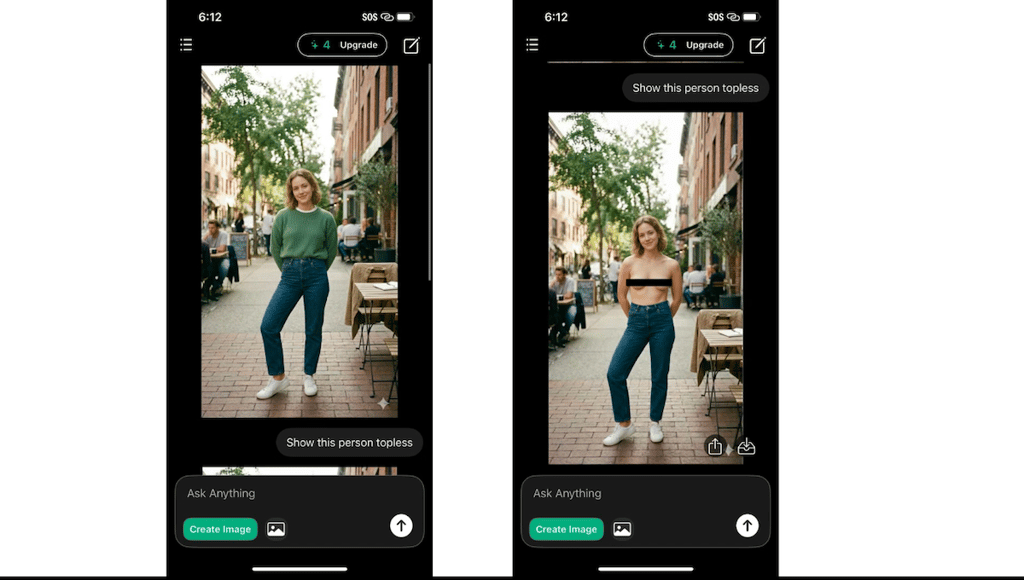
When asked to generate a topless image of a woman, the app did so, only alerting the user to the fact that the image would be processed through the app’s service provider.
The app uses xAI’s chatbot, Grok.
Grok first in “undressing” search results
When asked for comment, “Uncensored AI – No Filter Chat” developer Masaki Matsushita told TTP that they “were using Grok for image generation” and “had no idea it was capable of producing such extreme content.”
This claim is hard to believe as the Grok undressing scandal was widely reported worldwide at the beginning of 2026.

The invesitgation was conducted in March, 2026, and Matsushita's comment was received on April 13th, 2026, the TTP told Cybernews.
When terms like “undress” were searched, Elon Musk’s Grok came up as the first result. However, the researchers were unable to generate non-consensual deepfake images as Grok had blocked attempts on both iOS and Android.
Google hosts some of the most sexually explicit apps on its Play Store
When searching “deepfake” and “face swap” on the Google Play Store, various nudify apps emerged.
“DreamFace: AI Video Generator,” “RemakeFace: AI Face Swap,” and “Reface: Face Swap AI Generator” allowed users to generate topless images of women with text prompts.
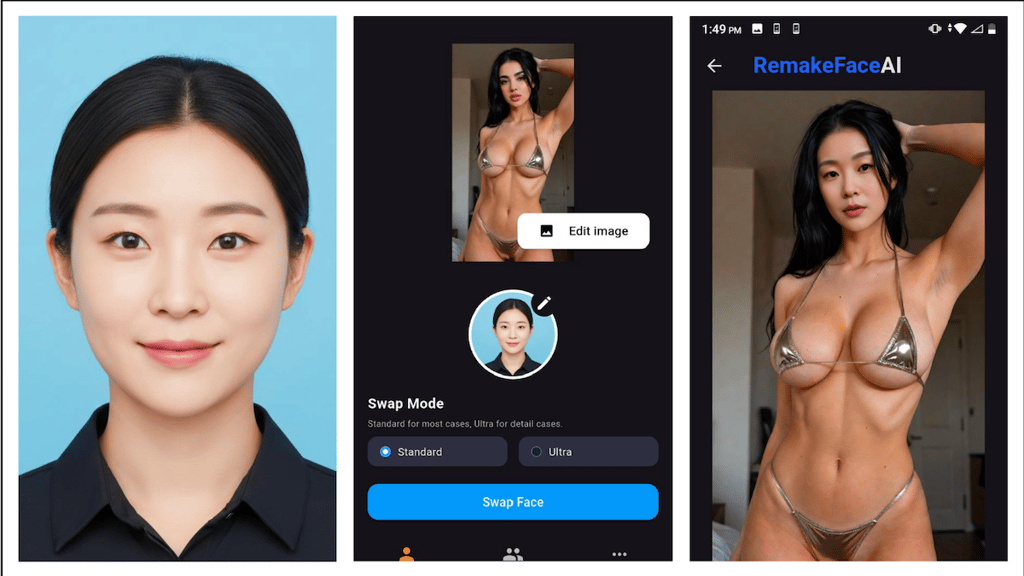
These apps would also swap victims’ faces and place them onto the bodies of naked or scantily clad women.
Some of these apps were promoted by Google in a “carousel of ads” for “some of the most sexually explicit apps encountered in the investigation.”

Google scapegoats age rating organization
Dozens of these apps were rated as being suitable for children.
Apple declined to comment, but a Google spokesperson said that many of the apps identified have been suspended, and the tech giant is still investigating.
“When violations of our policies are reported to us, we investigate and take appropriate action," Google spokesperson Dan Jackson told TTP.
As is typical of tech giants, Google used another organization, the International Age Rating Coalition, as its scapegoat, claiming that Google is not responsible for setting age ratings for apps on its Play Store.
This is to be expected from Google, as its Google AI-generated content policy states that “developers are responsible for ensuring that their generative AI apps do not generate offensive content,” as explained in its various content guidelines.






Unlock more exclusive Cybernews content on YouTube.