Brussels wants to tackle US tech, but 70% of its emails flow through American servers
EU institutions don’t practice what they preach.
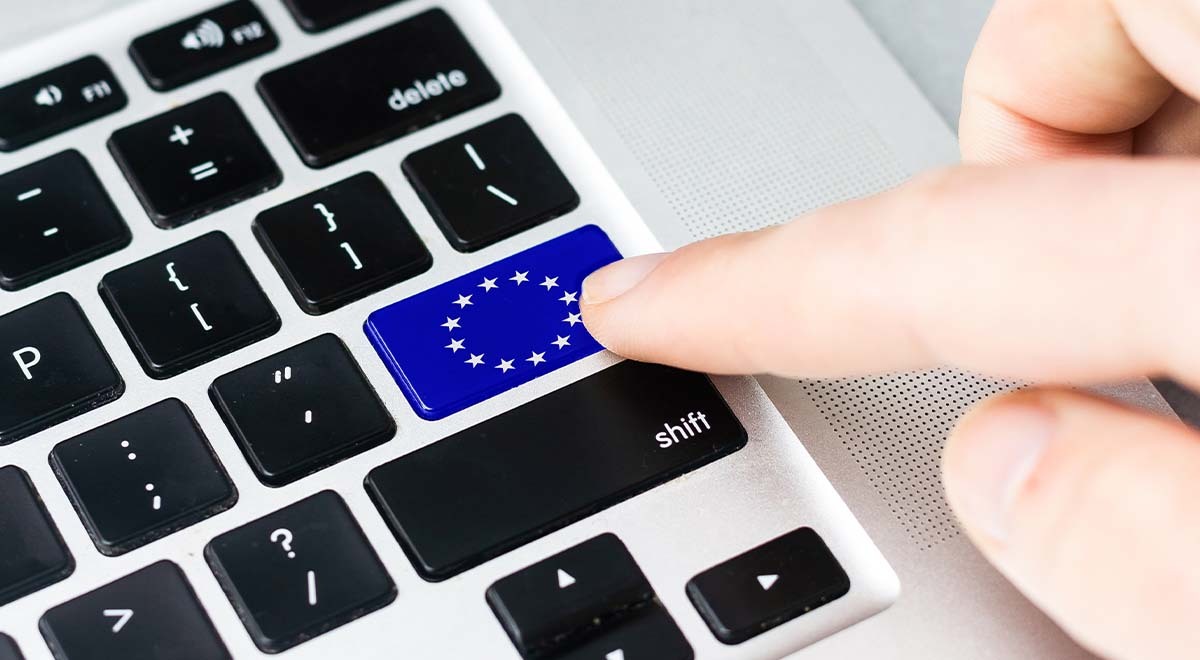
Image by Andrew Angelov via Shutterstock

 Follow us
- About 70% of EU institutions route email through American-owned servers, according to NOS.
- Microsoft handles email servers for more than half of EU institutions, bodies, and agencies.
- Only about 30% use European-owned email servers, while Parliament, Europol, and the EU court reportedly avoid US servers.
- Experts say a US service cutoff is highly unlikely for now, but it remains a sovereignty concern.
Key Takeaways by nexos.ai, reviewed by Cybernews staff.
EU institutions have been stepping up their efforts to reduce the continent's dependence on US tech, but nearly three-quarters of them still use American servers.
More than half of institutions, bodies, and agencies use the mail servers of a single provider, Microsoft, and 14% rely on servers owned by other American providers, according to an analysis by Dutch broadcaster Nederlandse Omroep Stichting (NOS).
Only around one-third (30%) of institutions route their emails through European-owned servers.
The European Commission, too, uses American servers, despite its efforts to tackle big tech with fines and legislation.






Ursula von der Leyen, the Commission’s president, said in July that Europe cannot depend on others for the crucial technologies that keep hospitals running and services secure.
“This is about protecting our citizens, defending our interests, and making our own choices,” she is quoted in a press release.
The NOS analysis suggests that the European Parliament does not use American email servers, nor do Europol, its law enforcement agency, or the Court of Justice of the EU.
Most Europeans distrust US tech companies
Europeans found a renewed interest in digital sovereignty amid deteriorating relations with the Donald Trump administration. Data privacy concerns are among the major drivers of the sovereignty push.
The US Cloud Act compels American companies to hand over data requested by its law enforcement, regardless of where it’s stored.
American companies say user data is shared with US law enforcement only in very rare, strictly defined circumstances, such as when data is requested by court orders.
However, these claims appear to do little to quell concerns on the continent. Around 84% of Europeans don’t trust US tech companies to handle their personal data responsibly, according to a Politico survey.
Microsoft was recently accused in 2026 of leaking Dutch civil servants’ data to the US House of Representatives. The employees worked on EU regulations on online services, aimed at combating illegal content and protecting user rights.
In theory, at least, using American servers could allow the US government to take a peek at the EU’s upcoming regulations targeting big tech.
The EU institution’s dependence on American mail servers may also prove troublesome in the event of a “kill switch.” In this scenario, the US government would order American companies to disable their services to customers in Europe.
In other words, one order from Trump would be enough for a large part of European institutions to have their email communications cut off.
Luckily, experts consider such a scenario highly unlikely – at least for now.