Europe's X users watched the same Ukraine war, but hawks and doves just couldn't agree what it meant
An analysis of 38 million tweets finds that social media users read the same events drastically differently.
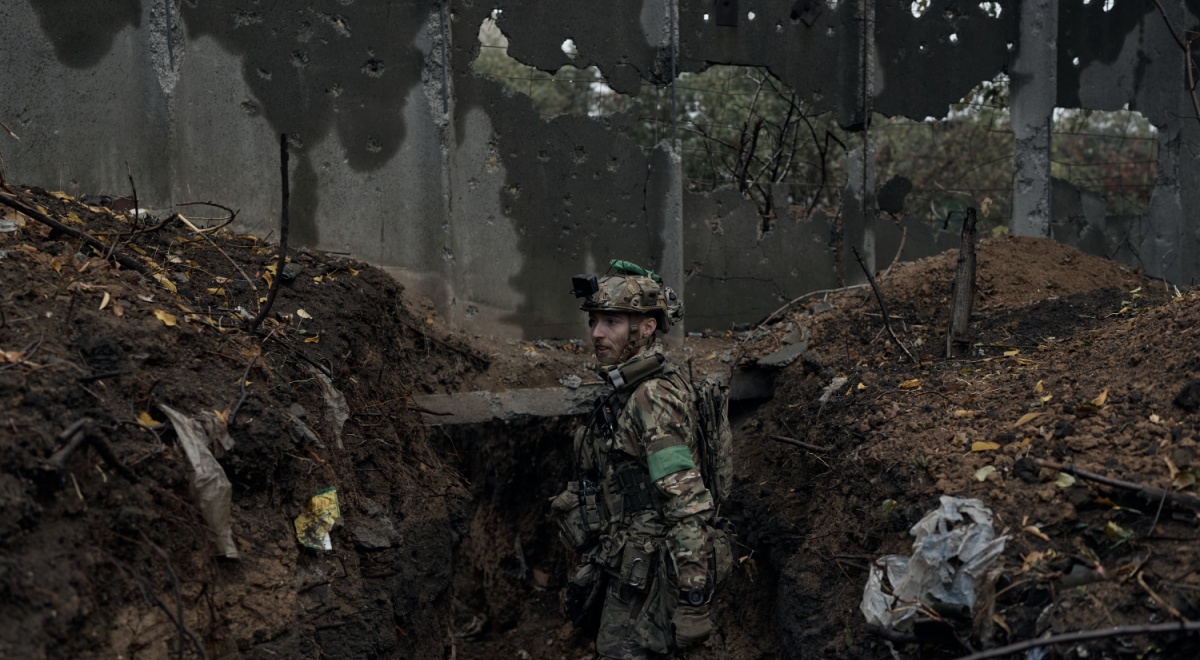
Ukrainian Marine in site where a Russian sabotage was eliminated. Kostiantyn Liberov/Libkos/Getty.

 Follow us
An analysis of 38 million tweets finds that social media users read the same events drastically differently.
Europe’s social media users have long argued about the war in Ukraine ever since Russian troops first set foot on Ukrainian soil in 2022. And they were not always split because they believed different things had happened in the fog of war.
The streaming video from FPS drones and other social media posts, shared through Telegram groups, meant that people could agree on factual events. But that didn’t mean there wasn’t disagreement. Quite often, they were split because they agreed on the basic facts – and bitterly disagreed on what those facts meant.
That’s the finding of a new preprint study published on the arXiv server that analyzed more than 38 million geolocated tweets from 20 European countries during the first eight months of Russia’s full-scale invasion of Ukraine. The researchers identified “hawkish” and “doveish” camps in almost every country they studied, but argue that the real divide between both sides was often interpretive about events, rather than disagreements on a factual basis.



Two tribes go to war
Both pro- and anti-Russian sides were watching the same headlines, the same atrocities, the same speeches, and the same turning points. But social media’s virality means they have been pushing those events into different narratives about blame, legitimacy, justice, and what Europe should do next.
The paper calls these groups “conditional publics” – where and whether rival online camps share a common frame of reference depends on the issue under discussion.
What the researchers call “pragmatist” questions – such as whether Europe should send weapons, impose sanctions, or recognize war crimes – saw hawks and doves often react to the same high-profile events.
But more “interpretive” questions, such as who was really responsible for the war, or whether peace should matter more than justice, were where they both differed.






The standard explanation is that social media users become more divided because they are pushed into different realities by misinformation, algorithms, or partisan feeds. But the research suggests something messier is going on: even when people are looking at the same reality, they can still end up miles apart because they attach different moral and political meaning to what they see.
Losing casual interest
That polarization becomes worse too because casual users have dropped away from the conversation about Ukraine as people grew tired of the war. That left the conversation to be dominated by longer-term, more engaged, and more insular users. The researchers say the platform may be selecting and promoting the people who were already the most committed.
That doesn’t mean the platform itself is off the hook. The paper argues that X was particularly well-suited to binding debate to major news events because of its role in real-time commentary among journalists, pundits, and political actors.
But the researchers admit they focused on highly visible retweeted content rather than quieter conversational exchanges, and they explicitly say they did not try to detect bots or coordinated influence campaigns.
Nevertheless, they found Europe’s online arguments over Ukraine were not always battles between truth and falsehood. They were often battles over interpretation. And that is a tougher problem for platforms – and for anyone hoping to rebuild a shared public sphere – because fact-checking alone cannot solve people who have wildly different interpretations of the same event.
Unlock more exclusive Cybernews content on YouTube.