Nokia partners with Ukraine to build a Starlink alternative as Trump asks Musk to ditch limits
Will it be indestructible like Nokia 3310?
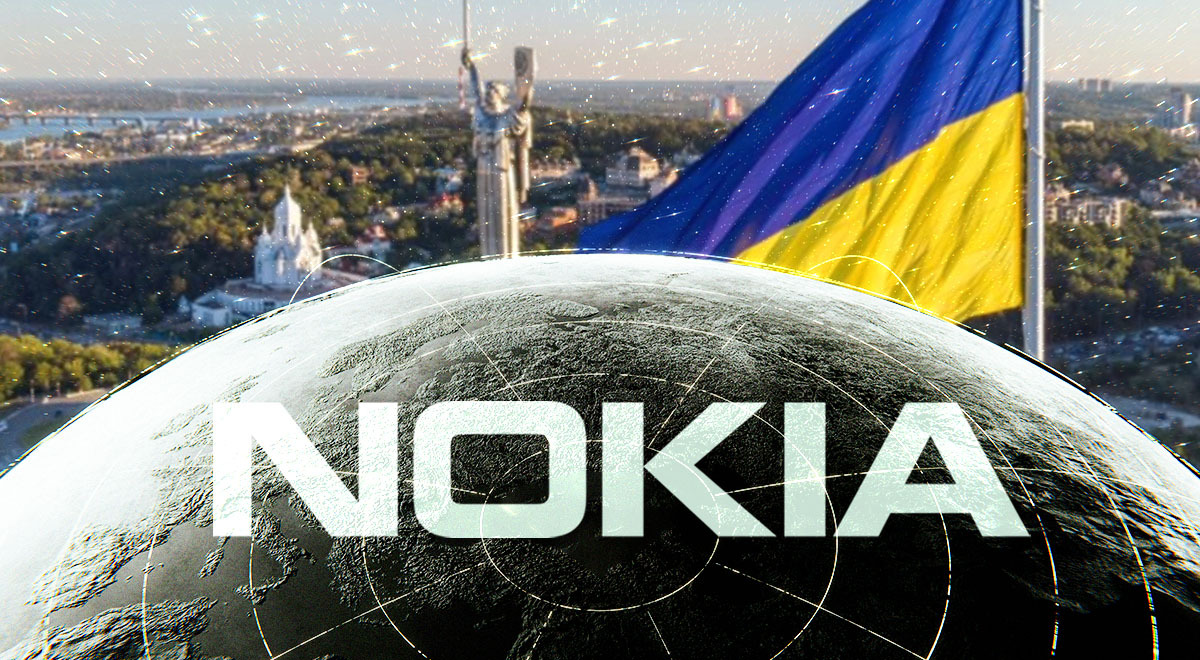
Images by Alex Shuper via Unsplash and Pandora Pictures via Shutterstock

 Follow us
- Nokia and ICEYE plan to help Ukraine build secure satellite communications it controls.
- Ukraine says recent Starshield limits disrupted drone operations and air defenses against Russian attacks.
- Trump reportedly asked Elon Musk to lift the Starshield restrictions, while both sides deny responsibility.
- Europe and Canada are developing satellite alternatives, but none yet match Starlink’s scale.
Key Takeaways by nexos.ai, reviewed by Cybernews staff.
Finland-based communications company Nokia plans to help boost Ukraine's defenses by building sovereign satellite communications capabilities.
Nokia, the firm that made the legendary 3310 phone, and Finnish aerospace company ICEYE have signed a Letter of Intent with the Ministry of Defense of Ukraine to explore cooperation in space, and announced it on October 22nd, 2026.
Nokia and ICEYE announced the partnership earlier in October to develop secure, sovereign, and high-performance broadband low Earth orbit (LEO) satellite communications systems.
They are intended for government use to support defense, border security, and disaster response missions, according to Nokia’s press release.








Stay updated with our latest stories and follow us on social media
Be the first to discover new stories, ideas, and updates from our team.
Rafal Modrzewski, CEO and co-founder of ICEYE, says Ukraine needs secure, sovereign, and high-performance satellite communications systems that it controls.
“We have a proven track record of delivering sovereign missions at speed to help build that capability. ICEYE has proudly supported Ukraine since 2022, and we remain committed to continuing that support today,” Modrzewski is quoted as saying.
Musk ordered Starlink restrictions
The partnership was announced days after Ukrainian officials reported that Starlink’s military-grade service, Starshield, stopped working on terminals moving at speeds of 100mph (160km/h) or greater.
Kyiv says restrictions hinder their drone attack operations and disrupt air defense systems that intercept Russian drones, leaving the military and civilians even more vulnerable to Moscow strikes.
The Donald Trump administration and Elon Musk, who owns Starlink, deny the responsibility for imposing limitations and are pointing fingers at each other.
However, media reports based on anonymous sources suggest that it was Musk who ordered the slowdown of Starshield.
The Wall Street Journal reports that Trump called Musk on October 23rd, asking him to lift restrictions on Starshield, while some Ukrainians report military units experiencing higher Starlink speeds.
This isn’t the first time Ukraine has experienced Starlink disruptions at a critical time on the battlefield. Musk reportedly ordered the service switched off in 2022 amid Kyiv’s counter-offensive aimed at recapturing territories occupied by Russia.
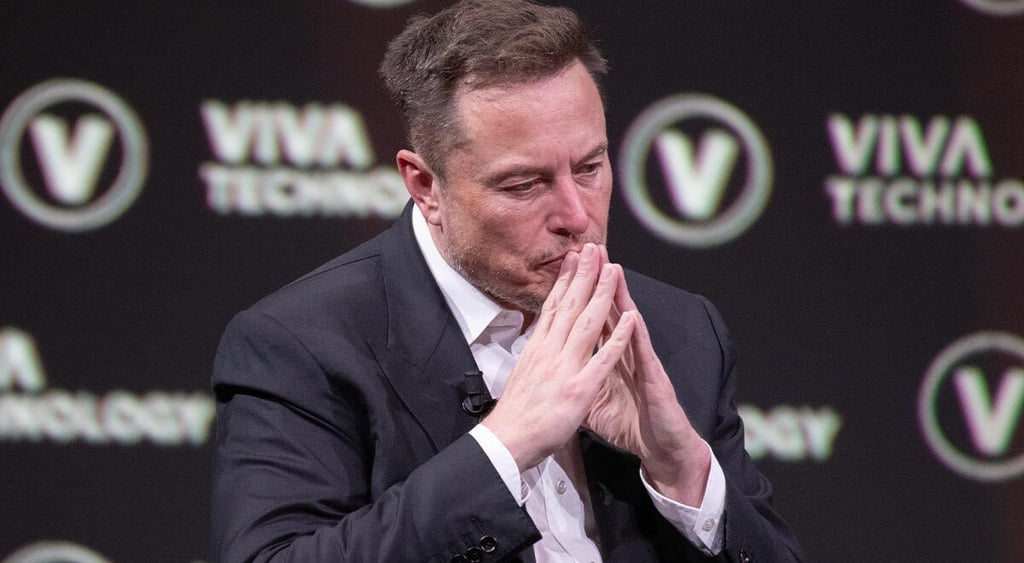
The restrictions attracted criticism even from Musk’s allies.
SpaceX investor Ross Gerber told CNN he was “disgusted” with Musk, calling the decision to impose Starlink constraints “strategically horrendous” and “horrible” from a humanity perspective.
Gerber said that Musk gave a reason to believe that Starlink isn't reliable for national security.
European alternatives to Starlink
The slowdown of Starlink reignited concerns about dependence on American technologies across Canada and Europe, the latter of which currently pays for Starlink services in Ukraine.
There’s currently no full-fledged alternative to the Starlink network, which consists of over 10,000 satellites in low Earth orbit.
However, Nokia and ICEYE aren’t the only companies looking into expanding satellite communication networks.
Major European telecom providers, Deutsche Telekom, Orange, Telefonica, and Vodafone, announced on October 19th that they are considering a joint venture for radio spectrum to provide “direct-to-device” satellite mobile service.
The European Union (EU) is currently negotiating to fast-track Ukraine’s connection to its GOVSATCOM secure satellite communications program, which began operations in January 2026.
The EU’s multi-orbit satellite program, Infrastructure for Resilience, Interconnectivity and Security by Satellite (IRIS²), based on the 290-satellite constellation, is expected to be initially deployed by 2029.
Meanwhile, Canada’s Telesat says its LEO broadband satellite network will enter service in early 2028 and can be extended to allied militaries, including Ukraine.