Canada’s Telesat is building a Starlink rival and is ready to share it with Ukraine
Canada’s big sovereignty gamble.
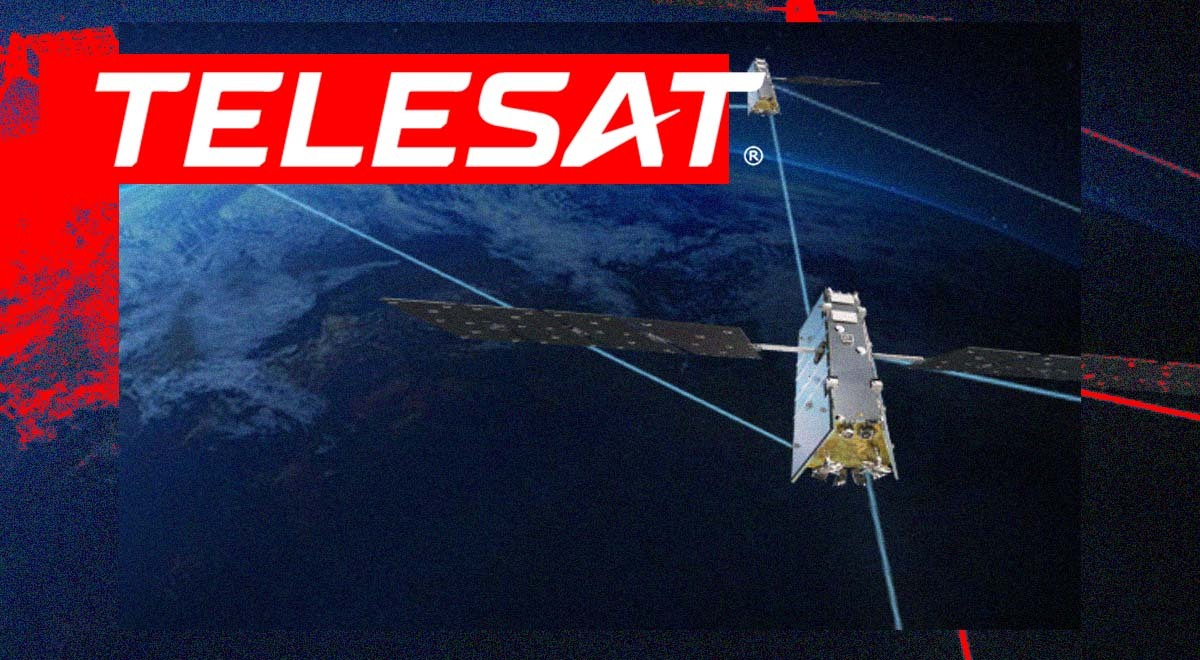
Screnshot from Telesat website/Illustration by Cybernews

 Follow us
- Telesat plans to launch Telesat Lightspeed service in early 2028 for governments, telecoms, and defense customers.
- Canada awarded Telesat a CA$2.3 billion contract to improve military communications, especially in the Arctic.
- Telesat says it may extend Lightspeed services to Ukraine and other allied partners.
- Ukraine relies heavily on Starlink, but past restrictions have pushed allies to seek backups.
Key Takeaways by nexos.ai, reviewed by Cybernews staff.
Ottawa-based Telesat says its low-Earth-orbit broadband satellite network will enter service in early 2028 and be available to allied nations, including Ukraine.
The US government’s decision to temporarily restrict Ukraine’s use of SpaceX’s military-grade Starlink system, Starshield, disrupted the country’s defense operations, leaving Ukrainians even more vulnerable to continuous Russian attacks.
It also made US allies, increasingly at odds with the Donald Trump administration, rethink their dependence on American technologies.
Starlink, a network of over 10,000 active satellites in orbit that delivers high-speed internet to remote areas, remains unrivaled, despite European countries and Russia actively developing their own alternatives.






Canada’s satellite communications company, Telesat, has also entered the race and plans to deliver its advanced global low-Earth-orbit high-speed broadband network, Telesat Lightspeed, by the first quarter of 2028.
The company tells Cybernews that the network is being purpose-built for telecom operators, enterprises, governments, and defense organizations that require “carrier-grade performance, security, service assurance, and seamless integration with existing terrestrial network.”
In August, the Canadian government awarded Telesat a CA$2.3 billion ($1.63 billion) contract to “strengthen secure and reliable military communications” for the Canadian Armed Forces (CAF), particularly in the Arctic and high-latitude regions
Telesat will provide the Canadian army with LEO military Ka-band (Mil-Ka) communications at 500 MHz, which the company says will allow allied forces to “access more Mil-Ka bandwidth, in more places, with greater resilience.”
Telesat tells Cybernews that it will consider extending Telesat Lightspeed services to Ukraine.
We expect Telesat Lightspeed to serve government and defense customers in Canada, across the NATO Alliance, and among other allied partners,Telesat
Telesat Lightspeed vs Starlink
Unlike Starlink, Telesat Lightspeed won’t focus on consumer and commercial applications.
The Canadian company is yet to launch the first satellites of its planned 225-satellite fleet into low Earth orbit – it is planned for December 2026.
In addition, its satellite constellation will be deployed by SpaceX’s Falcon 9 rockets, making the company SpaceX’s largest customer after the US government, according to Telesat’s CEO, Daniel Goldberg.
Yet, the company is hopeful that it can find its place in the market.
“Right now, it’s really just Starlink that’s out there in the market. Next up will be Telesat. Amazon is also coming into this market,” Goldberg told Bloomberg.
The Canadian government’s billion-dollar bet on Teleset Lightspeed, however, worries some experts.
The analysis by the Center for International Governance Innovation (CIGI) states that Ottawa has committed to a massive gamble that Telesat's satellites will get into orbit on time and demonstrate their promised capabilities.
“If the gamble pays off, it will bring real benefits for sovereign Arctic communications and the potential for new and advantageous allied partnerships,” it reads.
What are European alternatives to Starlink?
Starlink has become the key backbone for Ukrainian civilian and military communications, as well as drone operations, since Russia launched a full-scale invasion in 2022.
Joshua VerGow, a nonresident Senior Fellow at the Atlantic Council, writes that losing access to Starlink would force units to improvise backup plans and change how information flows and how missions are coordinated and executed.
“Even limited disruptions can create cascading operational problems,” he states.
It wouldn’t be the first time Ukrainians have been blindsided on the battlefield.
Elon Musk, the CEO of SpaceX, ordered the disabling of Starlink for the Ukrainian forces in late 2022 to disrupt Kyiv’s counter-offensive aimed at recapturing territories occupied by Russia, resulting in communications blackouts, according to Reuters.

Europeans, who currently finance Ukraine’s use of Starlink, are scrambling to offer alternatives, while Trump’s rhetoric increasingly sides with Moscow.
Major European telecom providers, Deutsche Telekom, Orange, Telefonica, and Vodafone, are considering a joint venture for radio spectrum to provide “direct-to-device” satellite mobile service and reduce the continent’s dependence on foreign providers, the Financial Times reports.
The EU is also in talks with Kyiv about Ukraine joining the GOVSATCOM secure satellite communications program, which has been operational since January 2026, but it remains unclear whether it can fully replace Starlink’s capabilities on the battlefield.
The EU’s secure, multi-orbit satellite program, Infrastructure for Resilience, Interconnectivity and Security by Satellite (IRIS²), which involves a constellation of 290 satellites, is expected to be initially deployed by 2029.