Potential employee looks suspicious? This software can tell if they’re wearing smart glasses
Detect smart glasses. Alert the security.

Detection system spots smart glasses and Flock cameras. Image source: Amazon UK | Shutterstock

 Follow us
- Bastille’s software detects smart glasses by monitoring wireless signals from WiFi, Bluetooth, and cellular frequencies.
- The system can locate a wearer within 1 to 3 meters and alert security teams within seconds.
- Bastille says the tool helps protect sensitive workplaces from recordings and data theft without a system hack.
Key Takeaways by nexos.ai, reviewed by Cybernews staff.
Bastille Networks, a cybersecurity company that provides wireless intrusion detection systems (WIDS), has developed software to detect and locate smart glasses.
The software works by “continuously monitoring the invisible radio signals that every wireless device emits.”
It works as an add-on to the existing Bastille platform, which tracks different types of devices in real time via WiFi, Bluetooth, and cellular frequencies.
Once someone wearing smart glasses enters a building, within seconds, the system identifies their unique wireless signature and finds their location within 1 to 3 meters, and warns security teams via their systems.





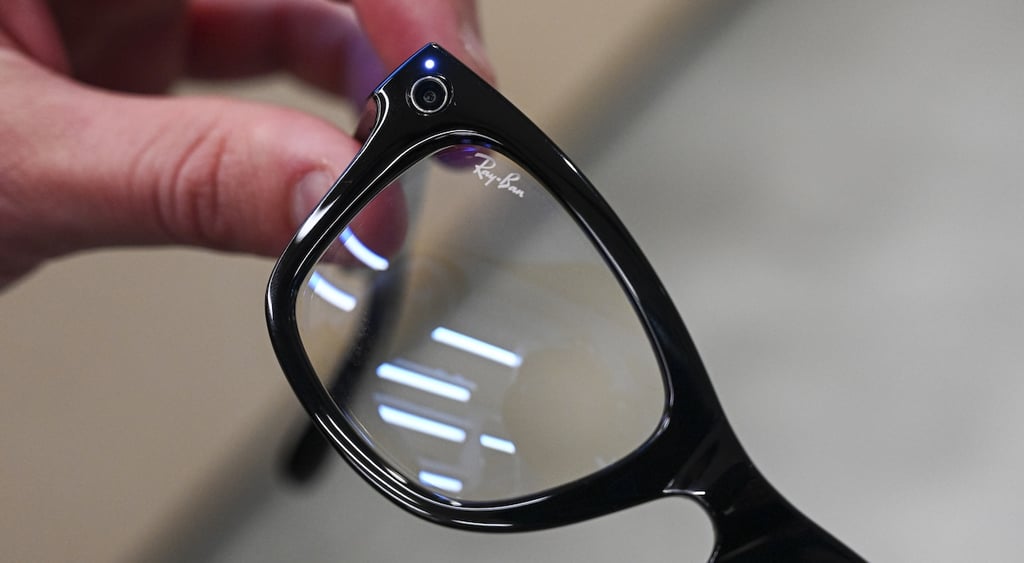
The company stated that the new smart glasses location feature should be available with the next software update for companies that already use Bastille services.
“As people increasingly wear smart glasses, including government officials and military personnel, the threat of information exfiltration is growing exponentially. Governments and corporations with sensitive operations can no longer afford to be blind to them,” said Chris Risley, CEO of Bastille Networks.
Backlash against smart glasses in all sectors of society
The company has released a video showing how smart glasses can be used to cause harm in real-life.
It showed a man heading to a job interview. Unbeknownst to the company, the interviewee was wearing smart glasses, so he had no problem leaving his phone, as he was still able to capture everything shown and said during the workplace tour.
The video was shown as an example of smart glasses being used to steal important data without even having to hack the company’s systems.
While the company emphasized the need to protect governments and corporations, there’s also a desire to avoid smart glasses among private individuals.



Stay updated with our latest stories and follow us on social media
Be the first to discover new stories, ideas, and updates from our team.
For this reason, a few smart-glasses detection apps are already available on the market.
For example, an Android-based app called “Nearby Glasses” can tell users when such a device is nearby by detecting it using Bluetooth signals.
The app was created by a German researcher, Yves Jeanrenaud, who shared it on GitHub and also made it available on the Google Play Store and App Store.
The conversation on this topic is live. Join in the discussion.
The application grew in popularity, with some even trying to profit from its open-source code. This made Jeanrenaud flag similar apps that aren’t actually related to the original project.
The backlash against “pervert glasses” has also made those who want to use the technology in harmless ways, such as capturing content or for convenience, think twice before actually going out with the device.
Some of the smart glasses owners shared that they’re scared of being accused of being “creepy.”