Pervert glasses detection app Nearby Glasses fights impostors on app stores
Smart glasses detection apps try to profit from the “pervert glasses” security panic.
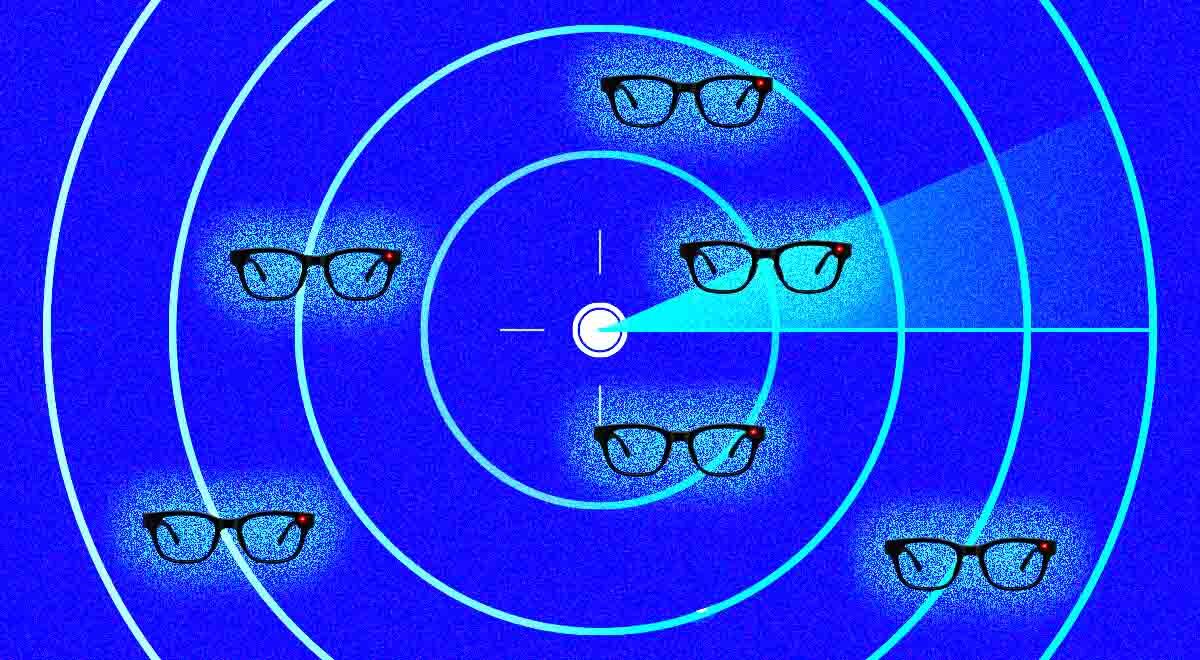
Image by Cybernews.

 Follow us
- Nearby Glasses’ creator warns copycats are reusing open-source code and similar branding to profit from privacy concerns.
- The free app detects nearby recording-enabled smart glasses through Bluetooth signals without collecting personal data or showing intrusive ads.
- The creator says clones violate license terms, while some charge fees or omit privacy policies.
Key Takeaways by nexos.ai, reviewed by Cybernews staff.
The creator of "Nearby Glasses," an app that can somewhat reliably warn users of nearby recording-enabled smart glasses, warns that copycats are trying to cash in on its anti-surveillance mission.
The free, privacy-preserving app Nearby Glasses was released in February 2026, even before the new popular term “pervert glasses” was coined, stemming from backlash over predatory recording behavior by some smart glasses users.
Since then, the creator, PD Dr. phil. Yves Jeanrenaud has added support for several new recording devices, including HeyCyan, Nilox, RollMe, and Rogbird, released an iOS app, expanded language support, and made the app available on additional storefronts.
However, impostors are now grabbing open-source code and trying to make a quick buck.


“Many apps in the Play Store and App Store look or are even called something very similar to Nearby Glasses. They seem to hijack the name and try to make a quick profit from it. They do not adhere to the AGPL license, give no whatsoever. I do not endorse this,” Jeanrenaud posted in the GitHub repository.



Stay updated with our latest stories and follow us on social media
Be the first to discover new stories, ideas, and updates from our team.
The German researcher flagged nearby-glasses-alert.pages.dev as unrelated to the original project. The site advertises an app called “Nearby Lens: Glasses Detector,” available for €1.99 on both the Google Play Store and the Apple App Store.
Several other similar apps offering comparable features can also be found on both stores.
Jeanrenaud now deliberately lists the app “Nearby Glasses (Original)” on the App Store to distinguish it from copycats.
The researcher created it solely to alert users about nearby smart glasses, without collecting any personal data or displaying intrusive ads. Some clones don’t even provide a privacy policy.
The app checks for Bluetooth signals
Cybernews previously reported that the Nearby Glasses app works by analyzing Bluetooth signals. It will not exactly pinpoint where the smart glasses are, but will alert to their nearby presence.
Every Bluetooth Low Energy (BLE) device sends advertising headers containing manufacturer-specific data, such as the company ID. These IDs are assigned by Bluetooth SIG (Special Interest Group), the global governing organization, and are immutable and mandatory:
- 0x01AB for Meta Platforms, Inc. (formerly Facebook)
- 0x058E for Meta Platforms Technologies, LLC
- 0x0D53 for Luxottica Group S.p.A (who manufactures the Meta Ray-Bans)
- 0x03C2 for Snapchat, Inc. (that makes SNAP Spectacles)
- 0x05D6 for Zhuhai Jieli Technology Co (the maker of Rogbird VisionPro and Rollme VistaView)
This method is still not perfect, because manufacturers are producing other products with the same IDs, including VR headsets.
The default -75 dBm signal strength (RSSI) value allows users to detect devices at about 10 meters. However, users can select to be alerted to weaker signals of up to -100dbm, which would detect smartglasses at 30-100 meters distance at near signal loss.
The app later added scanning for broadcasted device names and UUID scanning, another BLE identifier that might be fixed to some smart glasses software.
Not only are smart glasses facing growing criticism for enabling stalking or surveillance, but authorities are also taking action to ban their use in some places.
The recording-enabled eyewear and headwear have been banned in New York state courts since July 20th. The College Board banned US students from wearing smart glasses during the Scholastic Assessment Test (SATs) in March, 2026. Meta itself is cracking down on harassers and pranksters using Meta glasses to prey on unsuspecting people, banning their accounts.