UK app developers sue Apple for £2B over tracking rules
It’s accused of giving its own apps and services preferential treatment.
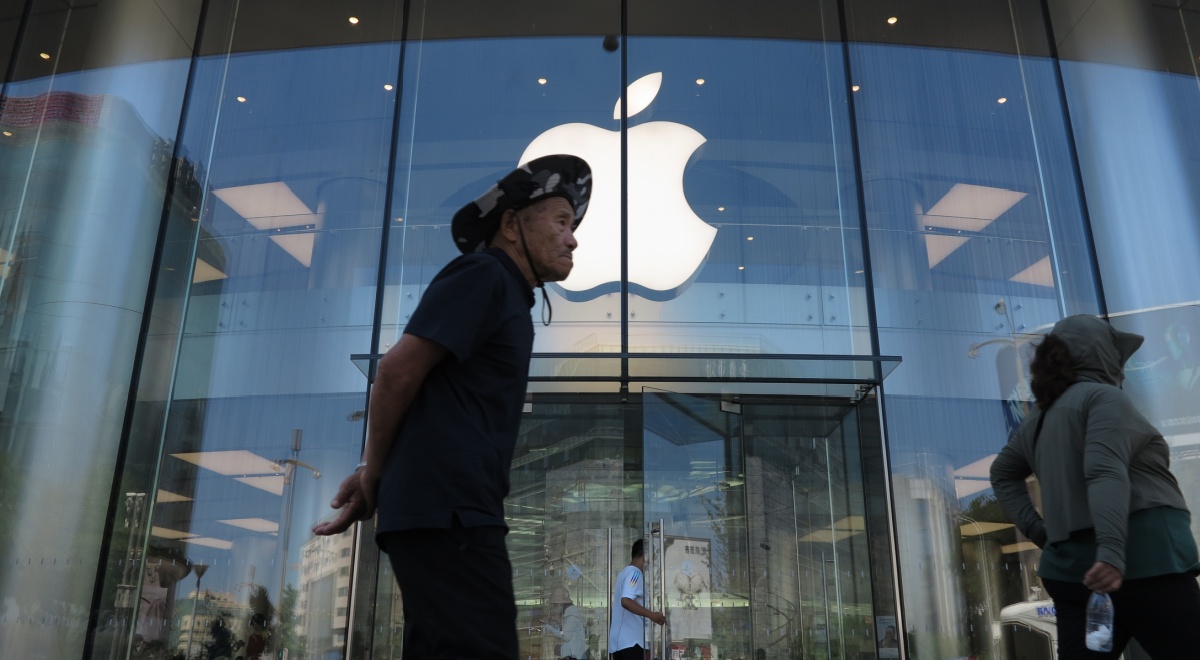
Pedestrians pass by an Apple store in Beijing, China. CFOTO/Future Publishing via Getty Images.

 Follow us
- Apple faces a £2 billion UK lawsuit over its App Tracking Transparency rules.
- Developers allege Apple uses tougher consent prompts for third-party apps than for its own services.
- The claim says the rules harmed developers that rely on advertising revenue.
Key Takeaways by nexos.ai, reviewed by Cybernews staff.
Apple has been sued in the United Kingdom on behalf of thousands of app developers over a privacy feature called App Tracking Transparency. It now faces a £2 billion collective action.
The App Tracking Transparency framework requires app developers to obtain a user’s permission to track their data across third-party apps and websites.
The privacy feature has been around since 2021, when iOS 14.5 was announced. Since then, app developers have to ask users for permission if they want to track them, for example, for advertising purposes.
Ever since Apple launched App Tracking Transparency, advertising networks, including Facebook, have voiced strong criticism of Apple’s privacy feature.






The company stated that the privacy feature makes it more difficult for advertisers to track their customers, which would particularly impact small business owners because Facebook would no longer be able to serve targeted ads on its platform.
On top of that, Apple would apply stricter rules for third-party app developers than for its own apps and services.
For its own apps, Apple asks for permission for “personalized advertising,” whereas for third-party app developers, it involves permission for “tracking,” giving Apple a competitive advantage.



Stay updated with our latest stories and follow us on social media
Be the first to discover new stories, ideas, and updates from our team.
“As a result, the double consent requirement for third-party apps is harmful to developers, whose business model relies on the sale of advertising space, as well as to advertisers and advertising intermediation platforms,” UK law firm Hausfeld says in a statement.
Therefore, thousands of app developers in the UK have filed a class-action lawsuit with the UK Competition Appeal Tribunal.
The claimants allege that Apple imposes stricter requirements on third-party app developers than on its own services, leaving UK app developers unable to adapt their business models to avoid significant losses.
“Privacy is an important protection for consumers, but it should be applied fairly and in a way that ensures businesses of all sizes can compete on a level playing field. It cannot become a reason for digital platforms to play by one set of rules while forcing app developers to play by another,” Ann Pope says in response, who’s involved in the lawsuit and previously was a senior director with the Competition and Markets Authority (CMA).
The law firm points out that Apple has already been fined over the controversial privacy feature, including in France and Italy.
Last month, Germany’s competition authority found that Apple's App Tracking Transparency framework gave its own apps more favorable consent prompts than those of third-party developers, potentially breaching competition rules.
Apple was given 4 months to implement changes.