AI doesn’t kill jobs, it unbundles them and reduces your pay
Some forecasts say that intensifying automation might put millions of Americans out of work, but a new paper argues it’s not so simple – if your so-called job-bundle is strong, you’re probably safe.

Image by Cybernews.

 Follow us
Some forecasts say that intensifying automation might put millions of Americans out of work, but a new paper argues it’s not so simple – if your so-called job-bundle is strong, you’re probably safe.
In January, one analyst said that AI and automation could wipe out roughly 6% of jobs in the US by 2030. That equates to 10.4 million fewer positions than today.
Last year, US Senator Bernie Sanders, although famously prone to overdramatizing, also said that AI could destroy 100 million jobs.
The fear – or glee, since corporate leaders see a path to larger profit margins – that AI is already causing widespread unemployment is real. There’s even a term for people fearing job automation: apparently, they’re suffering from AI Replacement Dysfunction.
The assumption is pretty simple: if AI can do enough of what you do, you’re done. And if you’re not keen to reskill, you’ll remain jobless.



But it’s not that simple, authors of a new research paper called “Weak Bundle, Strong Bundle: How AI Redraws Job Boundaries” claim, pushing back on the idea that more AI exposure almost automatically means fewer jobs.
According to Luis Garicano, professor at the London School of Economics, and Jin Li and Yanhui Wu, who both work at the University of Hong Kong, it’s not accurate to simply call a job a task or a list of tasks.
The conversation on this topic is live. Join in the discussion.
Jobs are bundles, they say, and it’s illogical to simply count how many tasks AI can perform in a given occupation and then infer that more exposure means more displacement.
“Much of the discussion of AI and labor markets starts from task exposure: if AI can perform more tasks in an occupation, that occupation should lose employment or earnings,” say the researchers.






“This is incomplete because labor markets price jobs, not tasks. Jobs bundle tasks together, and the effect of AI depends on how costly it is to break the bundle.”
A good example is radiology. A radiologist doesn’t just sell image classification, but does many other jobs: triages cases, communicates with other physicians, trains residents, makes the difficult decisions, and signs a diagnosis, Garicano further explains on X.
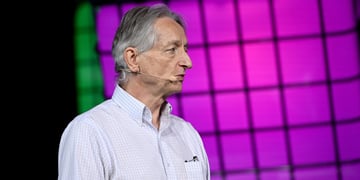
Famously, Geoffrey Hinton, one of the so-called godfathers of AI, said in 2016 that medical schools should stop training radiologists as AI would soon outperform them at reading scans.
This, of course, hasn’t happened: there are now more radiologists than ever, and they earn more than they did a decade ago, says Garicano.
That’s because the job of a radiologist is a strong bundle, and it’d be costly to unbundle all those tasks from the job. A weak bundle, on the other hand, can be split apart with no trouble, it seems, and the human might be left with a much narrower – and more modestly compensated – job.
“In weak-bundle occupations, AI automates some tasks and narrows the boundary of the job, leading to the standard task-substitution channel,” the paper reads.

Check if your data was exposed
Find out if your email and related personal information have appeared in known data breaches.
“In strong-bundle occupations where tasks are not independently reallocable, AI improves performance inside the job, but does not remove the human from the bundle. Thus, bundling provides a force that protects jobs and the labor share.”
Interestingly, even before the paper was published this week, Nvidia CEO Jensen Huang discussed automation and jobs on Lex Fridman’s podcast, and said he was “certain 100% that everybody’s jobs will be changed” by AI.
According to Huang, many tasks will be automated, and those jobs will be highly disrupted: “But if your job’s purpose includes you, then it’s vital that you go learn how to use AI to automate those tasks.”
Unlock more exclusive Cybernews content on YouTube.