Found your dream home on a real estate listing? Make sure it's not AI slop
With home seekers getting increasingly frustrated with AI-generated images in real estate listings, regulation is mainly in the hands of professional realtor organizations.

Image by Cybernews.

 Follow us
With home seekers getting increasingly frustrated with AI-generated images in real estate listings, regulation is mainly in the hands of professional realtor organizations.
Imagine driving for two hours to see your prospective dream home, only to discover that it looks totally different in real life because the images were tweaked with AI.
This is one of many stories shared by Reddit users who were recently deceived by AI-generated, or what some realtors call “visually enhanced” images, in real estate listings.
One Redditor was enticed by a lawn so realistic it even had yellow spots, but after arriving at the property, they learned it was “entirely mud.”
An X user shared a comparison of how a house looks on a listing and on Google Street View, suggesting that not only the house but also its environment, including the sidewalk and a tree, was heavily digitally manipulated.






Like this had me screaming. This the pic in the listing v.s what shows up on google maps. 😂 https://t.co/8fmJt9b6zF pic.twitter.com/ybpPPlPXWy
undefined I appreciate you. (@DeeLaSheeArt) October 6, 2025
Using digital tools like Photoshop to provide staged photos of how a property would look fully refurbished isn’t new. However, generative AI tools make digital manipulation much cheaper, easier, and more effective.
Ben Colman, co-founder and CEO at Reality Defender, says generative AI models like Sora and Nano Banana are producing highly convincing content.
“Manually detecting images and videos is a Sisyphean task. There is no one foolproof way to manually determine real from fake these days,” Colman told Cybernews.
Generative AI technology is often advancing faster than legislation. Nevertheless, some countries have already started the fight against deceiving buyers and renters.






The state of New South Wales in Australia introduced a law earlier this year that requires renters to disclose if images in rental advertisements have been altered to conceal faults, with fines ranging from $5,500 to $22,000.
The US Federal Trade Commission’s Truth in Advertising Law requires ads to be “truthful and not misleading” and can be applied to real estate listings. However, no law explicitly prohibits realtors from using AI.
Is using AI in real estate listings legal?
David Cohen, a real estate lawyer at Cohen Property Law Group, says several US states have made their own changes or decided to pass laws requiring disclosure of AI in real estate listings.
California’s Assembly Bill 723, which will take effect on January 1st, 2026, obligates real estate agents to inform home seekers that the picture has been changed digitally and provide an unedited edition or a link to the original picture.
If the images created by AI give the wrong impression of a property’s features or its condition, prospective buyers may assert that they were tricked, thereby giving rise to possible legal suits.David Cohen
Cohen says realtors who do not reveal the use of AI in their listings may face legal consequences, such as penalties and even suspension or revocation of their agent’s license.
False ads can also result in taking agents to court over misrepresentation or deceit.
“If the images created by AI give the wrong impression of a property’s features or its condition, prospective buyers may assert that they were tricked, thereby giving rise to possible legal suits,” Cohen tells Cybernews.
According to the bill, digital image alteration does not include common photo editing adjustments like lighting, sharpening, or color correction, as they “do not change the representation of the real property.”
However, using AI to make a house to hide cracks in walls or make the yard look bigger can get realtors in trouble, says William “Bill” London, a partner at Kimura London & White, a law firm.
“The safest thing for realtors to do is to be honest and say when pictures have been changed with AI. It keeps everyone out of trouble,” London says.
Realtors are regulating themselves
According to the National Association of Realtors' (NAR) 2025 Technology Survey, as many as 46% of realtors use AI-generated content, including for producing listing descriptions.
Many report that AI tools have had a positive impact on their job. At the same time, professional real estate organizations are self-regulating to protect home seekers from misleading images and videos.
Christy Walker, a broker-owner at Remax Signature in Phoenix AZ, says that rules for AI images are generally set by a local multiple listing service (MLS), a database of property listings accessible to estate agents and professionals within the industry.
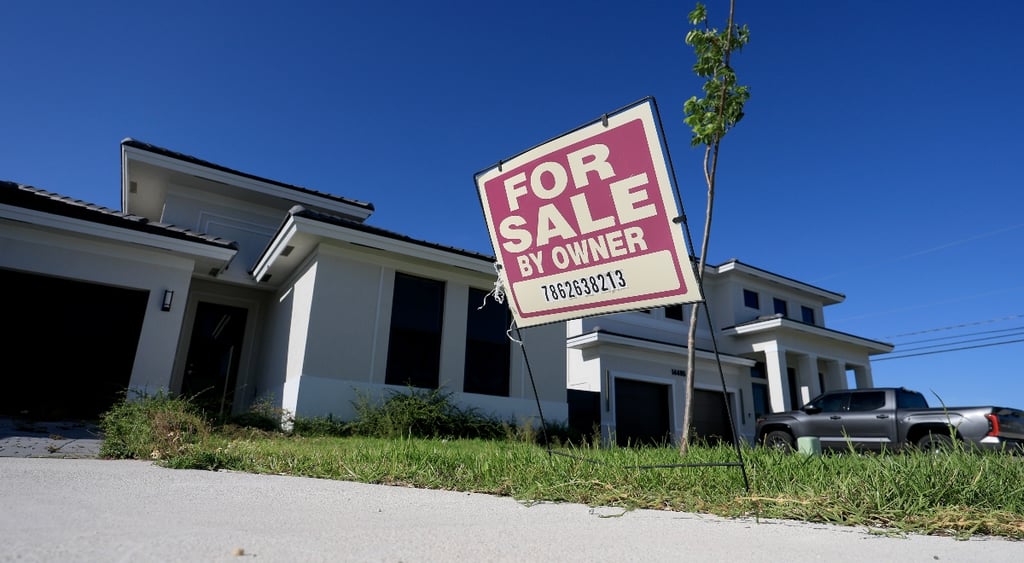
She says many MLSs require a watermark or disclosure of some kind if photos were virtually edited or staged. A standard practice is to disclose the virtual staging or put the virtually staged picture next to the unstaged picture.
“So consumers can see both images clearly and understand the staged photos are there to invoke their imagination and an emotional response to what the space could look like or be used for,” Walker says.
The NAR’s Code of Ethics and Standards of Practice prohibits realtors from “exaggeration and misrepresentation” of facts relating to the property. However, it isn’t legally binding the same way as a federal law is; thus, it doesn’t apply to non-members of the NAR.
Therefore, home seekers continue experiencing horror stories, like a Redditor who learned that a house with “excellent photos” hadn’t been renovated since the 40s.
They wrote, “The wood beams in the photos were literally spray-painted Styrofoam in person, but the AI made them look like thick natural logs.”
Unlock more exclusive Cybernews content on YouTube.