Landlord fined for using AI to fake a smoke detector required by law
He is ordered to pay over $15,000.
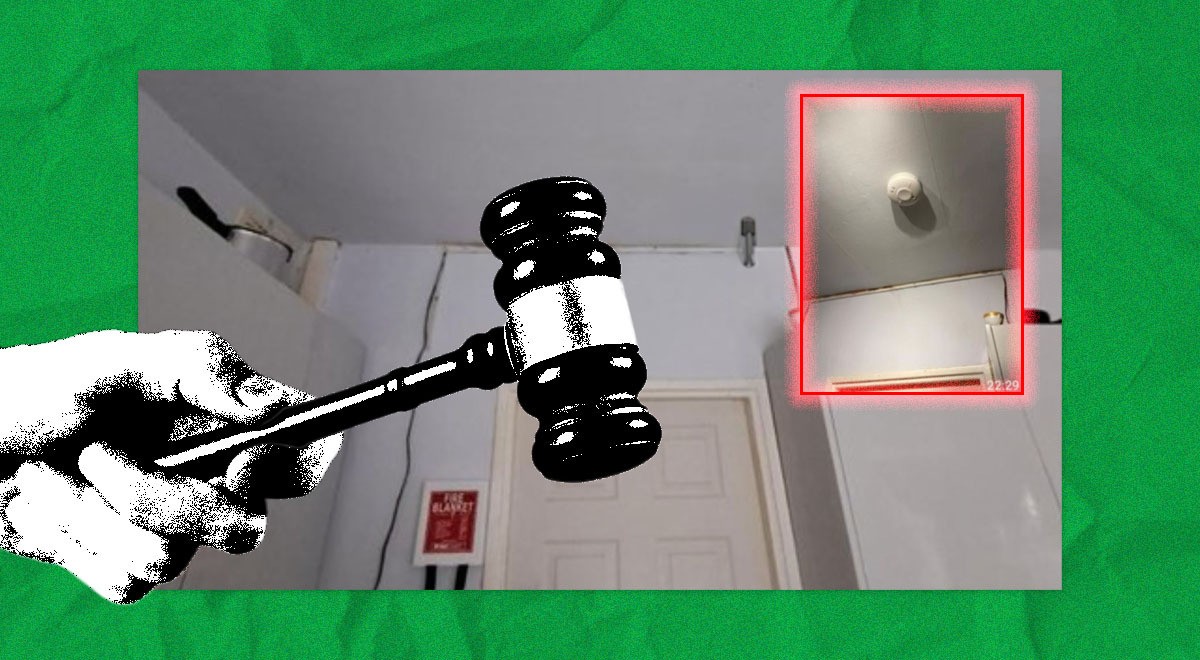
Image by Cybernews

 Follow us
- A Leeds landlord was fined after using an AI-generated image to fake a legally required smoke detector.
- Bradford Council found Mindaugas Palaima guilty of 10 offenses, including running an unlicensed shared house.
- Inspectors also found missing fire-escape windows and doors, raising safety concerns for tenants in the illegally sublet property.
- The case highlights growing AI-enabled rental fraud, including fake listings, synthetic identities, and illegal subletting risks.
Key Takeaways by nexos.ai, reviewed by Cybernews staff.
A landlord in the UK city of Leeds has used AI to trick the local council into believing he had installed a smoke detector in a house he was illegally subletting.
Bradford Council investigated Mindaugas Palaima, 44, over safety issues at one of the properties he had turned into a House in Multiple Occupation (HMO), a property rented by at least three unrelated people without the building owner's permission.
When investigators visited the property, they noticed that no smoke alarm was installed, leading them to conclude that Palaima had used an AI-generated image to fake the device, BBC reports.
In addition, some of the rooms lacked fire-escape windows and doors.






Imran Hussain, prosecuting on behalf of Bradford Council, told the court in May that Palaima sent the image of a smoke detector on the ceiling on October 27th at 10.30 p.m.
Officers re-visited the property the following day at 11:30 a.m., but didn’t find the smoke detector on the ceiling.




Stay updated with our latest stories and follow us on social media
Be the first to discover new stories, ideas, and updates from our team.
Palaima was found guilty of 10 offenses, including running an unlicensed HMO and failing to fit smoke alarms, and was ordered to pay more than £11,218 ($15,041).
Generative AI concerns not only safety inspectors but also home seekers. Buyers report visiting a property only to realize that the listing photos are AI-generated.
The Cybernews community is talking about this. Be a part of the conversation.
Scammers are getting equipped with the technology, too. AI-driven synthetic identity fraud in the global rental industry surged by 315% in 2025, according to Black List Global data.
Fraudsters employ AI tools to create fake identities, also known as “deepfake tenants,” which are then used to secure leases, often leading to illegal subletting, property damage, or long-term non-payment.