What’s next for Anthropic? Europe flirts with the Pentagon-blacklisted company
Europeans are calling on Anthropic to move overseas, where its values seem to better align with the regulatory environment, after the Pentagon labeled the company's supply chain as a risk.

Image by Cybernews.

 Follow us
Europeans are calling on Anthropic to move overseas, where its values seem to better align with the regulatory environment, after the Pentagon labeled the company's supply chain as a risk.
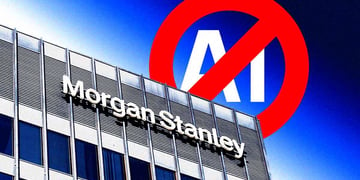
Anthropic’s refusal to allow the Department of War (DoW) to use its artificial intelligence (AI) tools without guardrails “earned” the company a government-wide ban and the supply chain risk label, previously reserved for foreign companies like China’s Huawei.
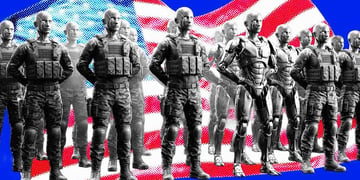
The maker of Claude has voiced concerns about its technology being used for “mass domestic surveillance” and “fully autonomous weapons,” while the Pentagon insists it uses AI tools for “all lawful purposes.”
Europeans, who are looking for ways to ditch US technologies, are now inviting Anthropic to relocate to Europe, citing its better alignment with stringent European Union (EU) regulations.






Standoff with the Pentagon
Bob Hutchins, the CEO of Human Voice Media, says that the “supply chain risk” label was meant to isolate Anthropic from others in the short term, but it could potentially solidify the company as the go-to entity for the non-military world in the long term.
Companies globally and civil society may see the Pentagon’s frustration as validation that they can rely on Anthropic.
“If the DoW sees a model as ‘too restrictive’ due to the fact that it will not allow mass surveillance, then that model is likely to become the default for healthcare, banking, and legal organizations that have privacy and guardrails as their products,” Hutchins says.
This appears to already be true for civil society, as Anthropic’s position received praise on social media, with users, including celebrities like Katy Perry, announcing their subscription to Claude.

The chatbot hit number 1 on Apple’s App Store, despite the company’s CEO, Dario Amodei, reiterating his hopes of reaching another agreement with the DoW.
Moreover, critics point to the now largely forgotten company’s partnership with Palantir, a highly controversial data broker, and Anthropic’s efforts to attribute human traits to AI systems, promoting the contested idea of superintelligence.
Meanwhile, its major competitor, OpenAI, which quickly replaced Anthropic by announcing an agreement with the Pentagon, is subject to widespread boycott calls.
However, Anthropic's position may be more vulnerable in business, especially because its chatbot, Claude, is widely seen as more B2B-focused than OpenAI’s ChatGPT.
According to Nik Kale, a member of Coalition for Secure AI (CoSAI), the supply chain risk label mandates that no contractor, supplier, or partner doing business with the US military may conduct any commercial activity with Anthropic.
This means that every Fortune 500 company with any Pentagon exposure now has to ask its general counsel whether using Claude creates contract risk.
“The label doesn't build a wall around one company. It poisons the well for everyone downstream. One designation at the top of the dependency graph, and suddenly every integration below it becomes a legal liability question that didn't exist last Thursday,” Kale explains.
There are also major legal questions about the Pentagon’s decision to blacklist Anthropic and ban it across agencies, as President DonaldTrump ordered on Monday.
According to Lawfare Media analysis, the Federal Acquisition Supply Chain Security Act’s 10 U.S.C. § 3252 statute, which applies to Anthropic, is exclusively the DoW’s procurement statute.
The label doesn't build a wall around one company. It poisons the well for everyone downstream. One designation at the top of the dependency graph, and suddenly every integration below it becomes a legal liability question that didn't exist last Thursday.Nik Kale
This means that the Secretary of Homeland Security and the Director of National Intelligence should issue their own exclusion orders, giving Anthropic 30 days' notice and an opportunity to respond.
Moreover, the statute has only been applied to companies tied to foreign adversaries, while Anthropic was the first frontier AI firm to deploy on classified networks.
Even if Anthropic doesn’t legally challenge the Pentagon’s designation, there are still ways for the company to win from the standoff. As Hutchins put it, Anthropic can gain a reputation for being “the only lab that is willing to say ‘no’ to the state.”
Could Anthropic move to Europe?
Anthropic’s standoff with the Pentagon is being closely watched in Europe, where calls for digital independence from the US are rising, partly due to the tense relationship with the Trump administration.
Thijs Pepping, a Dutch philosopher, has shared an open letter to Amodei on LinkedIn, calling Europe the logical “safe harbor” for Anthropic.
Pepping emphasized Europe’s priority of “predictability and reliability,” stating that “safety isn’t a hurdle but a logical measure.”
Rutger Bregman, a historian and bestselling author, said Europe should welcome Anthropic “with open arms,” as it already controls the “AI hardware bottleneck” through ASML, the Dutch manufacturer of lithography systems crucial to semiconductor production.
“Add the world’s leading AI safety lab, and you have the foundations of an AI superpower,” Bregman wrote on X.
Anthropic opened new offices in France and Germany in late 2025 to meet the increasing demand for Claude, expanding its European presence beyond offices in London, Dublin, and Zurich.
However, the move doesn’t necessarily address Europe’s concerns about data privacy, as the US CLOUD Act allows US authorities to access data held by American companies elsewhere.
Kale calls the location of data residency, model governance, and contractual jurisdiction “the actual risk surface.”
“European enterprises that embedded Claude into critical workflows are now watching a US government action ripple through their own operations, and no amount of Paris office space changes that,” he tells Cybernews.
Instead of asking whether Anthropic should move to Europe, Kale says, the question is whether enterprises have built a vendor abstraction layer.
“If you hard-wired one model provider into your operations without a governance wrapper that can reroute when the political ground shifts, you don't have an AI strategy. You have a single point of failure wearing a strategy costume,” he adds.
The EU AI Act prohibits systems from causing “unacceptable risks,” such as harmful AI-based manipulation and exploitation of vulnerabilities, but doesn’t specifically cover AI autonomous weapons.
Previous EU resolutions have urged that humans should remain in control of autonomous weapon systems.
While the bloc leads in AI regulation, it lags behind the US and China in AI development, owning only one frontier model: France’s Mistral.
Michael Bell, a Founder and CEO at Suzu Labs, notes that Anthropic’s capital structure is entirely American, as it received $8 billion in investment from Amazon and $2 billion from Google, among others.
“You don't redomicile that without blowing up the investor base,” he says.
In addition, Anthropic’s move would face challenges of compute, capital, talent, and export controls. Bell says European data center infrastructure doesn't yet support GPU clusters required to train frontier models.
Unlock more exclusive Cybernews content on YouTube.