Aurora City, the next battlefield for privacy threatened by facial recognition
The Aurora City Council will vote this week on whether to allow law enforcement to use highly controversial facial recognition technology, raising questions about data privacy and racial bias.
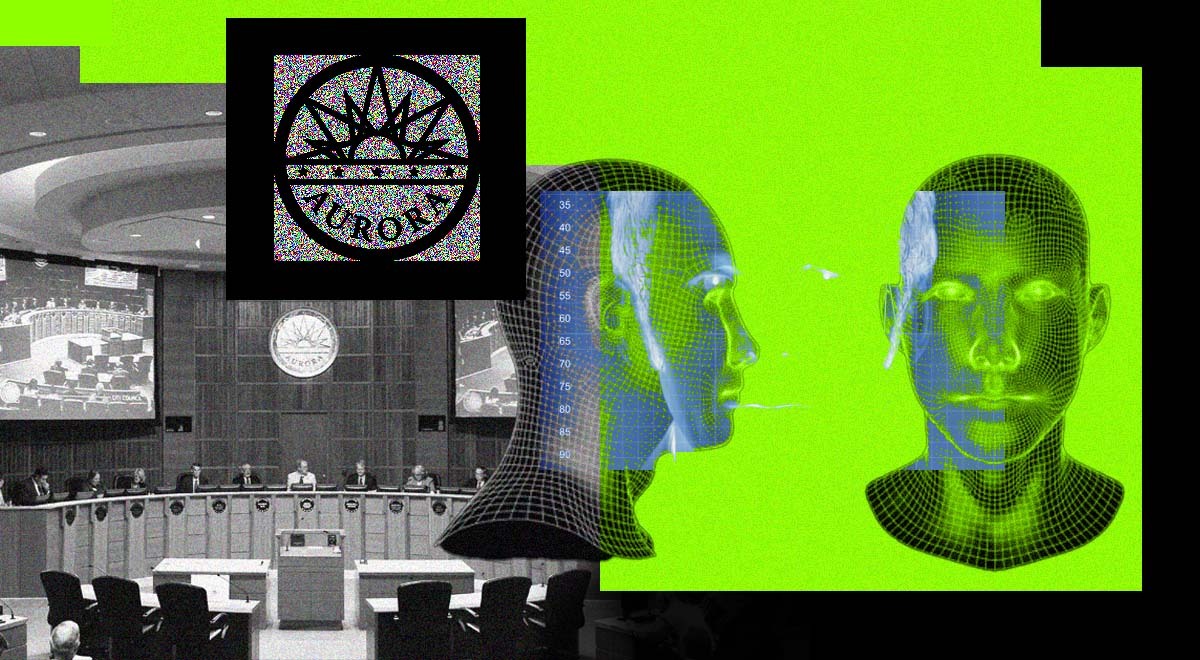
Image by Cybernews.

 Follow us
The Aurora City Council will vote this week on whether to allow law enforcement to use highly controversial facial recognition technology, raising questions about data privacy and racial bias.
The vote comes after the Aurora Police Department (APD) asked city leaders to formally allow it to use facial recognition software in criminal investigations.
The systems under consideration are Clearview AI and LexisNexis’ Lumen/AVCC software platform.
In 2022, the Colorado legislature passed Senate Bill 22-113, which requires government agencies that intend to use facial recognition technology to prepare an accountability report.
According to APD’s reports for the considered systems, facial recognition results are “investigative leads only” and not a final decision-making tool. Officers cannot rely upon these results as the sole basis for probable arrest or charging.










Moreover, the reports suggest that a trained investigator must review the results and submit them for independent peer review and verification.
With the rising use of facial recognition technology, more and more states in the US are placing guardrails on it. At least 15 states now have laws limiting police use of the technology, according to Tech Policy Press analysis.
Police officers in Montana and Utah are required to obtain a warrant to use facial recognition, while defendants in Maryland must be notified that facial recognition was used in an investigation that led to the charges that were brought.
Technology may not eliminate racial bias
Facial recognition software works by comparing a photo of a suspect with publicly available facial images. The systems powered by artificial intelligence (AI) match suspect photos with the most similar faces found online and link them with their online location.
For example, Clearview AI has a database of more than 50 billion images from news media sites, public arrest record websites, public social media pages, business webpages, and blogs.
The APD says the use of facial recognition systems could increase public safety and minimize the potential risks to individual privacy, civil rights, and civil liberties.
According to the APD, using these systems could reduce “the opportunities for bias and prejudice to impact the criminal justice process.”

However, facial recognition systems have a track record of amplifying racial biases rather than eliminating them.
A Black man and Michigan resident, Robert Williams, was wrongfully arrested in 2020 after Clearview AI made a false face recognition match, and police officers failed to conduct a more thorough investigation.
Nijeer Parks, a Black man from New Jersey, spent 10 days behind bars for theft and assault on a police officer, which he didn't commit, because a facial recognition system wrongfully matched him with a suspect’s photo.
A 2018 study that audited five facial recognition technologies found that they are less accurate at recognizing darker and female faces, raising the risk of misidentification. The study, however, didn’t test the software considered by the APD.
The National Academies of Sciences, Engineering, and Medicine warned in its 2024 paper on facial recognition that these systems can provide law enforcement with a new surveillance tool that can “serve to reinforce patterns of or perceived need for elevated scrutiny, especially in marginalized communities.”
Clearview AI claims that the technology has achieved 99% or better accuracy across demographic groups, but there’s no independent research to support these findings.
Concerns over data privacy
Critics of facial recognition technology say companies like Clearview AI scraped photos of millions of people without their consent. Watchdogs in multiple European countries ruled that the company’s database is illegal, and that police used it unlawfully.
Moreover, data breaches involving this sensitive biometric data raise the risk for identity theft, stalking, and harassment. Experts say that faces, unlike passwords, cannot be as easily changed.
There is also a risk of spoofing, a deceitful practice in which a person disguises themselves as a victim using pictures or masks created with their biometric data.
However, law enforcement agencies, including the Federal Bureau of Investigation and the Department of Homeland Security, defended the use of facial recognition technology, citing its accuracy and effectiveness.
Unlock more exclusive Cybernews content on YouTube.