Honeybees teach drones how to navigate without GPS
Bee-Nav, a robot navigation system inspired by Mother Nature, takes cues from honeybees to teach drones how to navigate on their own.
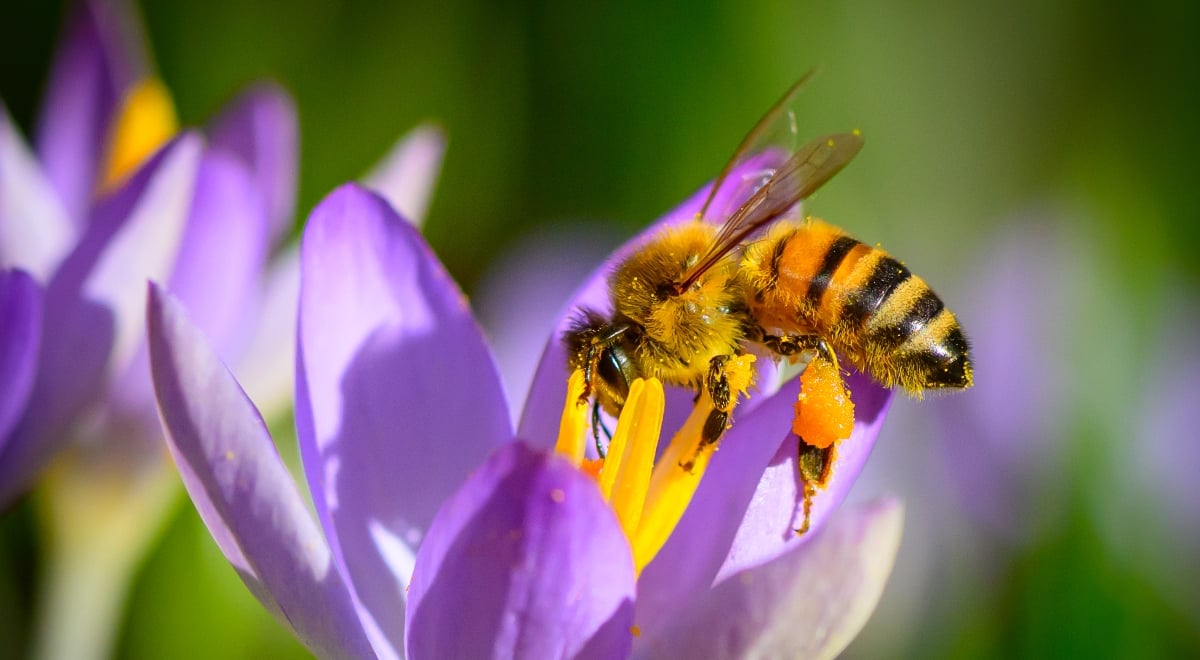
A bee searches for nectar in a flower. Image by Patrick Pleul/picture alliance via Getty Images

 Follow us
Bee-Nav, a robot navigation system inspired by Mother Nature, takes cues from honeybees to teach drones how to navigate on their own.
Imagine drones buzzing around a greenhouse, inspecting tomatoes or autonomously delivering packages to your door.
While this is already technically possible, drone navigation systems still require significant computing power and memory, making drones heavier than needed, more expensive, and energy-hungry.

Check if your data was exposed
Find out if your email and related personal information have appeared in known data breaches.
To solve this problem, a group of scientists from the Netherlands and Germany developed a system that enables even very small robots to travel far from home and return successfully, using neural memory of just 42 kilobytes.





The results of the study, which was carried out by roboticists and biologists from Delft University of Technology (DUT) and Wageningen University, both in the Netherlands, as well as the University of Oldenburg, in Germany, were published in the scientific journal Nature.
Bees show the way
The research team said they were inspired by what honeybees do when they first leave the hive.
“We were fascinated by the fact that honeybees can fly far away from home along winding paths, yet return almost straight back,” said Guido de Croon, professor of bio-inspired AI for drones at DUT.
Bees first make short learning flights around their hive before embarking on longer journeys. Then, they rely on odometry, or distance tracking, to return home. Researchers applied the same logic to train drones.

In Bee-Nav, the robot also first makes a short learning flight near home. During that flight, it collects panoramic images of the environment, which a small neural network then analyzes to estimate the direction and distance back home.
“Home may be too small to see, or hidden behind some trees. So we trained the neural network using odometry estimates of the direction and distance home, even though these become less accurate over time,” said Dequan Ou, a first author of the paper and PhD candidate at the DUT.
To researchers’ relief, the so-called odometry drift didn’t prevent the robot from finding a way home. In one instance, the drone used a neural network of just 3.4 kilobytes to interpret the data needed for it to successfully come back.
No GPS needed
Most current systems rely on detailed built-in maps of environments where GPS is unavailable, making them expensive and energy-hungry. Drones using the bee-inspired navigation system wouldn’t need that and could be made smaller, cheaper, and more energy-efficient as a result.
Researchers view their system as particularly useful for agriculture, envisioning lightweight drones inspecting crops and detecting diseases or pests, without endangering people working nearby.






Researchers tested their navigation system both indoors and outdoors. In large indoor spaces such as hangars, the system was successful in every test, while in windy outdoor conditions, success dropped to 70%.
“The experiments are very encouraging… But they also show that our current system needs to become more robust in real-world conditions,” said Dequan Ou.
Unlock more exclusive Cybernews content on YouTube.