Belgian stores are playing AI-generated music because it’s cheaper
Belgian hardware store Brico and supermarket chain Carrefour are playing AI-generated music in their stores. Not only is it cheaper, but it can also be adapted for promotions. The switch will mean a significant loss of income for the music sector, the copyright association Sabam argues.

Image by Cybernews.

 Follow us
Belgian hardware store Brico and supermarket chain Carrefour are playing AI-generated music in their stores. Not only is it cheaper, but it can also be adapted for promotions. The switch will mean a significant loss of income for the music sector, the copyright association Sabam argues.
DIY chain Brico uses AI-generated music provided by M-Cube. The latter company says it creates “music with included licensing rights and exceptional sound quality that meets the needs of the retail sector.” Brico has 152 stores in Belgium.
Retail chain Carrefour, with over 700 branches in Belgium, also wants to use AI music. However, it will take until 2028 before all Belgian stores play AI-generated music. Independent operators are currently experimenting with it.
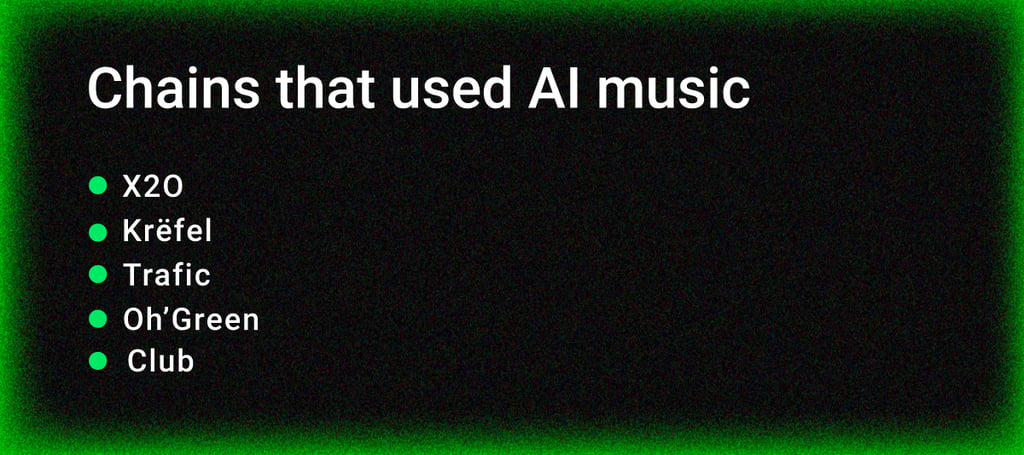
Chains such as X2O, Krëfel, Trafic, Oh’Green, and Club have already introduced M-Cube’s AI-generated music in their stores. To rule out that the AI-generated music sounds too similar to existing songs by human artists, all AI music is filtered by Shazam.





Commercial stores are opting for AI-generated music for simple reasons. AI-generated music is royalty-free, which means it’s cheaper than music created by actual artists and bands.
On top of that, it’s part of a marketing strategy.
“AI music allows us to play specifically tailored and seasonal royalty-free music, such as during the holidays, for example,” Damien Bytebier from Carrefour tells Belgian news outlet VRT NWS.
Stores can also choose to create AI-generated music for temporary discount products.
The use of royalty-free music can result in significant savings for stores and retail chains. However, it also means that artists will certainly lose some of their income.
“Research has shown that 25 to 28 percent of the income our songwriters receive from music in public spaces is at risk of disappearing if there is a switch to royalty-free music. And that is dramatic for our Belgian artists, who are already struggling to survive,” says Steven Desloovere, Head of Music at Sabam, the Belgian copyright association for musicians, composers, and producers.
In addition, the rise of royalty-free, AI-generated music is creating a new legal gray area. Almost all AI programs that generate music use existing songs by human artists as source material to create new, similar songs.
That is why Sabam continues to strive for the payment of copyright royalties and licenses to its members. This also applies to the AI music that can be heard in stores today.
Over the past 12 months, Spotify has removed over 75 million AI-generated tracks. Furthermore, the music streaming service announced new safeguards to make music lovers aware of what tracks are most likely AI-generated.






Unlock more exclusive Cybernews content on YouTube.