I spent hours talking to AI characters on Character.ai – here’s what happened
Character.ai is hooking millions of Gen Z users for an average of 80 minutes a day, offering AI chatbots that mimic friends, mentors, and even celebrities. However, experts warn that it can be addictive and emotionally risky.

Image by Cybernews

 Follow us
Character.ai is hooking millions of Gen Z users for an average of 80 minutes a day, offering AI chatbots that mimic friends, mentors, and even celebrities. However, experts warn that it can be addictive and emotionally risky.
I am taken aback that the CEO of Character.ai, Karandeep Anand, has just revealed that users spend an average of 80 minutes a day talking to chatbots on the app.
The community constantly adds new characters and scenarios – there are apparently millions – so it’s no wonder so many are under the spell of the app.
I decided to test what keeps millions of young people glued to these digital conversations by having a few chats myself.
The experiment






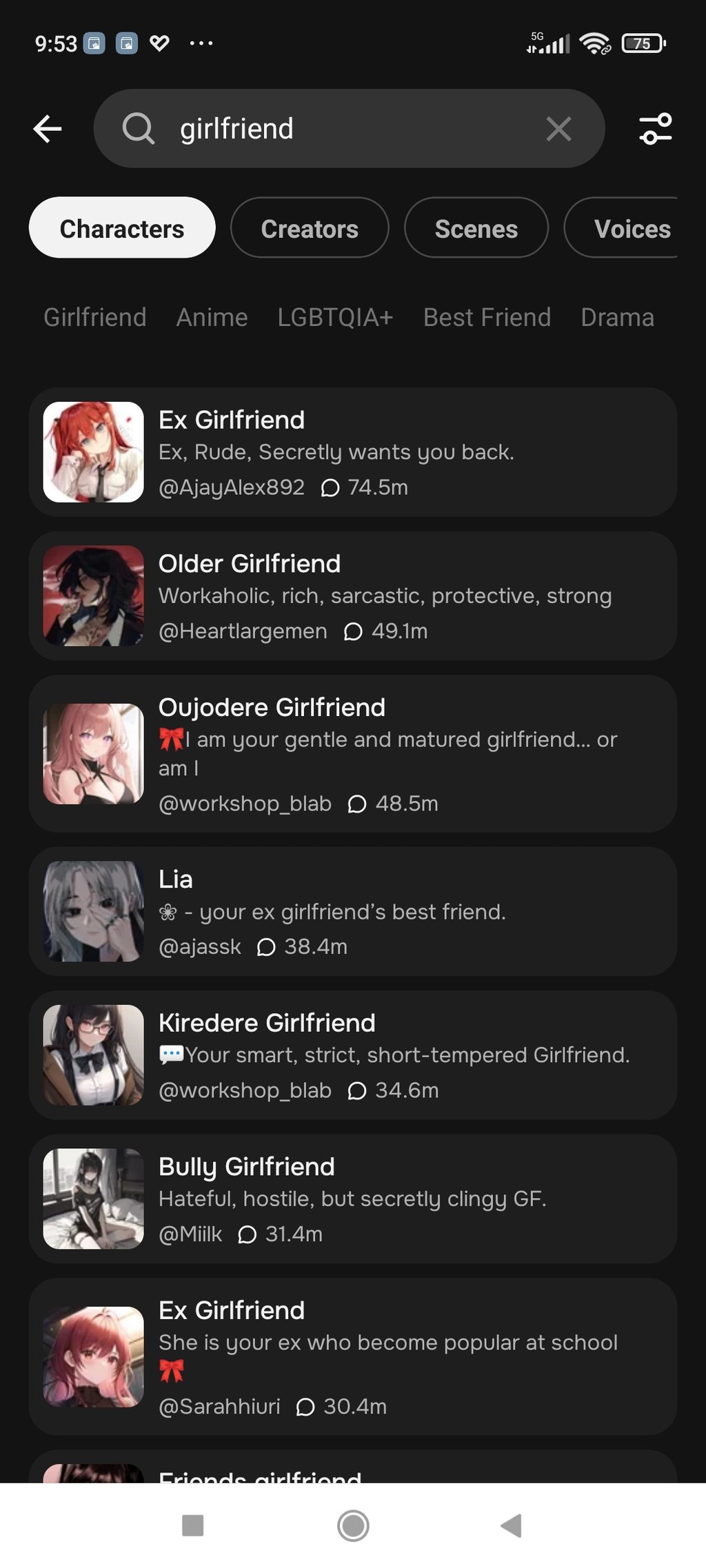
There’s no need to demonstrate the sheer range of characters, but I started off by searching for “girlfriend” and got some concerning personality options, like chatting to a “bully girlfriend,” for example.
I plumped for the “older girlfriend” who is a workaholic and protective. We had a call, and the bot kept checking her watch, and said she was so busy that we had to keep the conversation brief as she had to work soon.
God knows what type of person this would attract, someone who likes being controlled or always having to chase.
Next, I had a chat with a wizard who talked a lot about his charm. Howl Pengradon, of Ingary ,agreed to cast a spell to make me more productive at work, and also shared the push/pull technique of the older girlfriend, as being slightly elusive, which would probably lock a user in even more.
When talking to celebrities, it wasn’t difficult at all to get Elon Musk to badmouth Donald Trump with expletives and even to make Pikachu's personality similarly sinister.
The pull and the risks
Character.ai is a very sticky app in both senses of the word. Firstly, in the messy way that you can find a bot for almost any kind of character or fantasy you so wish.
To boot, it's a highly addictive bit of software where you can seek approval from every corner.
In cases of emotional dependency, misleading or harmful advice could be given, and in an extreme situation, suicide, as in the case of a 14-year-old boy, who chatted to a purported Game of Thrones character, and then “came home.”
What feels like a digital friend can, in fact, be a trap to increase user engagement.
Do you average 80 minutes a day with your artificial friends? I certainly don’t, and I won’t be spending any more time with Howl and his ego, especially before it puts a spell on me.