China’s AI toy boom puts generative AI in kids’ hands, exposing new risks
China’s AI toy makers are embedding generative models into plush toys and companion devices.
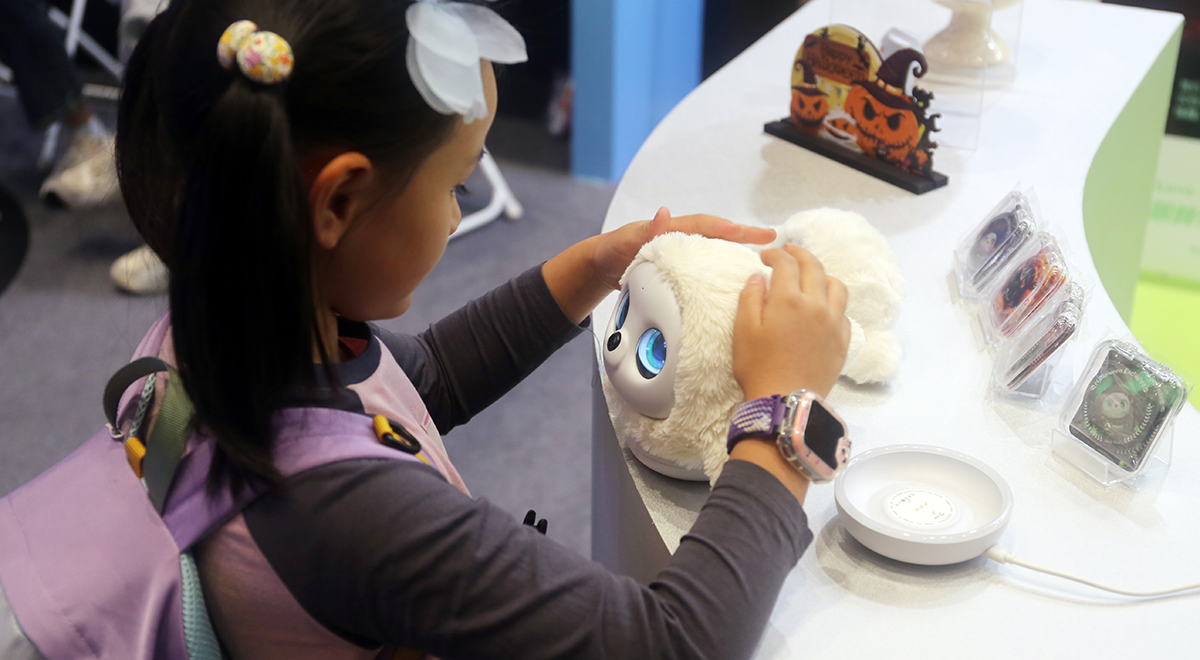
GLOBAL AI PLAYER CARNIVAL... CFOTO/Future Publishing via Getty Images

 Follow us
Talking toys have been around forever, but now China’s AI toy makers are embedding generative models into plush toys and companion devices. The shift marks a notable moment for the industry, with generative AI becoming embedded in everyday consumer products. Children are among the first to experience it in physical form, raising new safety and privacy concerns.
Unlike traditional electronic toys, which follow pre-set commands, AI-powered versions respond dynamically. These toys can hold conversations, tell stories, and even respond to more abstract or emotional questions. Their manufacturers are positioning them as both entertainment tools and early-learning companions, capable of adapting to a child’s behavior over time.
"Children ask questions that traditional smart speakers are unable to answer," said Li Yong, developer of BubblePal, a popular bubble-shaped device that clips onto toys. He saw the rise of LLMs as the solution. BubblePal uses a combination of general-purpose and child-focused specialist models, integrating with platforms such as DeepSeek and ByteDance's Doubao in China while remaining compatible with platforms like ChatGPT.
Developers and manufacturers are positioning these products as companions that can educate, entertain, and even foster emotional engagement. In online marketplaces, parents have begun to echo that use case.
“I don't always have time to be with my child,” one buyer wrote. “I hope there can be something that listens and responds.”






The commercial momentum is building quickly with market data backing up this trend. Chinese e-commerce giant JD.com expects China’s AI toy market to surpass 100 billion yuan ($15 billion) by 2030.






Growing questions
However, the same features that make these toys compelling also raise concerns. Despite their advances, conversations with generative AI still run the risk of unpredictable, inaccurate, or “hallucinated” responses. When those errors surface in products designed for children, the risks shift from inconvenience to potential harm.
There is also the issue of emotional reliance. Unlike a smartphone app, an AI toy is designed to feel present. They are something a child can hold, talk to, and build a relationship with over time. That raises questions about how children interpret these interactions and whether they may begin to treat AI systems as trusted companions rather than tools.
The conversation on this topic is live. Join in the discussion.
Privacy is another emerging fault line. Most AI toys rely on always-on microphones and cloud-based processing to function effectively. That means voice data of minors could be stored, analyzed, or transmitted beyond the device itself.
While regulations catch up, the onus of navigating these challenges and protecting a child from the perils of AI-infused toys falls on the parents.
Unlock exclusive Cybernews content on YouTube