How using AI could destroy PR's reputation
Recently, a Lithuanian PR agency was shown to be using AI to generate so-called expert commentary in response to PR requests posted by journalists on platforms like Qwoted. It comes after some PR agencies had also been using AI to generate comments from fictitious "experts."

Image by Cybernews.

 Follow us
New research from the University of Kansas should give PR agencies further reason to be extremely cautious about using AI. The study shows that people tend to view news releases written by AI as untrustworthy and lacking in credibility compared to those written by humans.
Losing credibility
Previous research has shown that people view AI-generated headlines poorly. The Kansas researchers wanted to understand if we have a similarly dim view of content in general.
The first step was to determine whether we're any good at detecting AI-generated content. The second was to determine whether we perceive content differently depending on who authored it.
"Even if people can't distinguish between human and AI writing, do they perceive it differently if it's attributed to a bot? That was the essential question," the researchers explained.






"How does AI affect how people consume things like public relations writing? We were glad to confirm that people favored human-generated content, but there was no difference between informational versus apology versus sympathy versions of the message."
The right approach
The way messages are framed has long been a debate within the PR industry, but until the emergence of generative AI, this has typically revolved around the tone messaging takes and how people respond to it.
The Kansas researchers gave participants a news release related to a crisis communication scenario released by a fictional chocolate company. The company had learned that its products were making people sick due to employee tampering.
Half of the participants were told that the release was written by AI and the other half by a human. The researchers also adopted one of three different strategies to try and address the crisis, with releases either informational, apologetic, or sympathetic in tone.
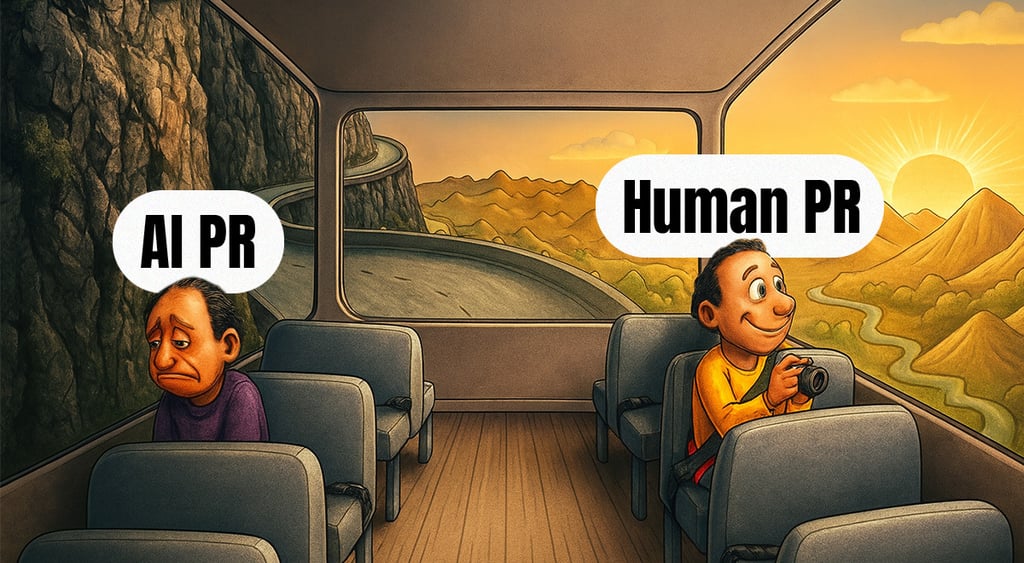
The results show that those who read the press release attributed to a human author found it not only more credible but also more effective than the release written by the AI.
Interestingly, however, it didn't seem to make much difference whether the press release was informational, apologetic, or sympathetic. Neither of these was rated more effective than the other. Interestingly, despite favoring the press release that had been written by humans, the participants didn't find this release more sympathetic.
Caution needed
The findings were surprising. While you might expect readers to be more receptive to content generated by humans rather than machines, you might also expect a degree of difference in how they respond to different types of messaging. The findings should perhaps give the industry just cause to be wary about using AI when putting out press releases.

"The findings raise more questions in this area than they answer, which is part of the fun of science," the researchers explained.
"If you decide to use AI as a writing tool, you really need to be on top of it. We think that's what can really test the credibility of your organization and you as a writer."
Trust in the media is already low, and the likes of the Trump administration continue to make hay about the apparent untrustworthiness of the "mainstream media", so it's important that the media industry doesn't do things that unnecessarily erode that fragile trust still further.
Taking accountability
This is especially so when it comes to crisis communication, where not only is the right wording crucial, but it's also important that the public feels that someone is taking accountability for the situation.






"At the end of the day, the public can't hang responsibility on a machine. They have to hang the responsibility on a person," the researchers explain.
"Whether that's a CEO or someone else, the public seems to be most accepting of a human message."
Ultimately, this means that the public isn't comfortable with AI-authored press releases. This is especially true in situations that demand credibility, empathy, and authenticity.
As in so many other industries, AI presents a real temptation to exploit the speed and scale it offers, and this temptation will only grow as the technology's capabilities expand.
In PR, at least, this study reminds us of the power that human voices still carry, especially in an industry where credibility remains the most effective currency available.
Unlock more exclusive Cybernews content on YouTube.