Japan asks OpenAI to protect its “irreplaceable treasures” from Sora 2
The Japanese government has asked OpenAI to stop imitating the country’s “irreplaceable treasures:” anime and manga.

Image by Cybernews

 Follow us
The Japanese government has asked OpenAI to stop imitating the country’s “irreplaceable treasures:” anime and manga.
After OpenAI launched its most advanced version of its text-to-video model, Sora 2, the company’s CEO, Sam Altman, said that companies and other organizations could opt out of having their work used.
At the time of release, at least one major studio, Disney, had already opted out of having its material appear in the app, people familiar with the matter said.






Now, the Japanese government has asked OpenAI to refrain from imitating anime and manga in the Sora app, as these genres of art are “irreplaceable treasures,” which the country prides itself on, ITMedia reports.




The minister of intellectual property, Minoru Kiuchi, has requested that OpenAI avoid engaging in copyright infringement, the report, which Cybernews machine translated, reveals.
The Cybernews community is talking about this. Be a part of the conversation.
A request was supposedly made online by the Cabinet Office's Intellectual Property Strategy Promotion Secretariat.
This action comes after Sora 2’s release, which, journalists report, saw an uptick in anime and manga-esque “art” created using the app.
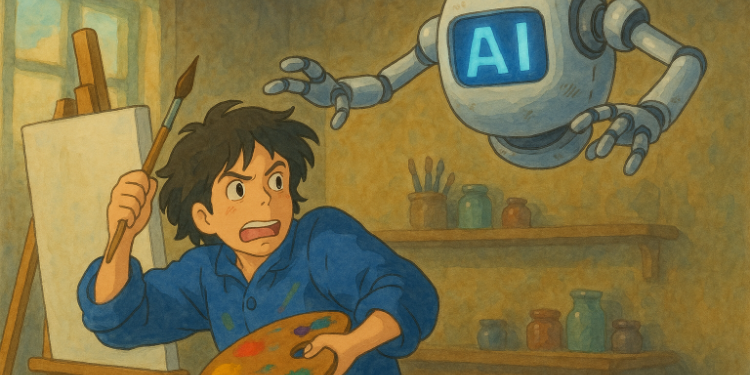
The influx of works imitating popular anime titles like Dragon Ball and Spirited Away raised concerns surrounding copyright infringement.
Multiple government officials addressed the issues via social media, saying if the issue escalated then the Japanese government would be forced to investigate OpenAI.
Japan’s digital minister, Masaaki Taira, also said that OpenAI will need to adjust to the needs of the Japanese government and urged big tech to take “voluntary action.”
OpenAI’s second iteration of its text-to-image model, Sora 2, was released on the 30th of September, and people began creating insane videos, including ones featuring a gay Jake Paul and a shoplifting Sam Altman.
Sora videos can be up to 10 seconds long, and the built-in feature “Cameo” lets users create realistic-looking AI versions of themselves to be inserted into AI-generated scenes.
These realistic videos naturally shook up Hollywood, and studios are naturally unhappy despite OpenAI pressing the Trump administration to declare that training AI models on copyrighted material fell under the "fair use" provision in copyright law.
Unlock more exclusive Cybernews content on YouTube.