Microsoft CEO asks users to stop calling AI “slop,” so web invents “Microslop” instead
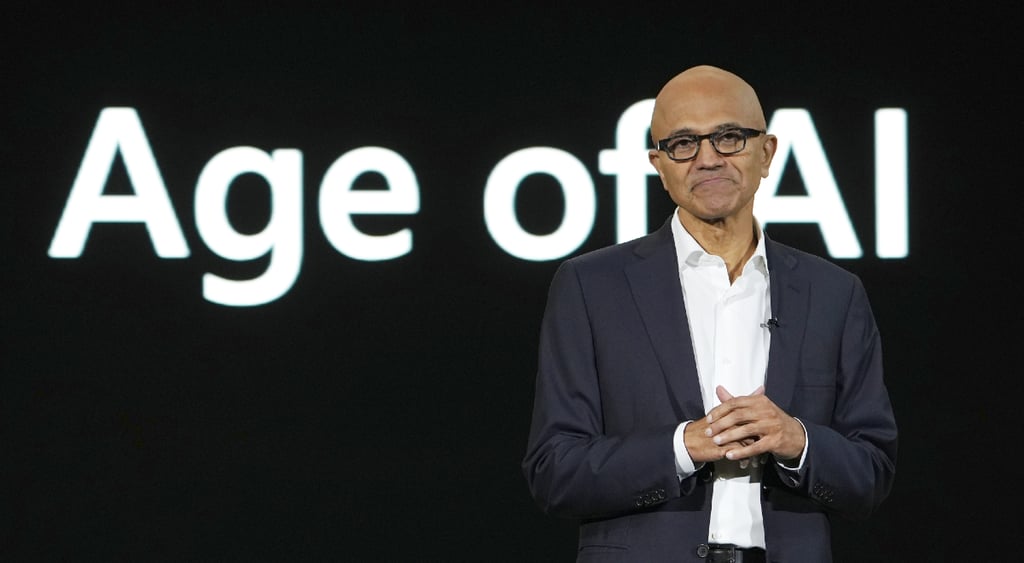
When Microsoft CEO Satya Nadella recently stated that we should essentially stop calling AI “slop,” the world immediately invoked the Streisand effect. Now, “Microslop” is trending on social media. People are angry, of course: the tech giant is pushing AI onto us with brute force.
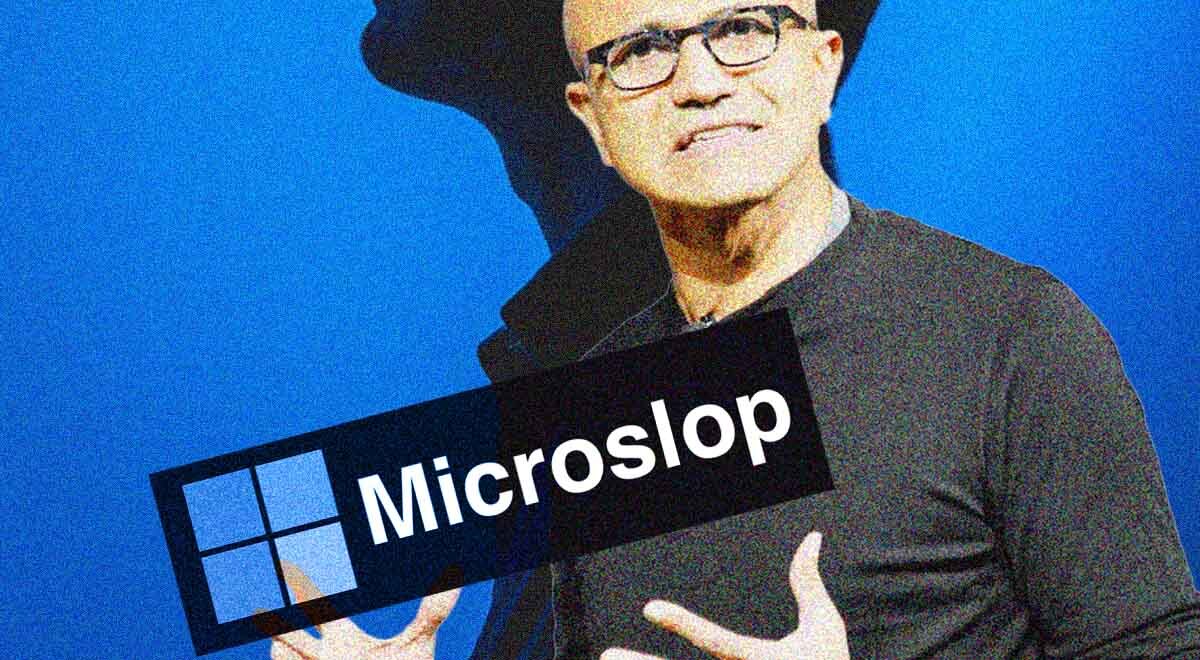
Image by Cybernews.

 Follow us
When Microsoft CEO Satya Nadella recently stated that we should essentially stop calling AI “slop,” the world immediately invoked the Streisand effect. Now, “Microslop” is trending on social media. People are angry, of course: the tech giant is pushing AI onto us with brute force.
- Nadella's dismissal of "AI slop" backfired, triggering the Streisand effect and making "Microslop" trend online.
- AI promises to cure cancer clash with reality: low-quality content, job loss, and cognitive harm prevail.
- Microsoft forces unwanted AI into products, but users find tools useless, fueling widespread "AI discontent."
In a rambling blog post at the end of December, Nadella mostly mused about what the new year would look like for AI. It’s obviously positive and full of ideas on how to “diffuse this technology in the world.”
We’re kind of used to it. Sam Altman, the CEO of ChatGPT maker OpenAI, is a bit more shy now, but he used to regularly babble about AI being able to save humanity, cure cancer, and solve physics.
None of that is close or even possible, of course. AI is a marketing term, a way to make certain kinds of automation sound sophisticated, powerful, or magical.
As such, it’s a way for the tech overlords to dodge accountability by making the machines sound like autonomous thinking entities rather than tools that are created and used by people and companies.
“The arguments of slop vs sophistication”
The big tech bosses naturally hate it when people resist the AI hype. The more they resist, the less money there is to be made, and the bubble might even burst spectacularly.
They couldn’t possibly be happy with the editors of Merriam-Webster’s dictionary, who chose “slop” as their word of the year and defined it as “digital content of low quality that is produced usually in quantity by means of AI.”
In his blog post, Nadella almost angrily states that “we need to get beyond the arguments of slop vs sophistication,” arguing that humanity needs to learn to accept AI as the “new equilibrium” of human nature.






Never mind that there’s now evidence that AI harms human cognitive ability. Never mind, too, that throughout 2025, we saw more and more AI-generated ads, ultra dumb memes, and search engine decay.
And in early 2026, xAI’s Grok is not only parroting right-wing propaganda but also allowing sexualized AI images of women and children. The Pentagon is fine with it, though.
AI is also rapidly disrupting entry-level jobs, essentially automating young people out of them.
Microsoft has a problem: it’s “all in” on AI, but nobody actually wants its poor and annoying AI products.
So many are now asking where all those tangible benefits for society are that Futurism has called 2025 “the year of AI discontent,” concluding that, as the tech of the future, “generative AI sure is making a lot of enemies in a very short time.”
Streisand effect in action
Our wrath towards Microsoft is also unique. The company has a problem: it’s “all in” on AI, but nobody actually wants its poor and annoying AI products.
Microsoft is positioning its ChatGPT-powered Copilot app in virtually every product it offers, especially the new Windows 11. However, the backlash has been huge, especially as the company also officially ended support for Windows 10 in October 2025.
The Cybernews community is talking about this. Be a part of the conversation.
Over the weekend, programmer Ryan Fleury also posted a short clip on X, demonstrating how useless Windows 11’s allegedly AI-powered search bar is.
Fleury said, “This is not a real company. <...> It’s obvious to anyone thinking and honest that this whole thing is like 90% a bubble.”
This is not a real company pic.twitter.com/NgWTfrFvcm
undefined Ryan Fleury (@rfleury) January 4, 2026
Honestly, Nadella shouldn’t have expected anything else but another round of backlash – this time, tinged with Streisand effect, an online phenomenon in which an attempt to hide or remove information results in the greater spread of the information in question.
For a few days, “Microslop” trended on X and other platforms as a response, proving that Nadella scored a huge own goal for his corporation.
A great example of the undefinedStreisand Effectundefined - in which telling people not to call AI undefinedslopundefined is already backfiring and resulting in millions of people hearing the word for the first time and spreading it virally.
undefined Ewan Morrison (@MrEwanMorrison) January 2, 2026
A huge own goal from Microslop. https://t.co/oTtm34PILx
It’s not just Microsoft promising AI magic, delivering AI slop, and making us, humans, furious. Many other firms also overhype autonomy left and right, even though the large language models still spew false information and barely increase productivity.
No, AI systems can’t read minds. No, they can’t evolve into fully autonomous AI governments or replace human creativity (that’s actually theft). And they can’t instantly solve business problems, cure diseases, or end poverty.
Unlock more exclusive Cybernews content on YouTube.