Microsoft AI data center clamor drives Wisconsin residents to breaking point
High-speed internet? How about noise-canceling earplugs?

Microsoft logo at Hannover Messe 2024 booth. Krisztian Bocsi/Bloomberg/Getty.

 Follow us
- Sturtevant residents are suing Microsoft over the constant noise created by its Fairwater AI data center.
- The lawsuit says residents suffered years of construction noise, which ceased for half a year, but another noise continued to disrupt their lives 24 hours a day.
- The case highlights growing tensions between AI infrastructure expansion and quality-of-life concerns in nearby communities.
Key Takeaways by nexos.ai, reviewed by Cybernews staff.
A once peaceful and quiet Wisconsin village is suing Microsoft over its Fairwater data center.
Sturtevant’s nearly 7,000 residents have had to deal with disruptions for the past two years as Microsoft built its Fairwater data center.
A new lawsuit reveals that residents of the small Midwestern village dealt with consistent banging from sunrise until past sunset for years during the data center's construction.
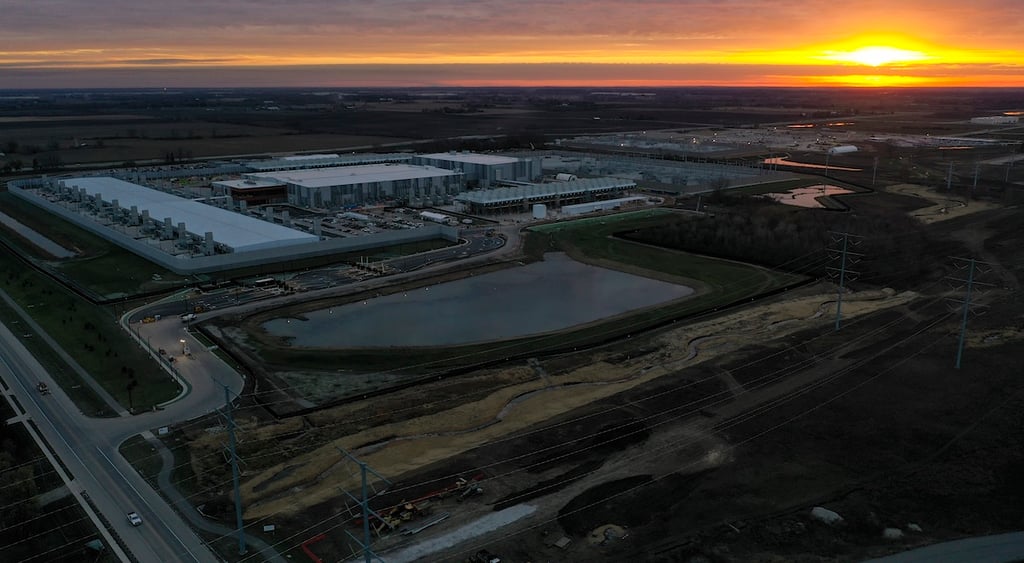






Once construction ceased, resident Amy Cimbalnik told the Milwaukee Journal Sentinel that peace and quiet returned for roughly 6 months, until February 2026, when villagers encountered a new kind of noise pollution.
The noise, which has been described as an incessant whirring sound, has been a core feature of residents' lives since work at the Fairwater data center started.
Residents didn’t understand where the whirring noise, which they hear 24 hours a day, was coming from until they traced it to Microsoft.
Sturtevant locals decided that enough was enough and filed a lawsuit alleging that Microsoft’s data center had disrupted their lives by creating excessive noise pollution.

The “constant and pervasive” noise seems to be coming from Microsoft’s diesel generators and heating, ventilation, and air conditioning (HVAC) systems.
Data centers generate a lot of energy and thus, a lot of heat. It requires significant effort to cool the hardware so it doesn’t burn out.
This means Microsoft data centers contain various chillers, cooling towers, air-handling units, and condenser fans to cool components, which may also be contributing to the noise.
Despite Microsoft’s commitments to “being a good neighbor and a responsible member of (its) local communities,” the lawsuit alleges that the tech giant didn’t put proper noise-canceling solutions in place to protect Sturtevant residents.
The lawsuit, which was filed in federal court, is claiming an unspecified amount of damages, according to local media.

The Wisconsin Fairwater data center is just one part of an interconnected network of Microsoft data centers that work together to form an AI supercomputer.
Microsoft calls Fairwater “the world’s most powerful AI data center,” and it’s placed at the epicenter of “hard work and ingenuity” paved by generations of Wisconsinites.
The conversation on this topic is live. Join in the discussion.
The $7 billion data center was marketed as “a technological feat” which promises to “grow responsibly, invest deeply, and create opportunities for Wisconsin and for the nation.”
However, Microsoft has seemingly done nothing but disrupt the community, which once described itself as a place where people can “enjoy the peace and quiet.”

Microsoft has promised to fund 20 ecological restoration projects in the surrounding area, which are said to benefit locals.
While Microsoft has been forthcoming about the figures it has invested in its data centers, the tech giant hasn’t been as transparent about its investment in Wisconsin wildlife preservation.
The tech giant also promised “faster, more reliable internet” to 9,300 residents and “next-generation service” to 1,200 homes and businesses in Strutevant.
But these promises just aren’t enough to placate Strutevant residents.



Stay updated with our latest stories and follow us on social media
Be the first to discover new stories, ideas, and updates from our team.