OpenAI DevDay key takeaways: From coding to agent kits, Altman is making it "easier to build with AI"
OpenAI’s third annual DevDay kicked off in San Francisco on Monday, starting with a livestream opening keynote by none other than OpenAI CEO and founder Sam Altman. From announcing new AI models to live demos showing how to build AI agents within minutes, the ChatGPT leader said it's all about "pushing the future forward" and "making it easier to build with AI."
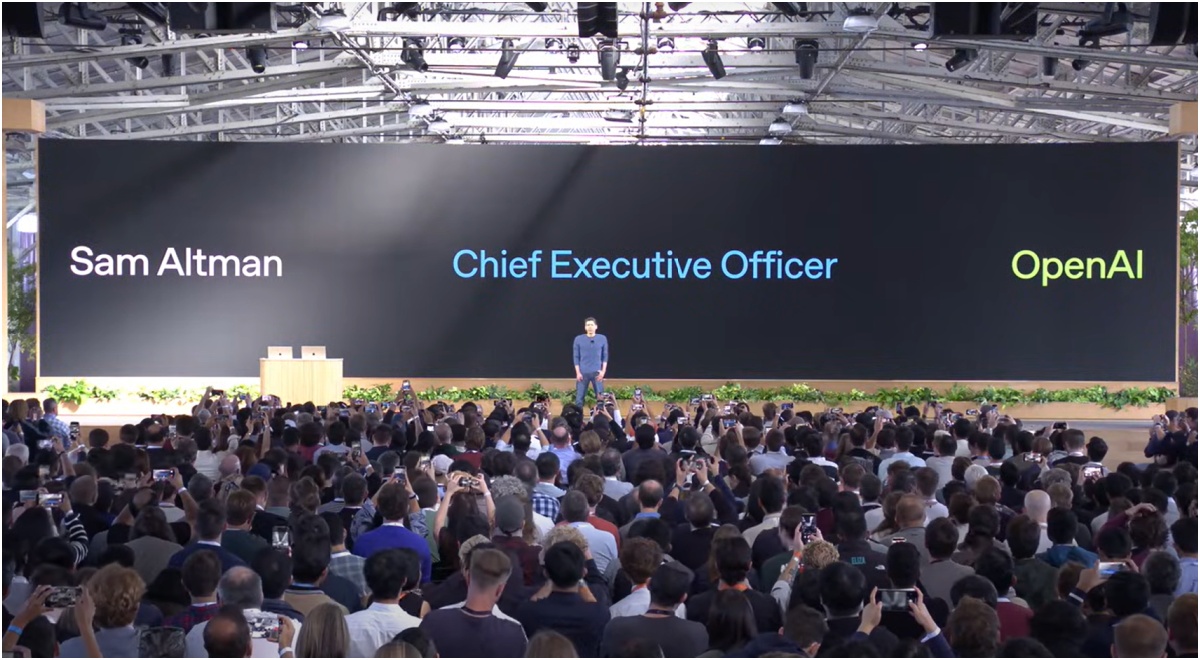
OpenAI DevDay 2025, CEO and founder Sam Altman

 Follow us
OpenAI’s third annual DevDay kicked off in San Francisco on Monday, starting with a livestream opening keynote by none other than OpenAI CEO and founder Sam Altman. From announcing new AI models to live demos showing how to build AI agents within minutes, the ChatGPT leader said it's all about "pushing the future forward" and "making it easier to build with AI."
"DevDay 20025 will include a series of "announcements, live demos, and a vision of how developers are reshaping the future with AI,” the AI start-up teased over the weekend.
Although all 1500 attendees will get the full monty, only the Altman keynote will be livestreamed on OpenAI’s website and official YouTube channel at 10:00 a.m. PT/1:00 p.m. ET. Cybernews will bring you the details as the live portion of the event unfolds.
Touting over four million developers, Altman began his presentation by giving a round of applause to all those developers in attendance who have created an app for OpenAI, thanking them “for doing such incredible work.”
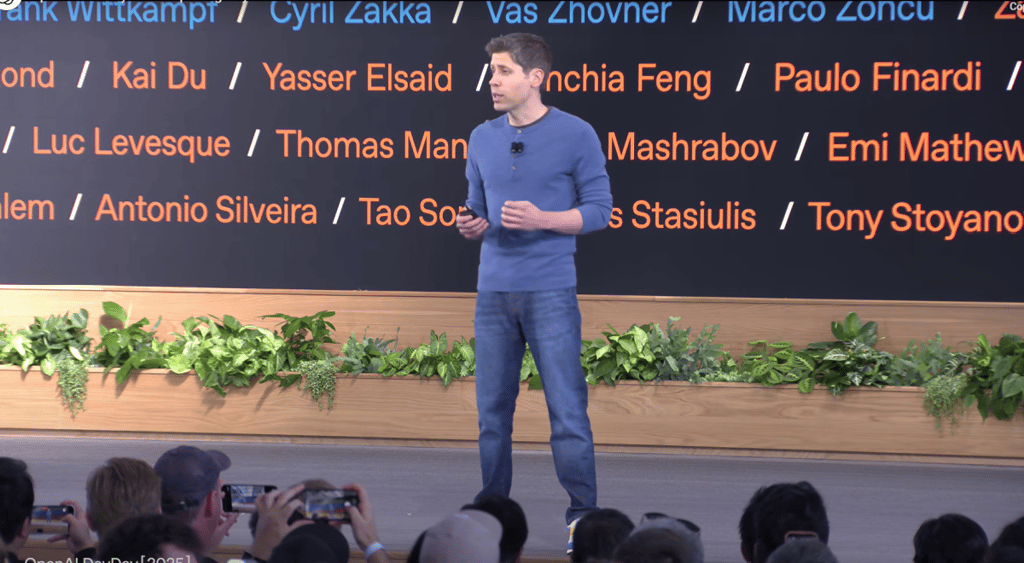






“You are the ones pushing the future forward, and seeing what you've already done makes us so excited about what comes next,” Altman said, adding that the journey is still in its infancy.
“It has never been faster to go from idea to product,” Altman said, introducing the four main areas of innovation that would be demonstrated for the crowd:
- Building apps inside of ChatGPT
- Building Agents
- Writing software
- Updates to models and APIs
Apps in ChatGPT
Altman’s first order of business was to excitedly announce that it is “opening up ChatGPT for developers to build real apps inside ChatGPT," enabling a new generation of “interactive, adaptive, and personalized” apps that a user can directly chat with inside ChatGPT."
The new dev feature starts rolling out Monday to Free, Go, Plus, and Pro users outside of the EU.
The company is also launching an apps SDK, (available right now in preview), giving builders full control over the back-end logic and front-end UI.
You can now chat with apps in ChatGPT. pic.twitter.com/T9Owi3POim
undefined OpenAI (@OpenAI) October 6, 2025
Besides the fact that anyone can integrate the app's SDK, Altman also pointed out that “any developer using the SDK to build an app can reach hundreds of millions of ChatGPT users.”
This will come in handy for when ChatGPT users are eventually given the ability to monetize accounts with "a new ecommerce protocol that offers instant checkout right inside of ChatGPT,” Altman said.
Examples of user interaction within ChatGPT apps shown on stage included making a playlist on Spotify, getting recommendations from Coursera to learn more about a topic, and asking Canva to generate a poster for a business idea generated within the chatbot.

Altman himself took the Zillow-integrated ChatGPT app to show off: how a homebuyer could search for a home in the app, request a tour, find out their affordability, and even ask ChatGPT to filter the search for a three-bedroom house with a yard for a dog and close to a dog park.
Besides those named above, the ChatGPT-maker already has over a dozen apps in partnership with major companies, retailers, and niche apps, including Booking.com, Target, Figma, Expedia, Uber, Instacart, OpenTable, DoorDash, Peloton, AllTrails, and Thumbtack.
Still, some bugs may need to be worked out with several ChatGPT-partnered apps. For example, last month, in a major query snafu, the Cybernews research team discovered Expedia’s integrated virtual travel planner, randomly instructed users on how to make a Molotov cocktail.
Besides rolling out more apps from partners in the weeks ahead, OpenAI will publish a directory that users can browse, as well as a developer’s guideline depicting standards for design and functionality.
Agent in a kit
OpenAI’s next announcement was the introduction of an AI-powered AgentKit, now part of the OpenAI platform, starting Monday.
The AgentKit is a complete set of building blocks that can help developers move quickly from “prototype to production,” according to Altman.
“AI has moved in from systems you can ask anything, to systems you can ask to do anything for you,” Altman said, adding, "We now see agent software that can take on tasks with context, tools, and trust.”
However, the CEO noted, "For all the excitement and their potential, very few are actually making it into production and into major use.”
Introducing AgentKit—build, deploy, and optimize agentic workflows.
undefined OpenAI Developers (@OpenAIDevs) October 6, 2025
💬 ChatKit: Embeddable, customizable chat UI
👷 Agent Builder: WYSIWYG workflow creator
🛤️ Guardrails: Safety screening for inputs/outputs
⚖️ Evals: Datasets, trace grading, auto-prompt optimization pic.twitter.com/pGgNHKOvj3
Touted as “everything you need to build, deploy, and optimize agentic workflows,” Altman explained that the kit can be used by both individual developers and large enterprises.
The toolkit contains two core capabilities: Agent Builder and ChatKit, as demoed live onstage by Christina Huang from the OpenAI Platform Experience team. To get an idea of how fast the AgentKit can be, from start to finish, Huang was able to build a simple agent in front of the audience in under 8 minutes.
Created based on feedback from thousands of developers, AgentKit gives the user a visual way “to design the logic steps, test the flows, and ship ideas,” Altman said.
The ChatKit tool is described as a simple embeddable chat interface that the user can customize with their own branding, workflows, guardrails, or “whatever makes your own product unique,” he added.
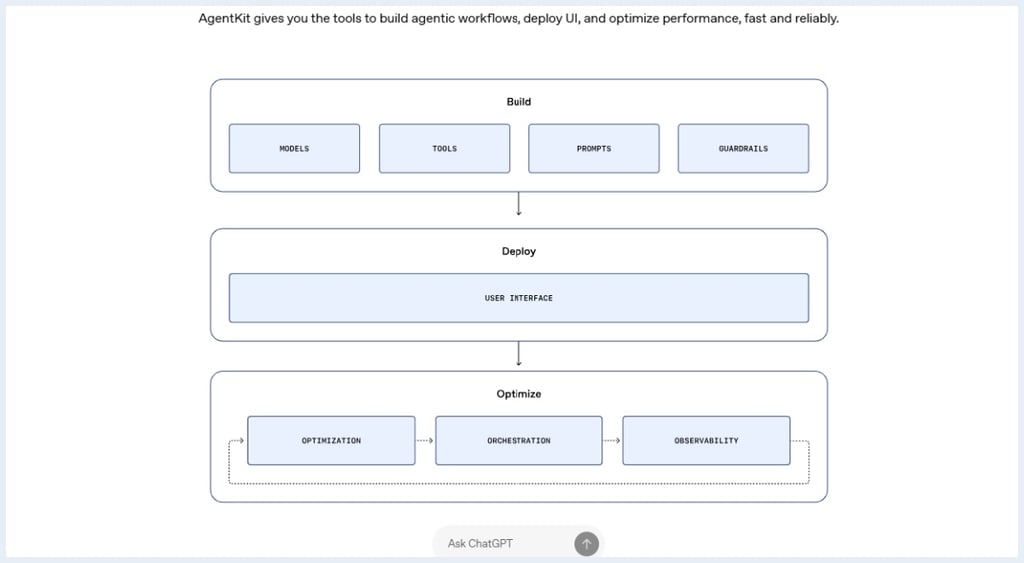
As part of AgentKit, developers will have access to performance metric, trace grading, automated prompt optimization, data sets to assess individual agent nodes, and the ability to run evaluations on 2 million weekly, directly from the OpenAI platform.
Yes, even newbies can now write software
OpenAI has now upgraded its research preview of Codex, its cloud-based software engineering agent, to seamlessly connect ChatGPT with tools such as “IDE, the terminal, GitHub, and in the cloud.”
The company has also released "a ton of new features" for the upgraded Codex (now available for everyone), indicating that it will now run on a fresh GPT-5 Codex model, described by Altman as “a version of GPT-5 purposely trained for Codex and genetic coding.”
Altman says "one of the most exciting things happening with AI is that we're entering a new era of how software gets written."
To illustrate, he tells the story of an 89-year-old retiree in Japan who taught himself to write code with the help of ChatGPT, parleying his knowledge to build iPhone apps for elderly users.

One of OpenAI’s fastest-growing models, GPT-5 Codex is said to excel at tasks like code refactoring and code review, and can adjust its thinking time for the complexity of the task.
“Almost all new code written at OpenAI today is written by Codex users,” Altman said.
“Our engineers that use Codex complete 70% more pull requests each week, and nearly every OpenAI PR goes through a Codex review,” he said, before handing the reins over OpenAI’s Head of Developer Experience, Romain Huet, for another hands-on demonstration.
Starting Monday, Codex will also be integrated with Slack, a move spurred on by feedback from engineering teams who use Slack to communicate about projects.
Now users can tag Codex in a Slack channel or thread and "it will automatically gather the context it needs from the conversation, choose the right environment, and answer with a link to the completed task in Codex clould," OpenAI states.

A new Codex SDK has been added to the roster of new features, allowing users to extend and automate Codex in their team's own workflows.
And finally, Altman boasted of “new admin tools and reporting, including environment controls, monitoring, analytics, dashboards, and more, so that enterprises can better manage Codex.”
Citing Cisco as an example, Altman states that after rolling out Codex across the entire engineering organization, Cisco was able to reduce the time to do code reviews by 50% and its average project timeline from weeks to days.
New models in the API
New models introduced for all developers on Monday include GPT-5 Pro in the API, and a smaller voice model in the API with GPT Realtime Mini, causing a roar in the audience.
“GPT-5 Pro is great for assisting with really hard tasks, domains like finance, legal, healthcare, and more, where you need high accuracy and depth of reasoning,” Altman said.
Altman describes RealTime Mini as a smaller, 70% cheaper version of the advanced voice model the company began shipping in August, with the same voice quality and expressiveness.
“Personally, I think that voice is going to become one of the primary ways that people interact with AI, and this is a big leap towards that reality,” Altman said.
GPT-5 Pro is now available in the API.
undefined OpenAI Developers (@OpenAIDevs) October 6, 2025
It spends more time thinking, for your hardest tasks. pic.twitter.com/BpbRczPLAF
Creators are also getting a boost with Sora 2 in the API for the first time, expected to benefit roles such as filmmakers, designers, game developers, and educators.
Sora 2 in the API is said to be more controllable, allowing the user to easily give detailed instructions, such as video length, aspect ratio, and resolution, and remix videos.
“Not just speech, but rich soundscapes, ambient audio, synchronized effects that are grounded in what you're seeing,” Altman said.
DevDay events to air on YouTube later today
Besides Altman's opening, two other anticipated talks will be recorded live – a “Developer State of the Union” and “Closing Fireside Chat” – and uploaded to YouTube later in the evening, the company said.
The State of the Union, hosted by OpenAI president Greg Brockman and OpenAI platform product head Olivier Godement, will take place at 3:15 p.m. PT.
Altman and former Apple cheif designer Jony Ive will chair the Fireside Chat at 4:15 p.m. PT.
“From day one, developers have been central to OpenAI’s mission to ensure AGI benefits all of humanity. You’ve used our tools to build first-of-their-kind products, launch startups, accelerate research, and reimagine what software can do,” the company says about its annual event.
“OpenAI DevDay is our way of celebrating and building upon that work—by sharing what’s new, surfacing what’s possible, and spending time with the people building at the frontier of AI,” it said.
Other expected events happening throughout the day wil include “a series of AI-powered sideshows” featuring a highly anticipated “Sora Cinema” short film bonanza, as well as presentations by industry leaders, Cursor CEO Michael Truell, and San Francisco mayor Daniel Lurie.
OpenAI employees, including model behavior researcher Laurentia Romaniuk and Codex lead Alexander Embiricos, are also expected to talk, Tech Crunch reports.






Meanwhile, earlier on Monday, Altman and AMD CEO Lisa Su announced a major deal for the global semiconductor corporation to help beef up the ChatGPT-maker’s AI computing infrastructure.
Under the multi-billion-dollar five-year agreement, OpenAI has committed to purchasing 6 gigawatts (GW) of Advanced Micro Devices' AI chips (Instinct GPUs) to power its data centers.
Beginning with 1GW of the MI450 chip in late 2026, “OpenAI plans to use the AMD chips for inference functions, or the computations that allow AI applications such as chatbots to respond to user queries,” the Wall Street Journal reports.