Siemens CEO to the EU: don’t throttle innovation speed while achieving AI sovereignty
Siemens CEO Roland Busch says prioritizing the development of sovereign artificial intelligence (AI) infrastructure in Europe over using existing tools to boost economic growth may lead to a “disaster.”
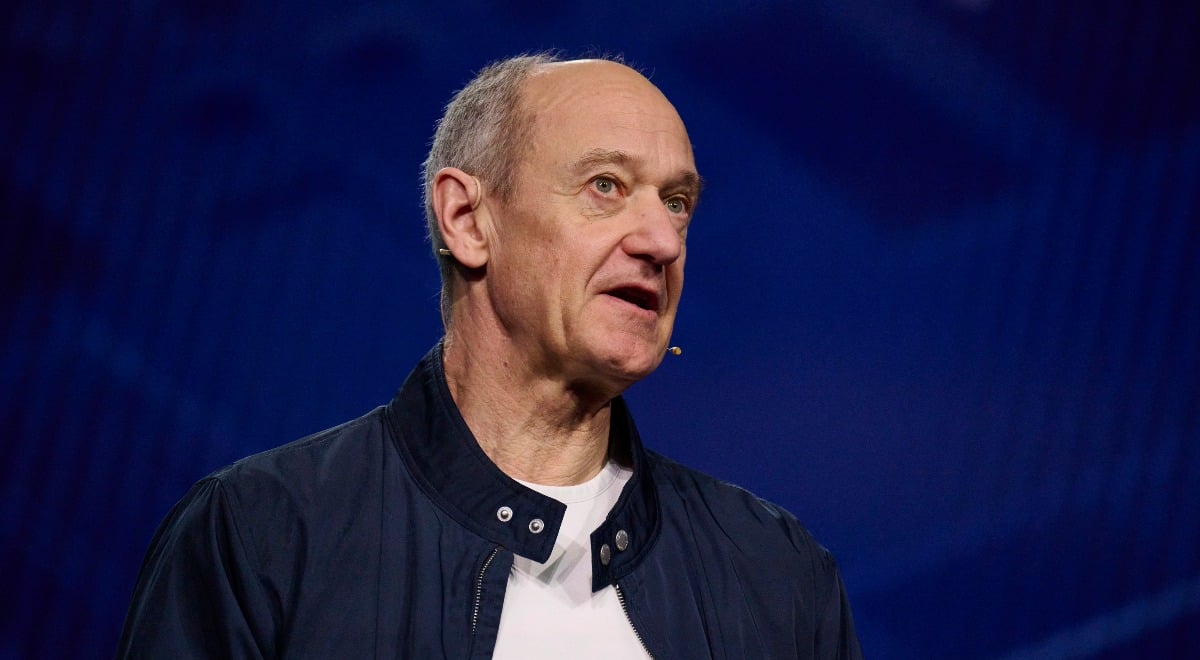
Roland Busch by Bridget Bennett/Bloomberg via Getty Images

 Follow us
Siemens CEO Roland Busch says prioritizing the development of sovereign artificial intelligence (AI) infrastructure in Europe over using existing tools to boost economic growth may lead to a “disaster.”
Busch told the Financial Times that building more of its own AI infrastructure would make Europe “more resilient” over time. However, he warned against waiting for AI factories to be built in Europe “before we start tuning our models.”
“You should not throttle your innovation speed for the sake of creating sovereignty. This would be a disaster,” he said.
Busch’s remarks come as the European Union (EU) seeks technological independence from the United States amid increasingly tense relations with the Donald Trump administration.












The EU currently lags behind the US and China in terms of AI investment and computing power, and is home to only one frontier large language model (LLM), France’s Mistral.
The bloc’s AI Continent Action Plan foresees the tripling of EU data center capacity by 2035, along with numerous measures to boost AI adoption and integration in strategic sectors.
However, Busch told the FT that the EU risked falling further behind in the AI race if it did not simplify its regulations.
The EU’s AI Act, a legal framework that sets risk-based rules for AI developers, came into force in 2024. The legislation received pushback from the US companies, which said the law is stifling innovation and putting them at a competitive disadvantage.
In addition, the heads of 46 European companies, including ASML, Spotify, and Airbus, called for a delay of the Act to allow for “reasonable implementation by companies and for further simplification of the new rules.”
The Germany-based technological conglomerate Siemens is among the most valuable companies in Europe. Busch said it is spending €1bn on developing its own AI tools but is prioritizing investments in the US and China.
Unlock more exclusive Cybernews content on YouTube.