Shocker: Trump administration will again try to override state AI rules
Eager to fulfill US President Donald Trump’s every wish, US House Republicans seem to have found a legislative vehicle they could attach language to that would essentially ban AI regulation in individual states.
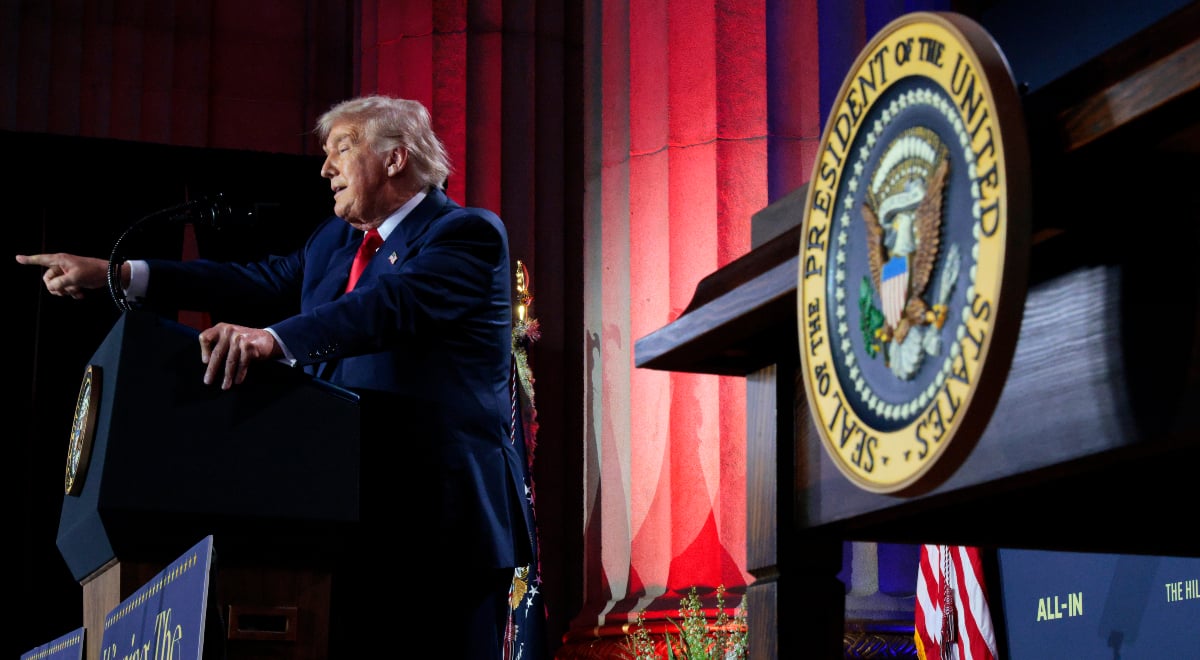
Image by Getty Images/Chip Somodevilla.

 Follow us
Eager to fulfill US President Donald Trump’s every wish, US House Republicans seem to have found a legislative vehicle they could attach language to that would essentially ban AI regulation in individual states.
Four months after the US Senate overwhelmingly rejected an attempt to include a prohibition on states enforcing AI laws in a major budget bill in July, in a 99-1 vote, the Republican Party is trying again.
That’s, after all, what the president wants. On Tuesday, Trump called for a federal standard to regulate AI, stating that state regulation is hindering AI-driven economic growth.
“Some states are even trying to embed DEI ideology into AI models, producing ‘Woke AI’ (Remember Black George Washington?). We MUST have one federal standard instead of a patchwork of 50 state regulatory regimes. We can do this in a way that protects children AND prevents censorship!” Trump said on Truth Social.






Now, House Majority Leader Steve Scalise is trying to include state AI regulation preemption in a must-pass defense policy bill that's expected to be finalized in the coming weeks. We’ll just “tuck it in,” he told Punchbowl News.
The National Defense Authorization Act, a yearly defense spending bill, is widely viewed as a must-pass, so if the maneuver is successful, states won’t be able to pass their own AI regulation anymore.
The Cybernews community is talking about this. Be a part of the conversation.
The states, including those typically voting right-wing, have certainly been busy. Acting as de facto rule-setters around AI in the US since there’s no federal legislation, they have passed hundreds of AI-related laws in recent years, spanning child safety, algorithmic bias, and workforce development.
A moratorium would upend that dynamic. According to Politico, House and Senate leaders want to finalize a deal before lawmakers break for Thanksgiving on November 27th, with final votes on track for early December.






It’s unclear, however, what form the updated AI moratorium would have to take to satisfy the critics of the initiative in Congress. In the Senate, most bills require 60 votes to pass, so bipartisan support is needed.
When the first attempt at the AI moratorium was blocked in July, many expressed concern about overriding states on issues like child safety and copyright. Proponents argue that this type of measure is necessary to foster innovation and keep pace with China.
Marsha Blackburn, a popular Republican Senator from Tennessee, is adamantly opposed to any sort of moratorium, and Florida Governor Ron DeSantis also came out against this latest effort.
Stripping states of jurisdiction to regulate AI is a subsidy to Big Tech and will prevent states from protecting against online censorship of political speech, predatory applications that target children, violations of intellectual property rights and data center intrusions on… https://t.co/g0FciT0gLN
undefined Ron DeSantis (@RonDeSantis) November 18, 2025
“Stripping states of jurisdiction to regulate AI is a subsidy to big tech and will prevent states from protecting against online censorship of political speech, predatory applications that target children, violations of intellectual property rights, and data center intrusions on power/water resources,” DeSantis said on X.
Unlock more Cybernews content on YouTube: