Valentino vilified for AI slop ads – fashion fans level “rage bait” accusations
Italian fashion designer Valentino is facing a red-hot backlash after a series of ads it created to promote its DeVain bag featured the use of AI, and ensuing accusations of “rage baiting.”
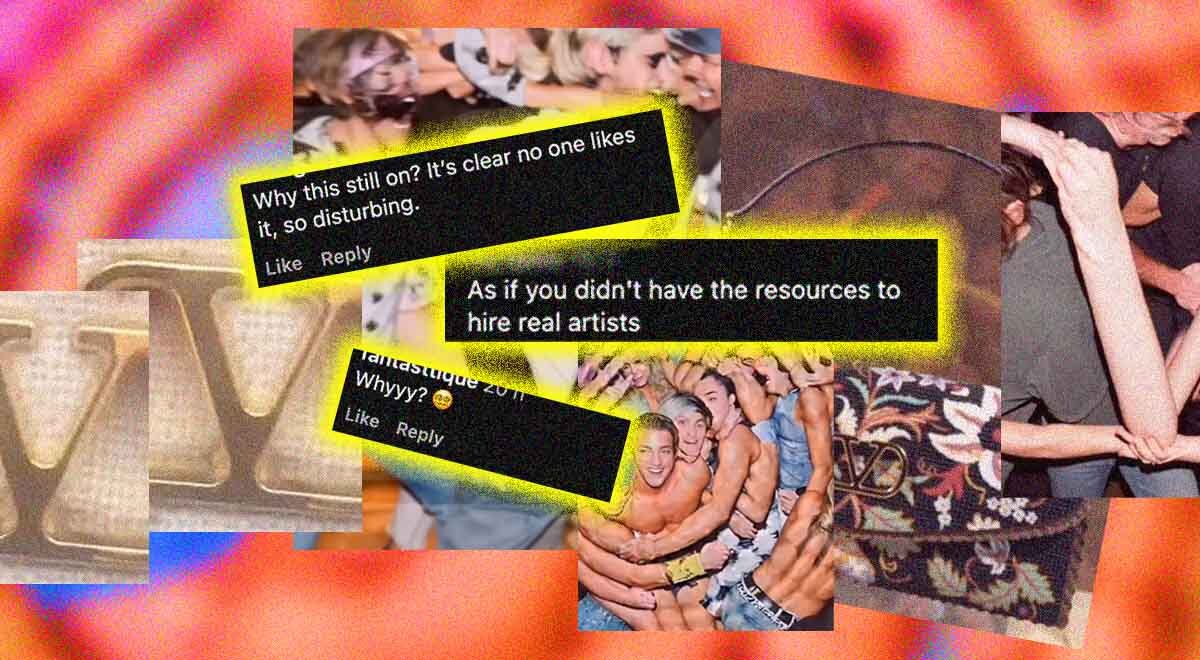
Image by Cybernews

 Follow us
Italian fashion designer Valentino is facing a red-hot backlash after a series of ads it created to promote its DeVain bag featured the use of AI, and ensuing accusations of “rage baiting.”
Nine artists have collaborated on the project, with five featured in the initial drop. The artists Enter The Void, Paul Octavious, Albert Planella, Animus Pax, and Total Emotional Awareness (Christopher Royal King) have all been credited with using AI to assist the project.
The reaction on Instagram was mixed at best, with one replier to the ad posting: “Valentino is the last brand I imagined would think gimmick of AI ‘surrealism’ is marketable. Anti-class, anti-taste, anti-luxury.”
Disapproval is often shown through brevity, and other accusations levelled at the couture firm are of being “sloppy” and “sad,” along with “rage baiting,” which has incidentally just been named Oxford University Press’ word of 2025.
The visuals are of otherworldly proportions. In a kaleidoscopic short video, models’ arms are interlocked as they appear a little disfigured in a loop of limbs.






Seconds before that is an ecstatic model emerging from the handbag itself, in an ad that recalls the late filmmaker David Lynch, in his penchant for creepily dreamlike visuals.
“Have you been hacked?” asked an Instagrammer in response.
Couture collides with AI
The disparaging remarks suggest that appreciators of such a high-end designer would expect better output from its hiring of designers.
And while, on the one hand, a slice of credit may be due, given that the Italian firm explicitly disclosed its use of AI on its Instagram channel, on the other hand, the aesthetics on display were not seen to be in line with the product in question.
“This bag is too beautiful to be advertised via AI,” observed another responder.
AI in the fashion industry isn’t new. H&M and Guess used “digital twins” earlier this year, as human models are able to digitally scale themselves out to multiple brands and earn a living like an avatar could.
But when companies like Valentino, which are not generally associated with fast fashion, cut corners by using synthetic means in their ads, it seems to result in disappointment across the board.






Anne-Liese Prem, head of cultural insights and trends at creative digital agency Loop, told the BBC: “Without a strong emotional idea behind it, generative AI can make luxury feel less human at a moment when people want human presence more than ever.”
And if “luxury” becomes synonymous with “digital efficiency,” then the abstraction and discomfort could loom larger than ever.
Unlock more exclusive Cybernews content on YouTube.