The startup 300 AI insiders would short: what that vote really tells us
More than 300 founders, investors, engineers, and researchers were asked a question at the Cerebral Valley AI Conference that quietly lingers in private conversations but rarely surfaces on public stages. Which billion-dollar AI startup would you short?


 Follow us
More than 300 founders, investors, engineers, and researchers were asked a question at the Cerebral Valley AI Conference that quietly lingers in private conversations but rarely surfaces on public stages. Which billion-dollar AI startup would you short?
Perplexity, the AI-powered search startup, was at the top of everyone's hit list. In second place was OpenAI, the most visible face of the current AI wave, signalling unease that goes beyond surface-level enthusiasm for AI tools.
What gives these opinions more weight is that they are from insiders who build, fund, and deploy AI systems. Their verdict reflects a deeper tension between rapid financial acceleration and the slower reality of creating products that deliver the elusive ROI and measurable value.
All of this also comes at a time when fears of a trillion-dollar AI bubble persist. But why did the majority of attendees target Perplexity?
Why Perplexity became the focal point






Perplexity has never lacked ambition. Its vision of reshaping search with AI rather than traditional link-based results caught early attention. A cheeky $34.5bn bid for Google Chrome would also ensure it remained in the spotlight.
Perplexity targeted users who were ready to question the status quo of search and explore alternative experiences that felt more conversational and contextual. But the ambition that fuelled its rise is now a source of scrutiny.

The big challenge for Perplexity is mainstream adoption. Can it rewire daily habits at a global scale while being profitable?
Concerns also centred around its fundraising trajectory. Rapid successive rounds and accelerated valuation increases suggest confidence on the surface. But in private discussions, this pace raised questions about whether the company is scaling faster than it can prove a long-term business model.
Growth can be a signal of strength. It can also be a symptom of pressure to justify the narrative rather than the fundamentals. Perplexity's spokesperson responded with humour, referring to the event as the Judgmental Valley Conference. The comment landed as playful, but it also underscored the sensitivity that accompanies criticism when valuations and reputation carry such weight.
Asked to comment on the Cerebral Valley @EricNewcomer survey, Perplexity spokesman Jesse Dwyer replied in an email: undefinedGeeze, it sounds more like the judgmental valley conference.undefined
undefined Ben Bergman (@thebenbergman) November 15, 2025
The quiet consensus around the AI bubble
The term bubble was not whispered at Cerebral Valley. It was acknowledged openly and without drama. Attendees largely agreed that the current phase of AI investment mirrors previous technology cycles, in which capital outpaces clarity and enthusiasm races ahead of execution.
This is not necessarily framed as an impending collapse.
History shows that bubbles often act as catalysts for transformation. They draw talent, funding, and attention into emerging spaces and accelerate innovation. The challenge lies in identifying which companies will remain when speculation cools, and the market demands proof over promise.
Several participants referenced historical parallels with the dot-com era. Many companies disappeared, and a few reshaped global commerce and communication. The pattern is familiar. Overinvestment followed by consolidation, then maturity.
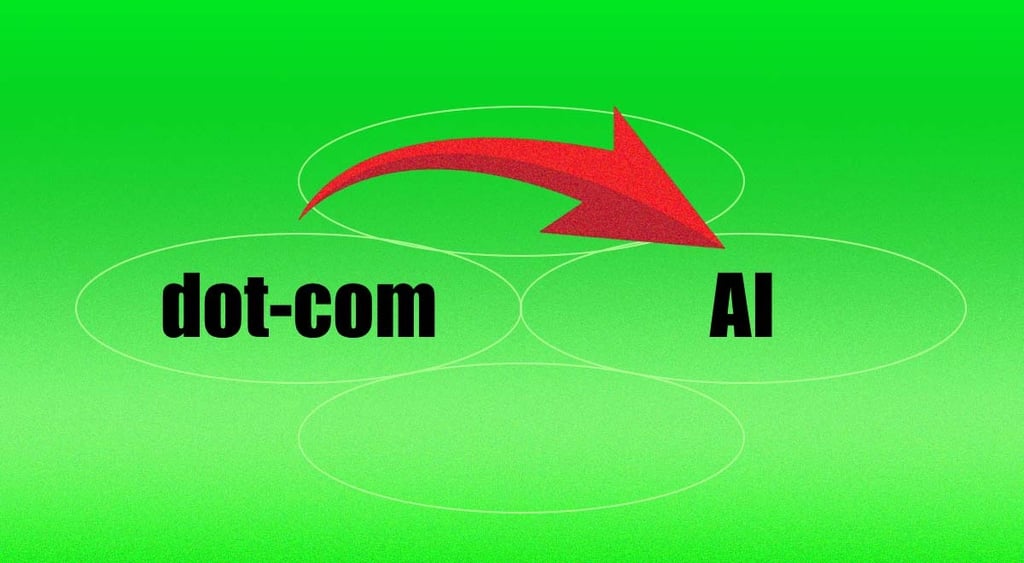
Focused AI versus the dream of general intelligence
While general AI continues to capture headlines, many are looking beyond hype and inflated valuations. Alternatively, the people building the solutions of tomorrow are more interested in systems designed for defined outcomes.
In a year where the ROI of AI projects has come under scrutiny, the promise of AI as a time-saving engine remains the big sales pitch. But real-world experiences tell a different story.
Several engineers at the conference described cases where LLMs saved little time once full validation and oversight were factored in. If AI-generated outputs will always require human review, in complex scenarios, the review process can cost as much as doing the work manually from the start.
There is an argument that AI does not eliminate complexity, but merely redistributes it. When users understand the underlying system, AI can accelerate meaningful work. When they do not, it masks risk until it becomes costly. Is the illusion of speed paving the way to inefficiency?
Another cause for concern with Perplexity lies in its technology stack. Unlike OpenAI and Google, which own and train their foundational models, Perplexity relies heavily on third-party systems. This creates a dependency that leaves little defensible ground if those providers evolve or reposition.
When the models you rent become direct competitors, competitive advantage becomes fragile. Innovation cycles accelerate, and differentiation narrows. The distinction between product and interface becomes blurred, leaving value vulnerable to sudden shifts in platform dynamics.
This reality fed into the scepticism voiced at the conference.
It was not rooted in pessimism toward Perplexity's vision, but in a pragmatic assessment of structural disadvantage compared to industry giants with full-stack control.
A contradiction at the heart of expansion and expectation
Some discussion centred around Perplexity's expansion strategy, particularly high-profile partnerships that increased user numbers. But while headlines celebrated adoption milestones, critics questioned the long-term conversion potential of these free user bases.

In highly price-sensitive markets, converting free users into high-margin subscribers remains a formidable challenge. When competing alternatives are free and deeply integrated into daily workflows, loyalty depends on perceived necessity rather than novelty. This creates a fragile ecosystem where usage metrics inflate while revenue sustainability remains unproven.
Despite the slightly misleading headlines, both Perplexity and OpenAI also featured in a separate list of companies attendees would bet on. So, although the attendees see them as risky, they are more than happy to hedge their bets with one eye on the upside if the AI boom continues.
The market is littered with contradictions on all sides. Investors acknowledge promise while fearing overextension. Builders celebrate innovation while recognising structural risk. The same company can represent opportunity and uncertainty simultaneously. This tension defines the AI moment more accurately than simplistic narratives of success or failure.
What the survey really revealed
The informal poll at Cerebral Valley did not predict collapse. It questioned whether momentum is being confused with resilience and whether valuation is being mistaken for stability.
Perplexity's position at the top of the list signals concern around distribution power, differentiation, and long-term defensibility. OpenAI's inclusion highlights anxiety around capital intensity and growth sustainability. Neither outcome guarantees decline; both prompt reflection.
The most powerful takeaway from the event was a renewed emphasis on grounded value. The next stage of this industry will reward companies that build dependable systems, respect user intelligence, and demonstrate practical outcomes over performative ambition.
Everyone wants to know if AI is a bubble. @peter_wagner says that question is too simple.
undefined Newcomer (@NewcomerMedia) November 24, 2025
At the Cerebral Valley AI Summit, the @Wing_VC Founding Partner shared that hype is a permanent feature of every major tech wave: pic.twitter.com/bC0r1ZySUd
What’s ahead for AI?
AI will inevitably evolve through consolidation, correction, and a renewed focus. The companies that survive will be those that demonstrate precise alignment between technology, purpose, and user experience.
The bubble narrative does not herald the end of AI. It marks its adolescence. This phase will test business models, temper expectations, and demand operational maturity. When the dust settles, what remains will shape how AI integrates into daily life for decades to come.






The Cerebral Valley question did what few conference panels manage. It forced an honest reckoning. It invited the industry to confront its own assumptions. And in doing so, it offered a window into the reality beneath the spectacle.
Not every startup will weather the transition. Not every valuation will justify itself. But the conversation now feels more grounded, more reflective, and more attuned to the difference between hype and lasting impact. That has to be a good thing, right?
Unlock more exclusive Cybernews content on YouTube.