Whose line is it anyway? When AI redraws the boundaries of art

 Follow us
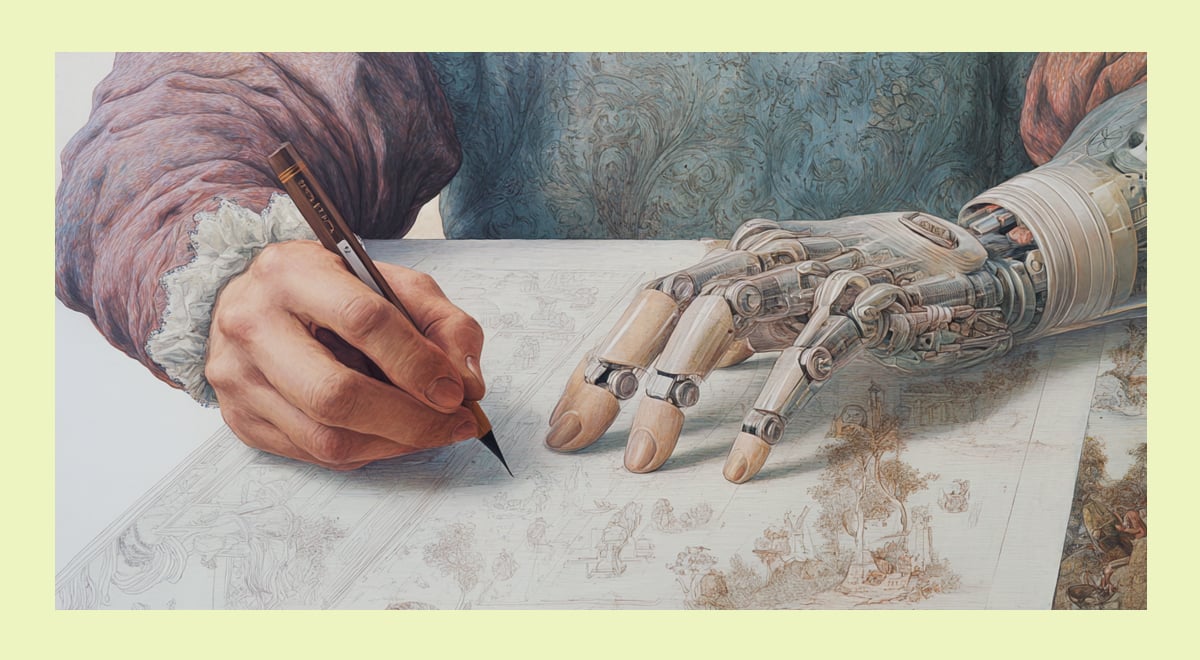
Somewhere between Tokyo and the servers of OpenAI, the delicate brushstrokes of Studio Ghibli found themselves distilled into a string of digital instructions. A prompt. A style preset. A look.
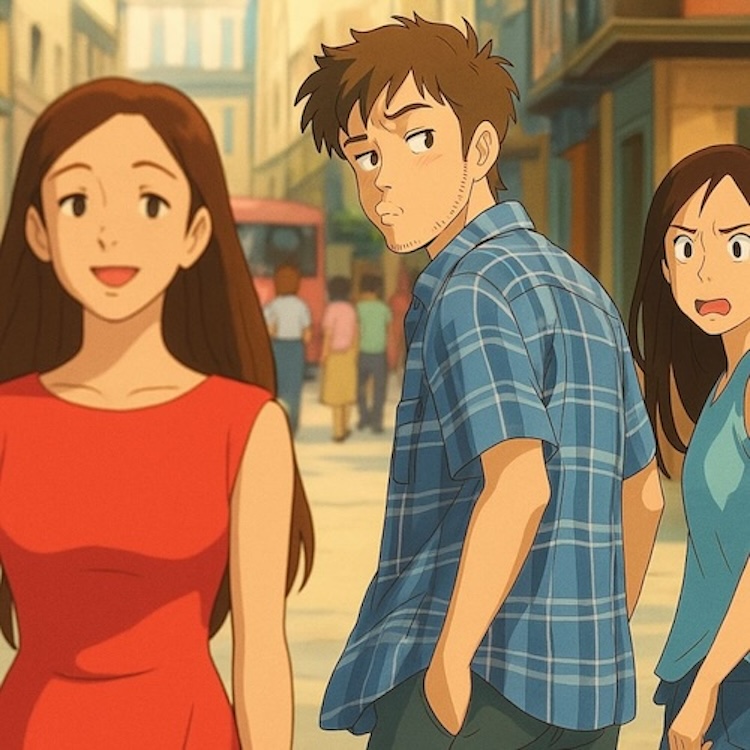
Type “in the style of Studio Ghibli” into an AI image generator today, and you’ll get something that looks, at first glance, like a lost frame from Spirited Away.
But this isn’t Miyazaki. This is code. Pattern recognition. Probabilities stacked on top of pixels.
And that, depending on who you ask, is either the future of creativity or its commodification.

Key takeaways
- Artists are pushing back. From Studio Ghibli to freelance illustrators, creators are calling out AI tools for mimicking their signature styles and saturating the market with machine-made imitations.
- Copyright law is still catching up. While courts in the US and Europe have rejected AI-only copyright claims, the legality of using copyrighted works to train these models remains unresolved and unevenly enforced.
- Lawsuits are scaling up. Class-action suits from artists and high-stakes copyright crackdowns from Disney, Warner Bros., and Universal show that rights holders are no longer sitting quietly.
- Recognition doesn’t guarantee rights. An AI-generated image won a state art competition, but failed to secure copyright. The line between authorship and automation remains legally undefined.
- Without regulation, artists lose ground. AI risks devaluing human labor, flattening creative expression, and warping how society defines originality and ownership.
- A collaborative future is still possible. Some envision AI as a co-creator – not a replacement, if licensing, attribution, and legal protections evolve to safeguard human input.
The theft of style
When Studio Ghibli, along with a consortium of Japanese media giants, issued a formal warning to OpenAI earlier this year, the message was plain: don’t use our work to train your machines.
But what exactly was being stolen? Not a character. Not a plot. Not even a shot. What’s being taken, many artists argue, is style. That quality which, unlike text or logos, has historically been too abstract to copyright, and too individual to clone.
Until now.
Style, it turns out, can be quantified, not in the romantic sense, but in the brute-force mechanics of neural nets.
AI models like Midjourney or DALL·E aren’t copying Ghibli’s animations frame for frame. They’re ingesting thousands of examples, crunching statistical similarities, and learning what makes a Ghibli scene look like... well, Ghibli.
When Fallout fans found the glitch in the vault
If the debate once felt confined to illustrators and indie artists, 2023 proved otherwise. When Amazon released its first promotional art for the Fallout television series – a franchise with a cult following and a meticulously crafted visual identity – fans noticed something was off.
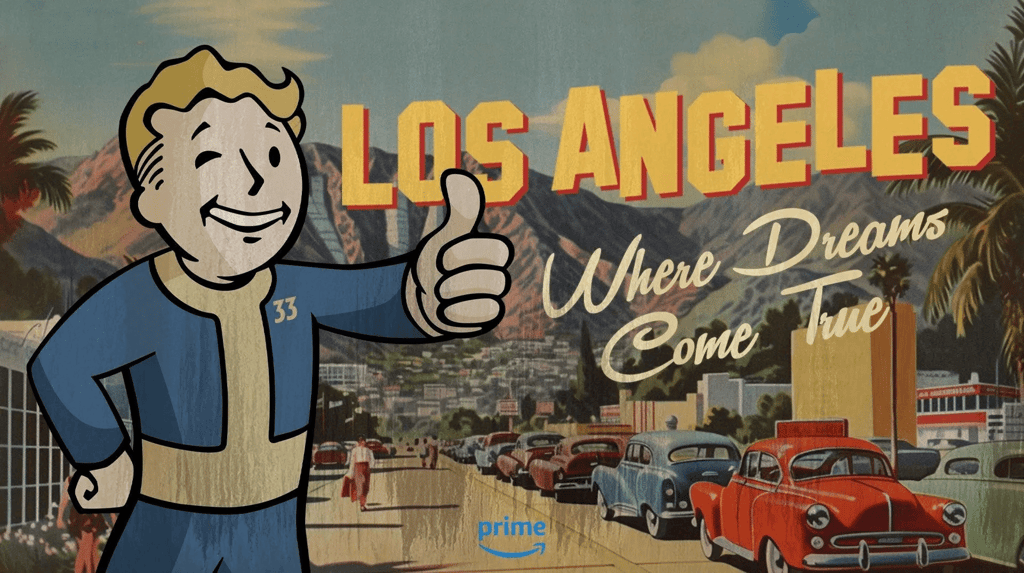
A stray hand here, impossible shadows there, objects bending in ways that defied physics. Internet users did what they do best: they zoomed, circled, and annotated. And soon, the conclusion was unavoidable – the official promo image appeared to be AI‑generated. Forbes later confirmed the suspicion.
For a series built on handcrafted world‑building, the revelation landed like a betrayal. Not because AI art is inherently scandalous, but because it had been slipped in quietly, without acknowledgment, into a space where fans expected human labor, human imagination, and human weirdness.
A legal system built for canvases, not code
The irony is, AI-generated art still can’t be copyrighted, not in the United States, anyway. The courts have spoken: without a human author, there is no art in the legal sense. The Copyright Office has issued similar rulings, rejecting fully machine-made works. But the frameworks that protect existing artists from having their work used to train those same machines? Paper-thin.
It’s a loophole big enough to drive a billion-dollar business through.
Curious what others think about this story? Contribute your thoughts to the debate below.
AI developers argue they’re covered under fair use – especially in the US, where transformative works are allowed wide latitude. But that defense is starting to look shakier. In Europe, and increasingly in parts of Asia, courts are taking a different tack: if your AI learned how to paint by watching copyrighted painters, the output might still be derivative.
Still, there's no clear consensus. In China, courts have already granted copyright to AI-assisted work when human creativity played a role. It’s a patchwork, and in that patchwork, corporate actors move fast and break things.
Illustrators strike first
In January 2023, a group of US illustrators, among them Sarah Andersen, Kelly McKernan and Karla Ortiz, filed a class‑action copyright lawsuit against Stable Diffusion, Midjourney and DreamUp (via DeviantArt), accusing them of infringing the rights of millions of creators by training their AI tools on billions of images scraped from the web, without consent, attribution, or compensation.
The lawsuit argued that these tools were effectively built to facilitate “wholesale, mass copying” of protected art, then repackaged as new images.
That kind of challenge raises questions not just about single images, but entire livelihoods. When a machine can approximate a human illustrator’s aesthetic, often for a fraction of the time and cost, what does that mean for freelance artists, small studios, and visual storytellers?
The ghost in the machine is us
If the legal questions are murky, the cultural ones are existential. What does it mean for art to be “created” if it’s assembled from other people's ideas? What happens to the aura of a work? The human touch, when that touch is outsourced to an algorithm?
When Hayao Miyazaki, co-founder of Ghibli, was shown a demo of AI-generated animation years ago, his response was blunt: “I strongly feel that this is an insult to life itself.”
He wasn’t being poetic. He was making a philosophical claim: that art, at its most vital, is the result of suffering, observation, failure, revision – the kinds of processes machines don’t (yet) undergo.
AI, for all its prowess, does not sit in traffic and think about lost time. It doesn’t mourn. And so, it cannot create in the way humans do, at least, not yet.
But it can simulate that creation. And in a world where the appearance of creativity is often enough, simulation may be all the market needs.
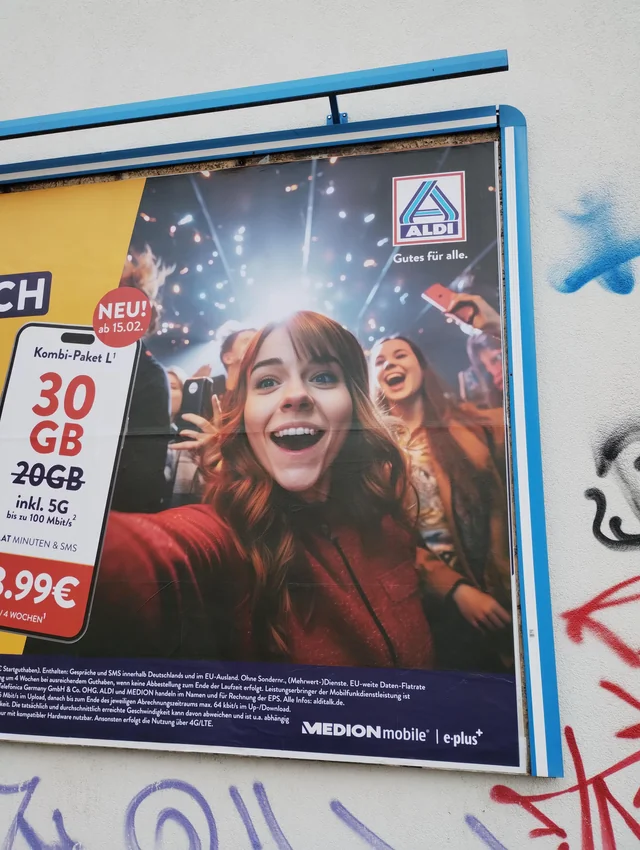
Already, we’re seeing AI-generated visuals slip into public life unnoticed. From luxury watch ads on Instagram to concept art in streaming platforms’ teaser promos, machine-made imagery is increasingly indistinguishable from human work.
With a trained eye, you can spot the digital fingerprints – unnatural shadows, uncanny fingers, dream-logic environments. But AI is improving fast. Soon, even those tells will vanish.
Conclusion: rethinking creation in an AI age
Like it or not, the machines are here. They just generate – faster, cheaper, and increasingly convincingly. AI isn’t waiting for our ethical frameworks to catch up, and the business world isn’t slowing down to let us catch our breath. From advertising to publishing to entertainment, generative tools are becoming default infrastructure.
And that means we’re past the point of whether AI belongs in the creative space. It’s already here. The real question is: what happens to the humans in the room?
In the coming years, courts will clash and diverge – some protecting human authorship fiercely, others leaning into “transformative” use. We’ll likely see a patchwork of national policies before anything like a global standard emerges.
In the meantime, artists will continue to sue, push, organize, and demand licensing systems that treat style, process, and provenance with the same weight we’ve long given finished works.
But even as legal systems scramble to catch up, something else is already shifting: how we value art. In a market saturated by machine-made content, the signal that something was made by a human, not generated, but created, may become the most valuable part of the work. Craft will matter again. So will traceability. So will voice.
The machines will get better. They’ll become collaborators, tools, even muses. But they won’t replace what makes artists. They can’t invent why something needs to be made.
So no, we can’t draw the old lines anymore. But we can redraw them – carefully, collectively, before the ink dries.