What are the primary factors that determine the reliability of a travel eSIM?
Our in-house expert researchers and journalists conduct independent, unbiased testing of eSIM services, assessing their real-life effectiveness and usability.
By staying current with industry developments and openly sharing our transparent testing methodologies, we ensure readers receive accurate, up-to-date insights so they can make informed choices about eSIM solutions.
Learn more

A reliable travel eSIM typically combines broad destination coverage, stable local tier-1 network access, consistent real-world performance, a straightforward installation and activation process, responsive support, and flexible plan management.
You’ll notice that this list doesn’t include low prices or big marketing claims. These do not guarantee reliability. Once you step off a plane, it’s important that your phone connects to local towers within seconds, and the factors above determine service quality.
Below, I explain exactly how these factors affect an eSIM's reliability in real travel situations. I also look into major eSIM providers, what they offer, and what users say about them.
Factor 1: coverage and local network quality
An eSIM is only as reliable as the local carrier network it connects with. So before choosing one, check which networks the provider uses at your destination and whether they offer reliable coverage there.
Without this, you can’t be sure your phone will connect to the internet once you enter your destination country. Even if it does, coverage will determine connection strength, too. If the provider relies on secondary roaming agreements with not enough network towers or bandwidth, the eSIM experience will also be sub-par.
Check destination fit before you trust any provider's claim
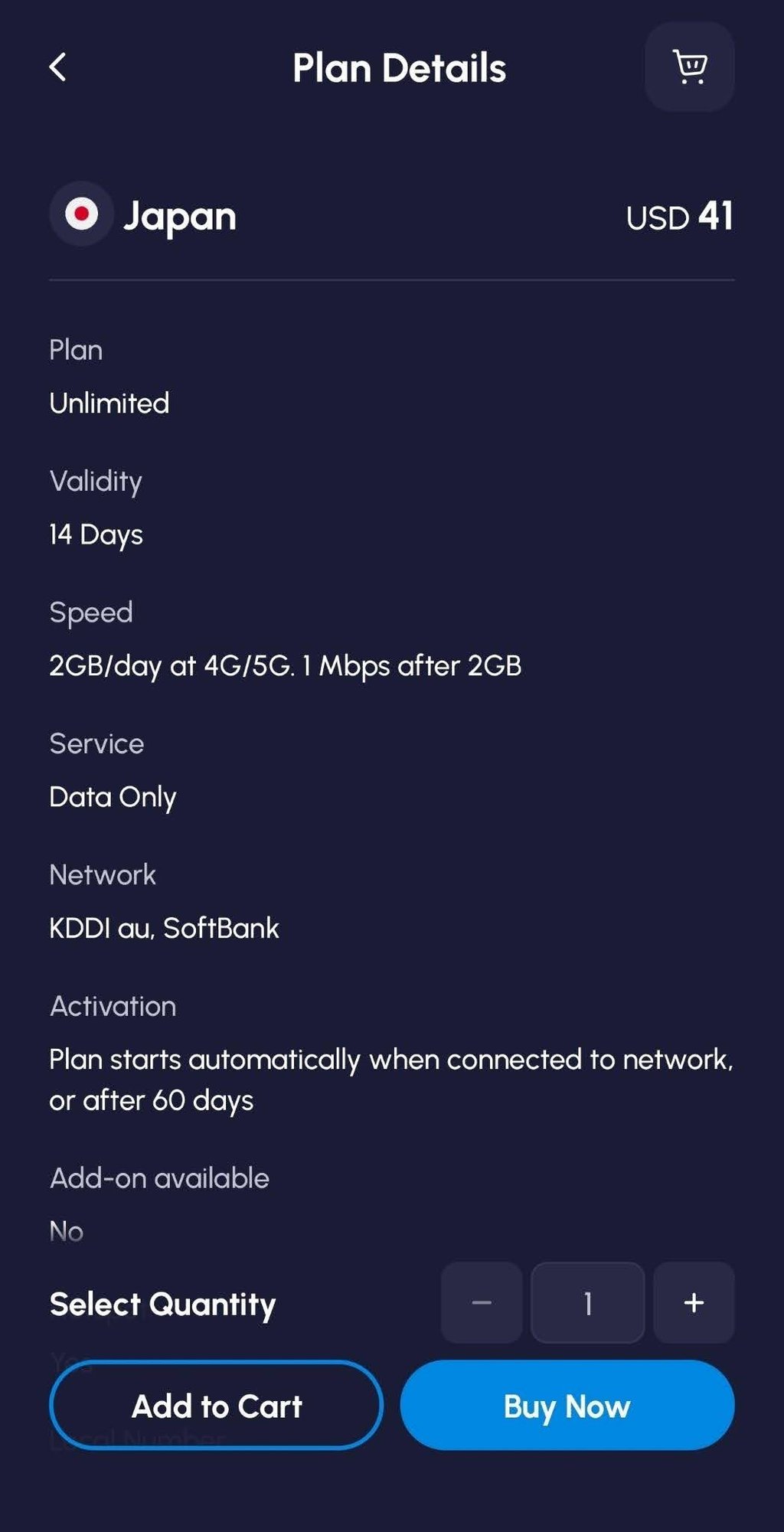
eSIM reliability can vary by destination. For example, a good provider in Italy and the rest of the EU might not work well in Japan. That’s why you should first consider where you’re going, whether you need single-country or regional coverage, and which local operators these plans connect to.
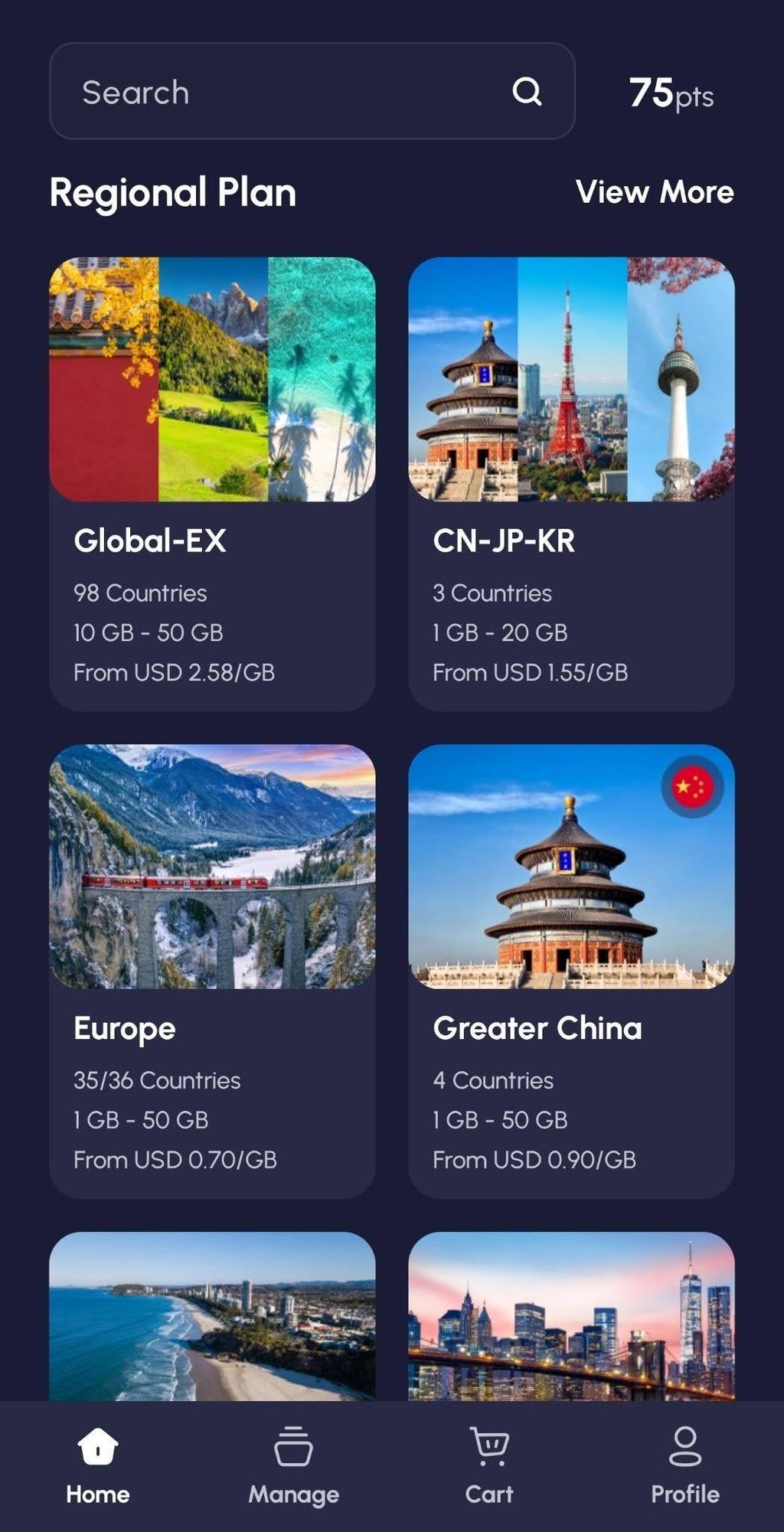
For instance, established eSIM providers like Nomad eSIM offer extensive coverage in over 200 destinations, including single- and multi-country plans covering China, South Korea, and Japan, as well as options that cover most of Europe. This can help if you’re planning to visit multiple countries or want a reliable eSIM for the future.
Factor 2: setup and activation experience
It’s important that the eSIM app you choose to use is easy to navigate. So if getting your eSIM installed and ready to use feels complicated and you have to browse chunky menus, the product has already failed.
A reliable travel eSIM offers a frictionless onboarding experience with automatic in-app installation based on straightforward instructions, simple QR code scanning, and upfront device compatibility checks.
A smooth setup process also means you can get everything ready before you leave. You don't want to be figuring out the app while standing in an airport after a long flight. Ideally, the eSIM should be easy to install before your trip and connect to a supported network when you arrive at your destination automatically.
That’s why you shouldn’t overlook the setup process when you’re trying to determine how to choose the best travel eSIM. Since you’ll need to purchase a plan to set it up, check the eSIM operator's instructions in the app or online.
See how it works first so you know what to expect, and you won’t run into major hurdles once you buy the eSIM. Also, check the troubleshooting steps to see whether the provider has addressed common issues, like your device not connecting to the eSIM. Moreover, make sure your device is compatible with eSIMs.
Factor 3: stable real-world performance
So, you arrive at your destination, turn on mobile data, run a speed check, and you see satisfying numbers. But that’s not all. You want the eSIM to consistently perform well.
This means you can keep using your map to find and reach places at any time, message friends and family on WhatsApp, translate text or speech, and browse the internet without frequent interruptions.
Impressive technical claims matter little compared to speed, session stability, and rare connection interruptions. You want the connection to hold at all times so you can always check your banking app or message people.
That’s why it’s important to choose a provider that emphasizes consistent network uptime and low-latency data routing.
Factor 4: useful features that reduce travel risk
The best travel eSIM features reduce stress and the chance of problems while you’re abroad. Flashy extras do not. A dependable eSIM puts you in control, giving you flexibility over your usage and letting you add more data when needed.
With that in mind, here are some useful features you’ll want to see from your provider:
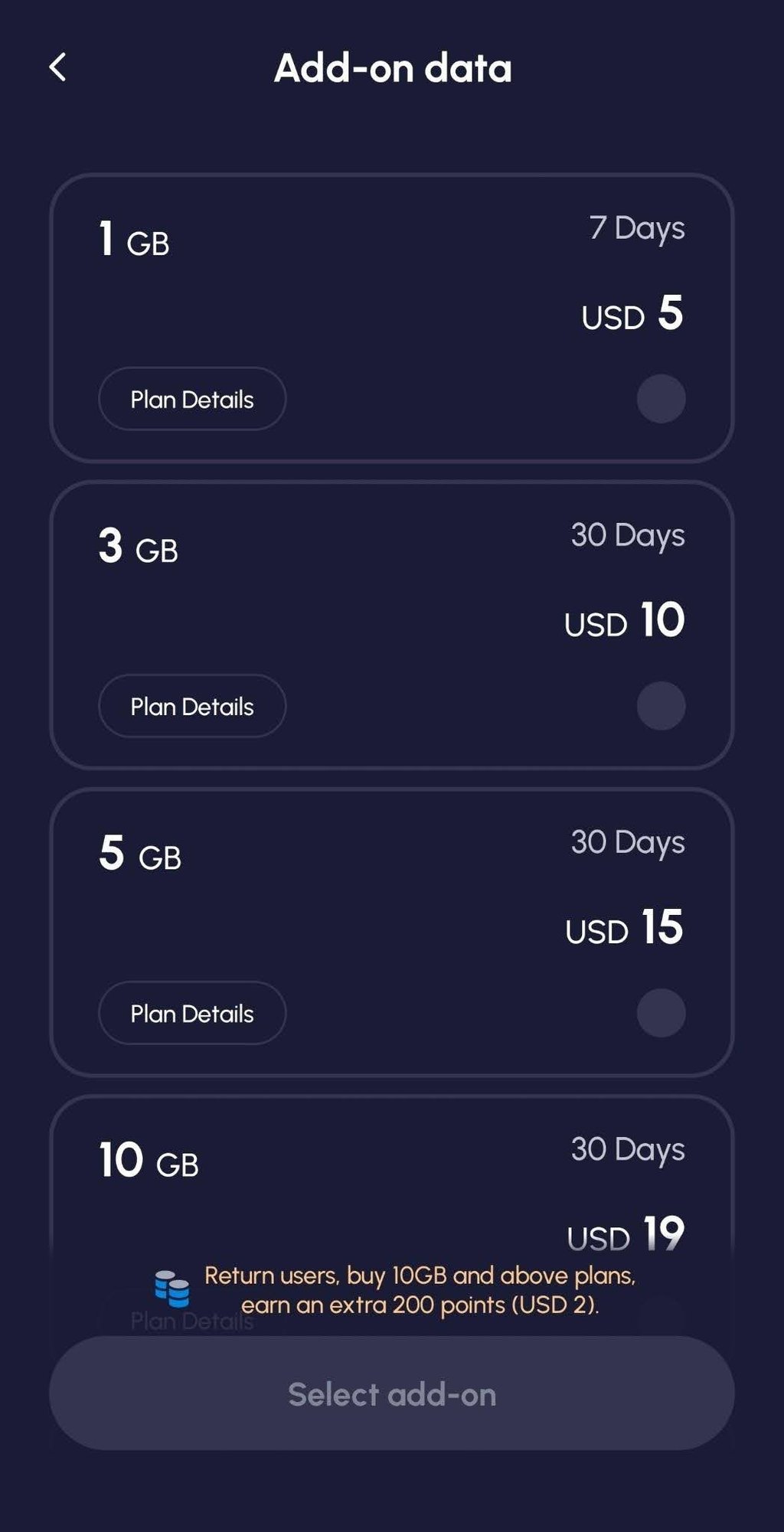
- Easy top-up options. Lets you add more data to your existing plan for a fee or in exchange for points you earn as a loyal member. This is useful if your trip changes or you use more data than expected.
- Transparent validity periods. This refers to clear explanations of when the plan starts and how, and also when it ends.
- Clear usage tracking. You should be able to see how much data you’ve used up and how much is left at all times. Notifications when you’re almost out of data are nice as well.
- Hotspot support. Unrestricted personal hotspot capability is important if you want to share your data with your partner or travel buddies.
Reliable providers like Nomad eSIM offer all these features and integrate them into their apps so you can easily monitor your plan and make changes.
Factor 5: Support and troubleshooting quality
Reliability isn't only about connection but also about what happens when something goes wrong, even if it’s a minor issue or a one-time thing.
That’s why you want an eSIM provider with reliable customer support. You should be able to reach them easily when activation fails or the plan doesn’t work while you’re abroad.
Beyond support, the platform should offer troubleshooting resources for common issues like incorrect roaming toggles or APN misconfigurations.
The eSIM provider will feel more reliable when you can quickly find an easy way to solve problems, even when you’re stressed out.
Factor 6: Fit for international travel and personal use
To choose the best eSIM for personal use, consider the destination, the trip length, how much data you need, and whether you’re visiting a single country or several.
Once you establish all this, compare the core reliability signals covered in this guide. Look for eSIM providers that properly cover your destinations with excellent, verifiable performance. Look for providers that offer easy setup, proper support, and practical features.
To make this easier, you can use our checklist to decide which is the most reliable eSIM provider.
A simple traveler checklist for choosing the best travel eSIM
Here’s a brief checklist that should help you choose a trustworthy eSIM provider:
- Destination coverage. Does the eSIM provider partner with reputable, tier-1 local networks in every region and country you plan to visit? Does it cover a broad area or just major cities?
- Set-up simplicity. Can you install the eSIM in the app with a few taps, or do you need to scan a QR code?
- Validity. How long does the plan last? Is the period long enough for your entire trip?
- Real-time management. Does the provider offer a way to track real-time data consumption?
- Policy transparency. Are important details like daily speed limits, throttling thresholds, and hotspot support clearly stated? If not, are they easy to find in guides or through support?
- Customer support. Is customer support easy to reach? What options are offered: a live chat or just email? Is there a Help Center with guides and troubleshooting steps?
- Data top-up. Does the provider offer ways to increase your data for a price? Can you buy different top-up options with a few taps in the app?
- Calls and texts. Does the eSIM provider offer support for calling and texting? If you don’t need them, make sure your regular SIM and eSIM can work together.
Are eSIMs as reliable as physical SIM cards?
It’s a common misconception that digital eSIMs are less stable than physical SIM cards. When comparing eSIM vs physical SIM reliability, remember that reliability depends on the network and provider, not the SIM format. That’s because both formats authenticate devices using the same radio frequencies and rely on the same local cell towers.
The real trade-offs come down to travel habits and operational conveniences. Traditional SIMs are more familiar to most people, and you can easily change them. However, they require small ejector pins, and you need to find a way to safely store your own SIM if your phone doesn’t have dual-SIM capabilities.
Travel eSIMs, on the other hand, let you keep your original SIM active and are installed digitally. The setup is much easier, too.
Ultimately, it all comes down to the provider, the coverage, the activation experience, and your personal preference.
Why Nomad eSIM can be a practical option if reliability is your priority
Travelers who prioritize reliability usually want more than low pricing. If you fit that description, you want an option that covers a broad range of destinations, is easy to set up, offers flexible plans with add-ons, and makes it easy to stay connected.
Nomad eSIM fits that bill and is a good option to consider when you’re looking for a roaming alternative that’s easy to set up and use daily. It’s a set-it-and-leave-it option that rarely causes connection issues, so it always fits well with your travel habits.
They offer fixed or unlimited data plans covering over 200 destinations, and you can go for single-country, regional plans or global plans depending on your travel schedule. You can buy plans in the app and install them in minutes within a 60-day activation window using a QR code or one-tap setup.
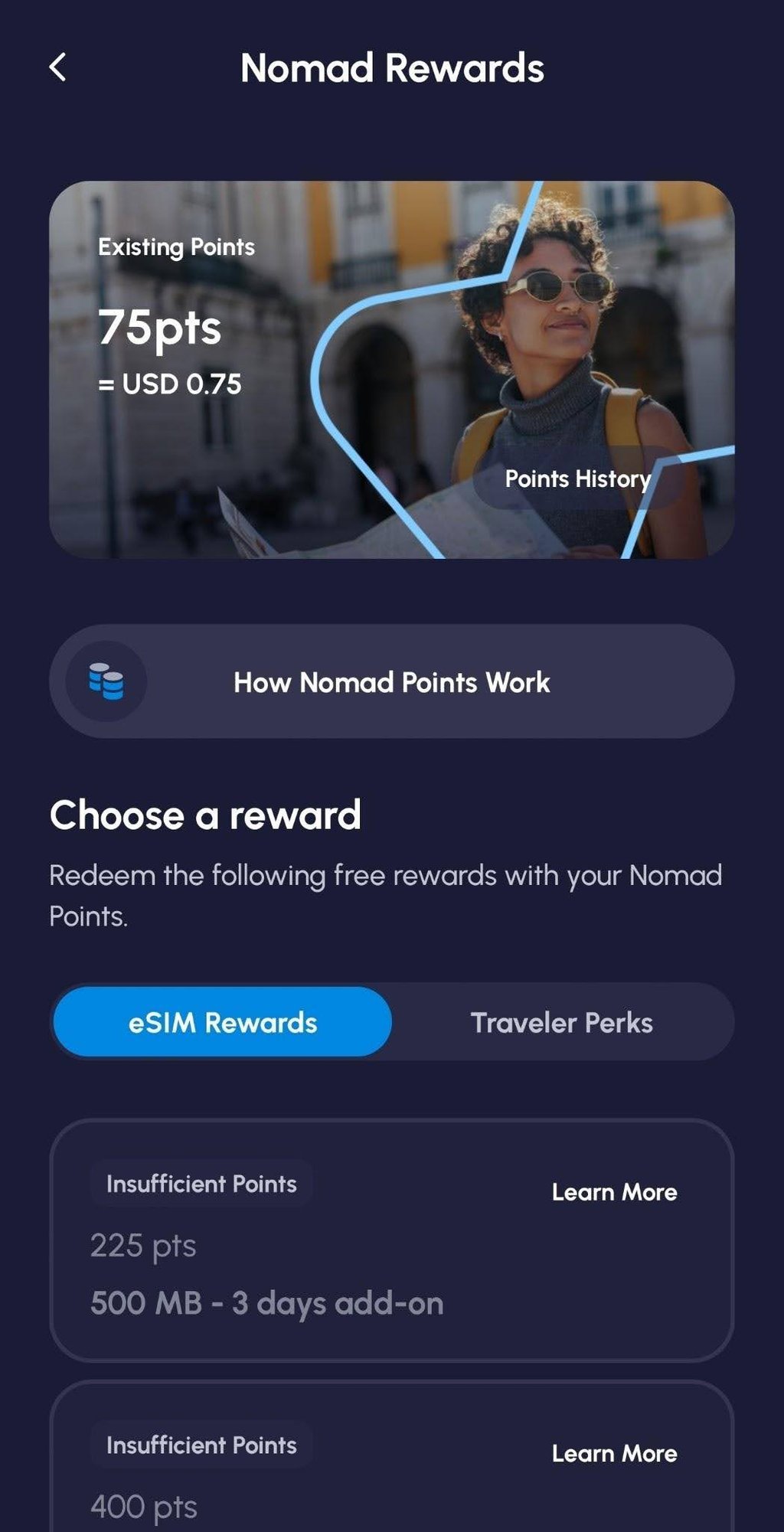
Hotspots are supported, making travel with friends and family convenient. They also offer rewards and promos through the Weekly Wins program, where users can check in weekly in the app to collect points and discount codes. Their Membership Tiers loyalty program also lets users earn points they can exchange for cash value when purchasing new eSIMs or any add-ons for any active plan.
When you combine the membership program, Weekly Wins, referral rewards, and constant promos, you often get the chance to buy a fixed or unlimited data plan for a much lower price than it normally costs. Plus, Nomad eSIM offers a free 1GB trial in 76 destinations.
What’s more, Nomad eSIM has one of the fastest global median download speeds and boasts a strong 4.3 average rating on Trustpilot from over 46,000 reviews.
Conclusion
The reliability of a travel eSIM depends on coverage, local network quality, ease of setup and activation, real-world performance quality, useful extra features, customer support dependability, and troubleshooting quality.
The smartest way to choose an eSIM provider is not to chase the overall best one, but to evaluate the factors that matter for your specific trip.
By picking the right option with solid coverage and transparent policies, you can keep your connection strong for your entire trip.
FAQ
Are eSIMs as reliable as physical SIM cards?
Yes, eSIMs are just as reliable as traditional physical SIM cards. Most users admit eSIMs are better because you can't lose them and don’t have to worry about durability, but setup is slightly more complicated, and they might not be compatible with older phones.
What features matter most in a travel eSIM?
The features that matter most for travel are detailed coverage, network quality, flexible data plans, easy setup and activation, and reliable customer support.
How to choose an eSIM for international use?
Choose a reliable eSIM provider like Nomad eSIM, confirm your device is compatible, make sure the available plans match your destinations, and choose the exact data plan type you need, like fixed or unlimited data.
How do I choose the best travel eSIM?
Check that it’s compatible with your device, offers enough data for your needs, and covers the country or countries you’re visiting well. Moreover, verify that it offers reliable support, flexible plan management, and an easy setup process.
Can a data-only travel eSIM still be reliable?
Yes, a data-only eSIM is reliable for standard travel, as long as you choose a reputable provider with good coverage. It connects to local carrier towers just like a regular SIM.