Who leaks movies first and why they do it
With the winners of the 98th Academy Awards finally announced, many will feel FOMO and ignore the warnings as they search for illegal streams or torrents of the big winners. But what is the origin story of these files uploaded to the Internet for the world to consume?

World Premiere of One Battle After Another at the TCL Chinese Theatre IMAX. Joe Seer/Shutterstock

 Follow us
With the winners of the 98th Academy Awards finally announced, many will feel FOMO and ignore the warnings as they search for illegal streams or torrents of the big winners. But what is the origin story of these files uploaded to the Internet for the world to consume?
The first leak of a movie is rarely the work of a cybercriminal. Instead, it usually begins somewhere inside the complex distribution chain, where post-production houses, distributors, localization vendors, and theaters all handle early digital copies.
Historically, groups like "Sparks Group" and EVO specialized in obtaining such material early, often by impersonating industry professionals to obtain discs or early access. Hollywood studios try their best to lock content down with watermarks, encryption, and strict distribution controls. But as Jeff Goldblum's character famously said in Jurassic Park, "Life finds a way."
During award season, the number of people with access expands dramatically. Critics, awards voters, distributors, and sales agents all receive screeners, increasing the number of potential weak links in the chain. Many leaks turn out to be inside jobs in which a trusted contact or assistant copies a screener and releases it online, rather than a movie fan secretly filming from the back row of a cinema.







Although leakers are seldom connected to criminal gangs, once a film appears online and demand surges, cybercriminals quickly move in to exploit the moment. Fake downloads, malware-laced torrents, and scam streaming sites often appear within hours, targeting audiences searching for the latest award winners.
Piracy and the award season cycle: How leaks become buzz
It's difficult to understand the motivations of movie leakers. On one side, there are organized release groups that engage in piracy for no other reason than reputation and prestige within their piracy communities. On the other side, we find grifters seeking to profit from private forums, advertising networks, or subscription-based streaming services.
Some pirates leak films for ideological reasons (the belief that all information should be free). Then, some pirates act for ego, curiosity, or simply because it is convenient (for example, an awards voter sends a screener to a friend, who then sends it to friends online).
Piracy and the award campaign cycle have blended. If a title is accessible to both voting bodies and the general public, it creates excitement and buzz for the distributor, studio, and filmmakers about which titles are creating the most buzz and which are the most popular with audiences.






Once a film starts to gain traction, studios will heavily support it to capitalize on the documented "Oscar bump," in which a film that may have been a modest performer becomes a long-term moneymaker.
Has anyone ever been caught for leaking movies?
In 2015, the leak of The Hateful Eight demonstrated that Hollywood does occasionally track down the person or people responsible for highly publicized piracy. A high-quality screener version of the film was released online weeks before its theatrical release and quickly spread across various torrent sites.
The file was traced back to a screener copy provided to voters within the awards circuit and eventually linked to a Hollywood executive who received an advance copy of the film during the awards campaign cycle.

Ten years before this leak, a very similar leak led to one of the first criminal cases related to Oscar screeners. In 2004, the FBI arrested Russell Sprague after determining that he had made digital copies of the films and was circulating them online.
Sprague had received these screener copies through his relationship with Academy Member Carmine Caridi. Although Caridi believed he was sending the tapes to a film enthusiast, Sprague had converted the VHS screener copies to digital and began distributing them online, showing how easily someone with trusted access to the awards ecosystem can become the initial source of mass piracy.
Large organized release groups
The Sparks Group was among the best-known organized piracy groups and a key player in the movie leak ecosystem. The US Department of Justice has indicted its members for stealing nearly all major studio movies from 2011 to 2020 before their official retail release.
Prosecutors claim that members of the group used fake identification to obtain access to advanced copies of DVD/Blu-ray discs and remove their copyright restrictions. Then they would send them out through an enormous network of servers worldwide. The authorities estimate that this group is responsible for over 300 pirated films, costing studios and distributors over $100 million in lost revenue.

Check if your data was exposed
Find out if your email and related personal information have appeared in known data breaches.
There is a strong correlation between how organized groups have operated in the past and how they operate today. The release group known as EVOLUTiON is one example of an organized group that has become a well-known distributor of high-quality WEB-DL and Blu-ray rips of major motion pictures since the beginning of the 2020s.
The Anti-Piracy Coalition ACE notified Portuguese authorities of the identities of some members of this release group. Subsequently, ACE and the Portuguese authorities cooperated on an enforcement action against the release group. As a result, EVOLUTiON stopped releasing new material in October 2022, demonstrating the ability of a single large organized release group to affect the entire piracy system.
In response to the increase in organized piracy and growing awareness of the issue, studios and law enforcement are now coordinating international enforcement actions and using technology to identify and locate pirates. Modern screeners contain forensic watermarking and digital identification capabilities that can be traced back to the person who received the screener and/or the viewing location or device.
Are people still doing in-cinema cam recordings?
Believe it or not, "cam" releases still exist, but they are no longer central to the piracy ecosystem, as Ultra HD-loving audiences now seek higher quality. But in the early 2000s, cam recordings were often the first versions of films to leak online.

Today, that window has shrunk dramatically, as studios move films to digital platforms within weeks of their theatrical debut and sometimes release them through Premium Video on Demand and hybrid releases that provide high-quality digital copies at the beginning of the official release.
Despite cam recordings fading into a fallback option for some piracy groups during a film's first week in theaters, cinema operators in the UK still reported more than 100 camcording attempts in 2024.
In some cases, pirates combine a cam video recorded in one country with a cleaner audio track captured elsewhere, producing a hybrid release that fills the gap until a higher-quality digital copy inevitably surfaces.
The secret life of a leaked film
The stories behind leaked movies are rarely as exciting as the movies themselves. The leaked movie industry doesn't have a Bond-like villain controlling everything, and there isn't a mysterious teenage hacker in a hoodie breaking into a studio’s digital vault.
Typically, a leak starts quietly from within the trusted group of individuals who manage screeners, production files, and early distribution versions of the movie.
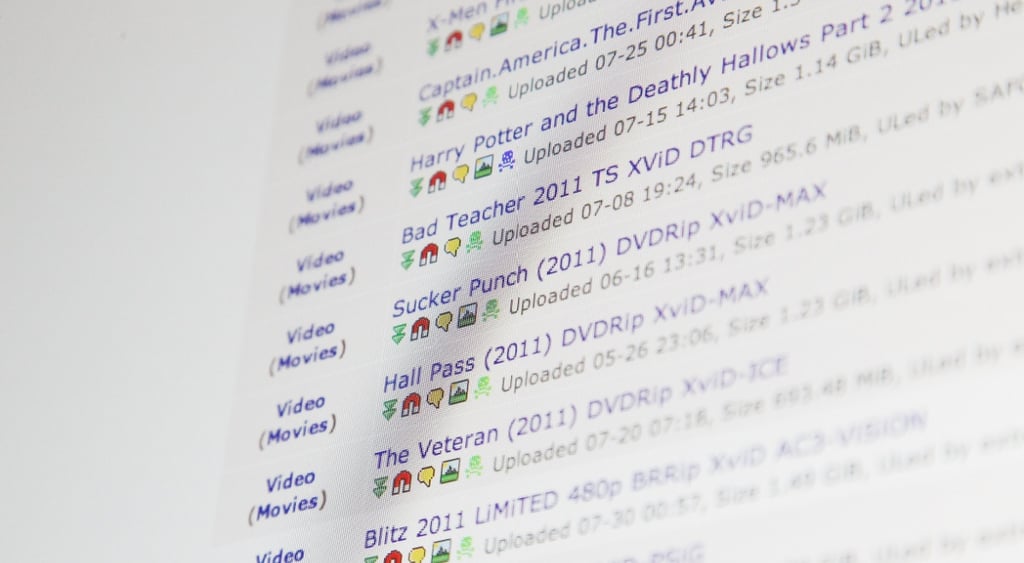
At this point, one copy can spread rapidly through thousands of private forums, hundreds of release groups, dozens of torrent trackers, and millions of people looking for the most recent Academy Award winners, all unaware they are entering a culture based on access, status, and opportunity.
After a movie leaks, the chain reaction can go far beyond the initial illegal download or stream. The studios follow the buzz online, enforcement teams follow the watermark trail, and pirate networks compete to deliver the best-quality version to their users. Finally, lurking in the shadows are the cybercriminals, waiting for a spike in search traffic to begin setting traps.
In many ways, the entire leak process feels like a scene from The Godfather: "Once you start down this road, there's no going back." The moment a new movie leaves the very tight control of the studios and gets released onto the Internet, it becomes virtually impossible to stop.
While viewers continue to look for the largest winners of the 98th Academy Awards, the next leak may already be on its way.
Unlock more exclusive Cybernews content on YouTube.